Brick House Front Design Ideas
Brick is the most forgiving beautiful material in residential design: it never needs painting, weathers into character rather than decay, and carries every style from Georgian formality to sharp contemporary minimalism. Brick house front design today is enjoying a renaissance — textured bonds, hit-and-miss screens, limewash finishes and long-format bricks have given the world's oldest building product a thoroughly current vocabulary.
This guide showcases brick front elevations across the spectrum and unpacks the decisions that separate a flat, monotonous brick wall from a facade with depth: brick selection and blending, mortar colour (more powerful than most people expect), bond patterns, and the projecting details that make brickwork play with light.
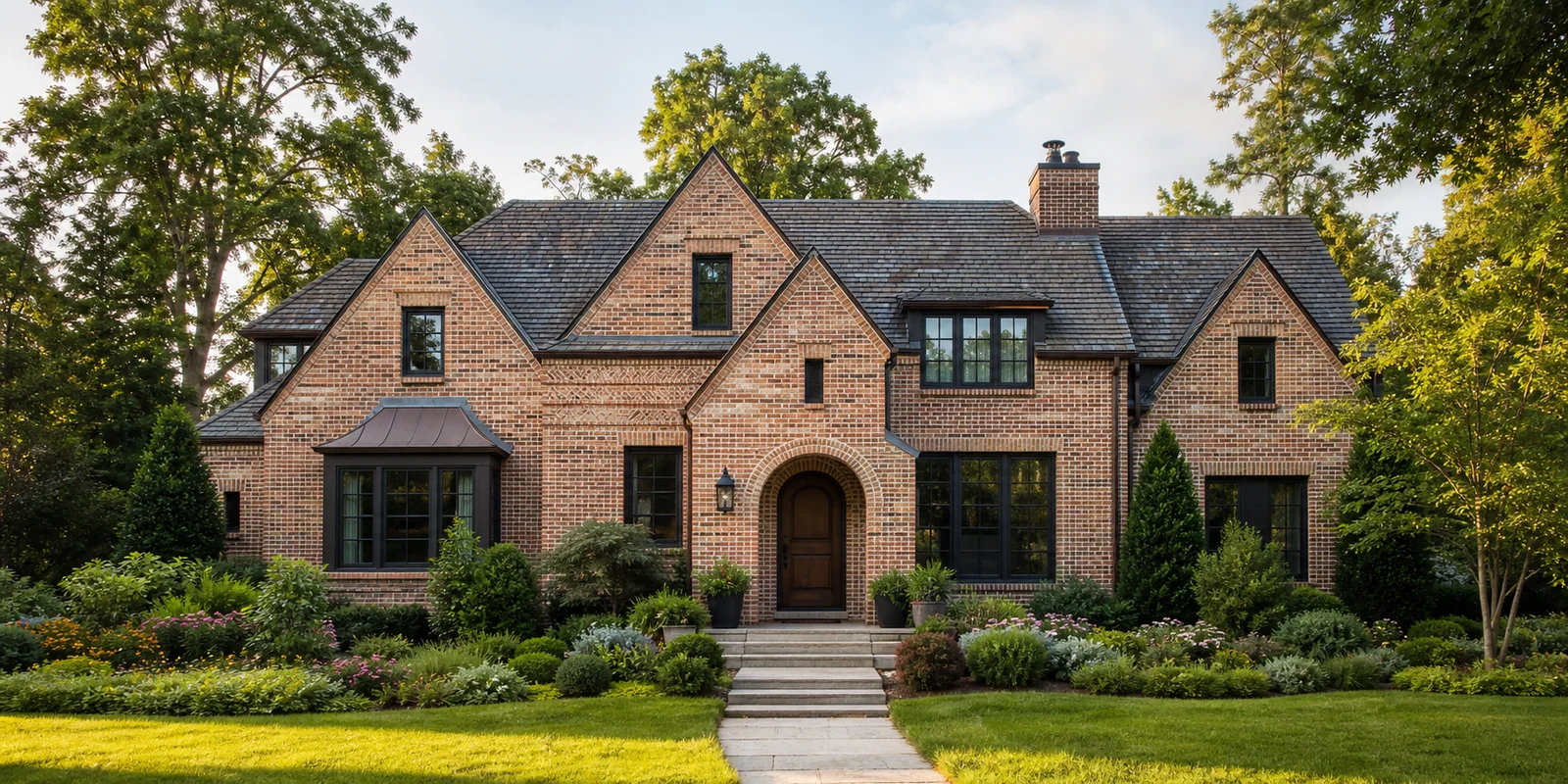
Brick House Front Design Gallery
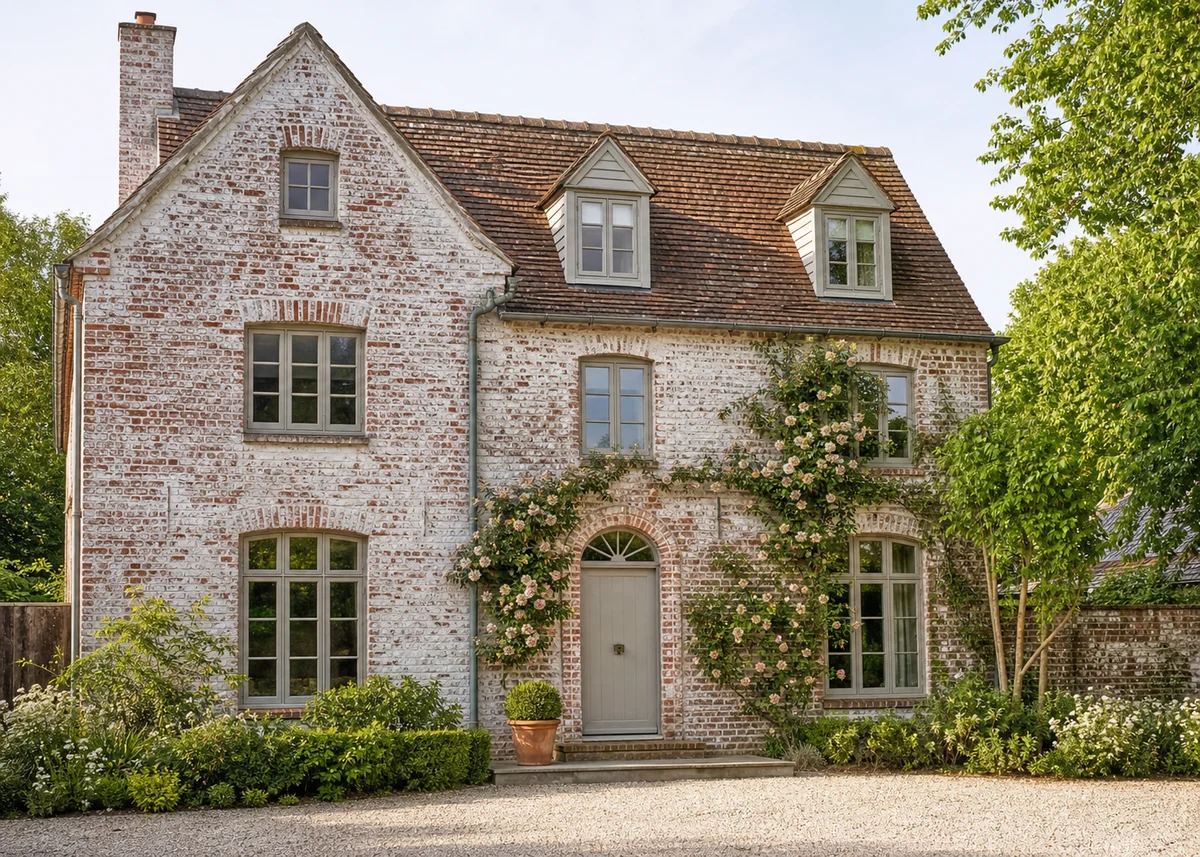
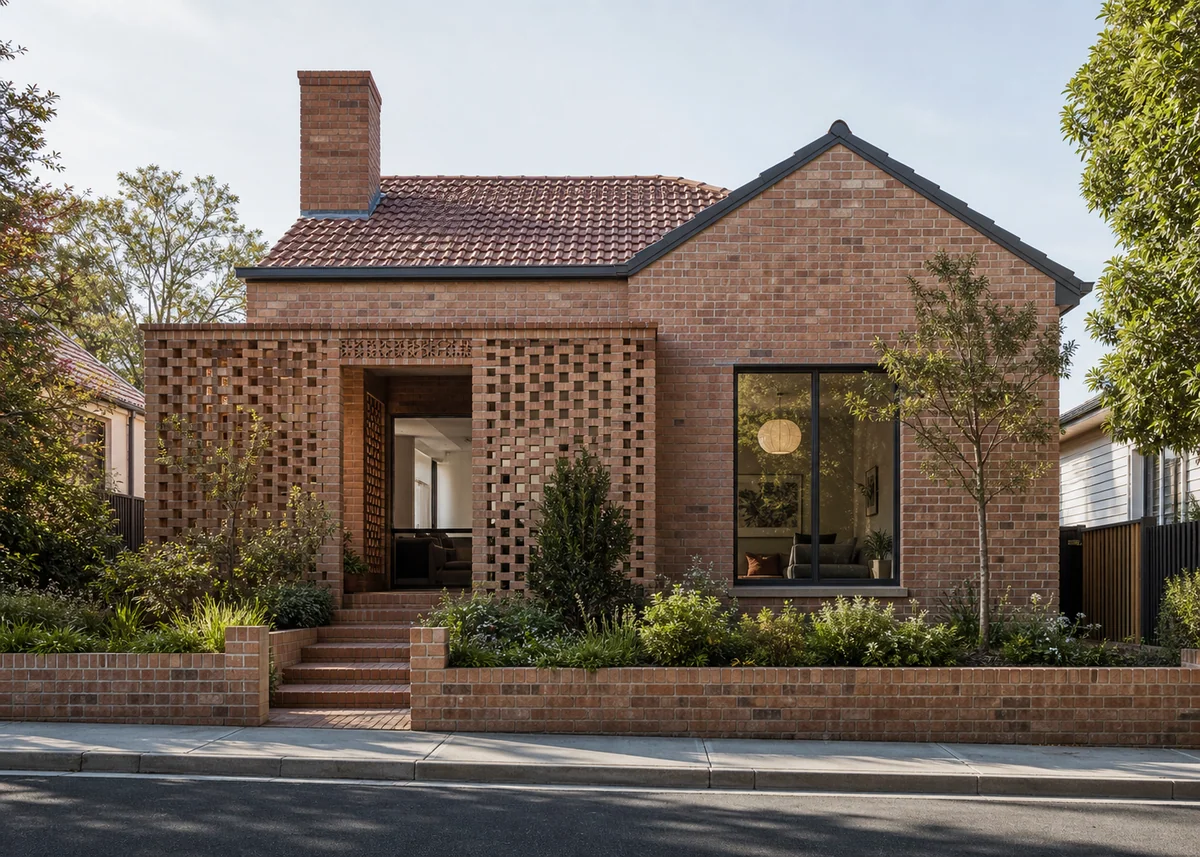
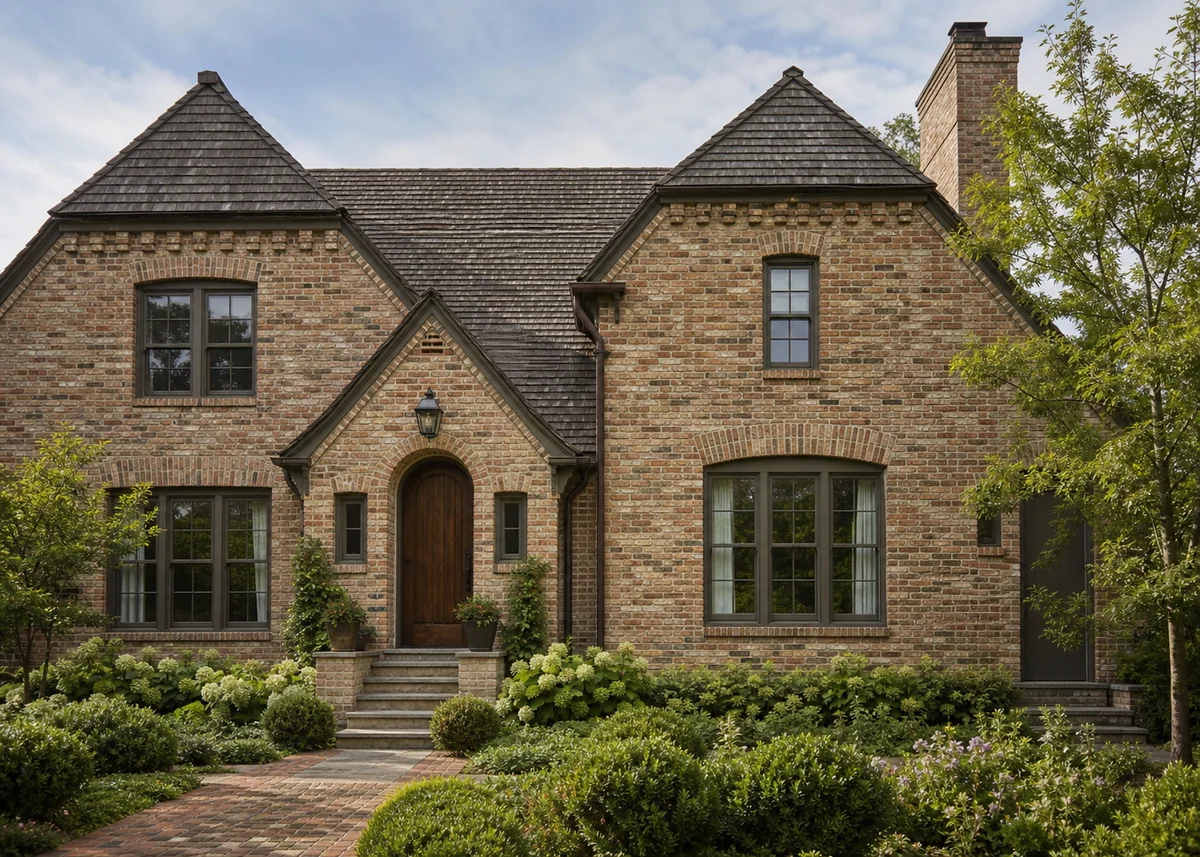
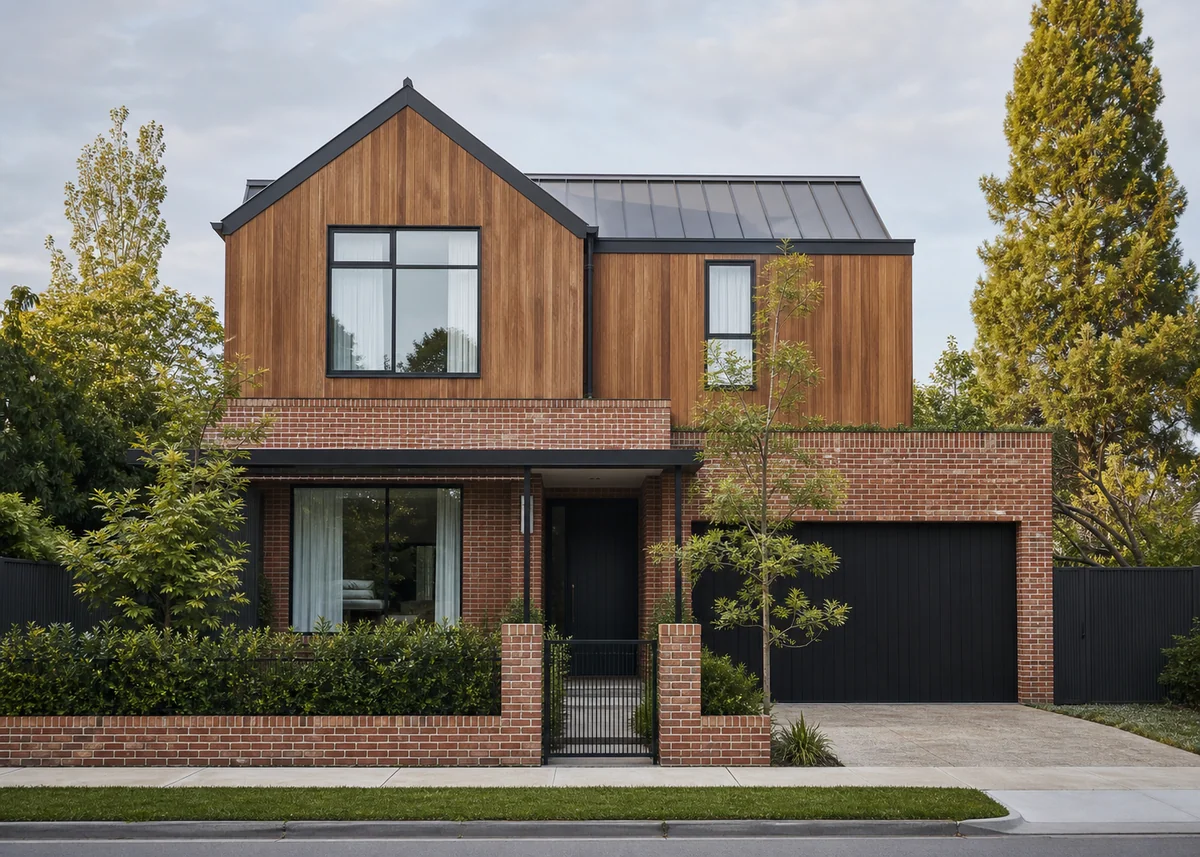
Every image below is a unique AI-created design concept. Love one? Use its caption as a starting prompt in our free AI generator and make it yours.
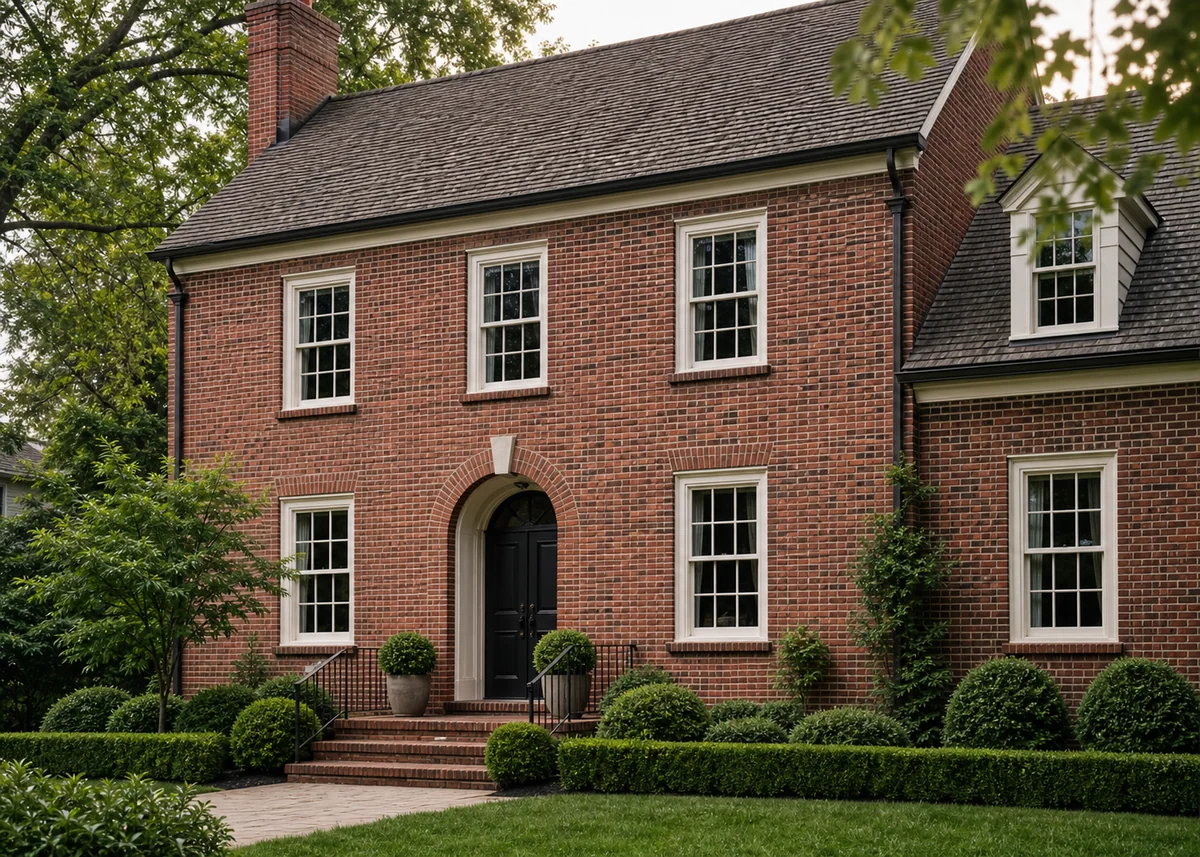
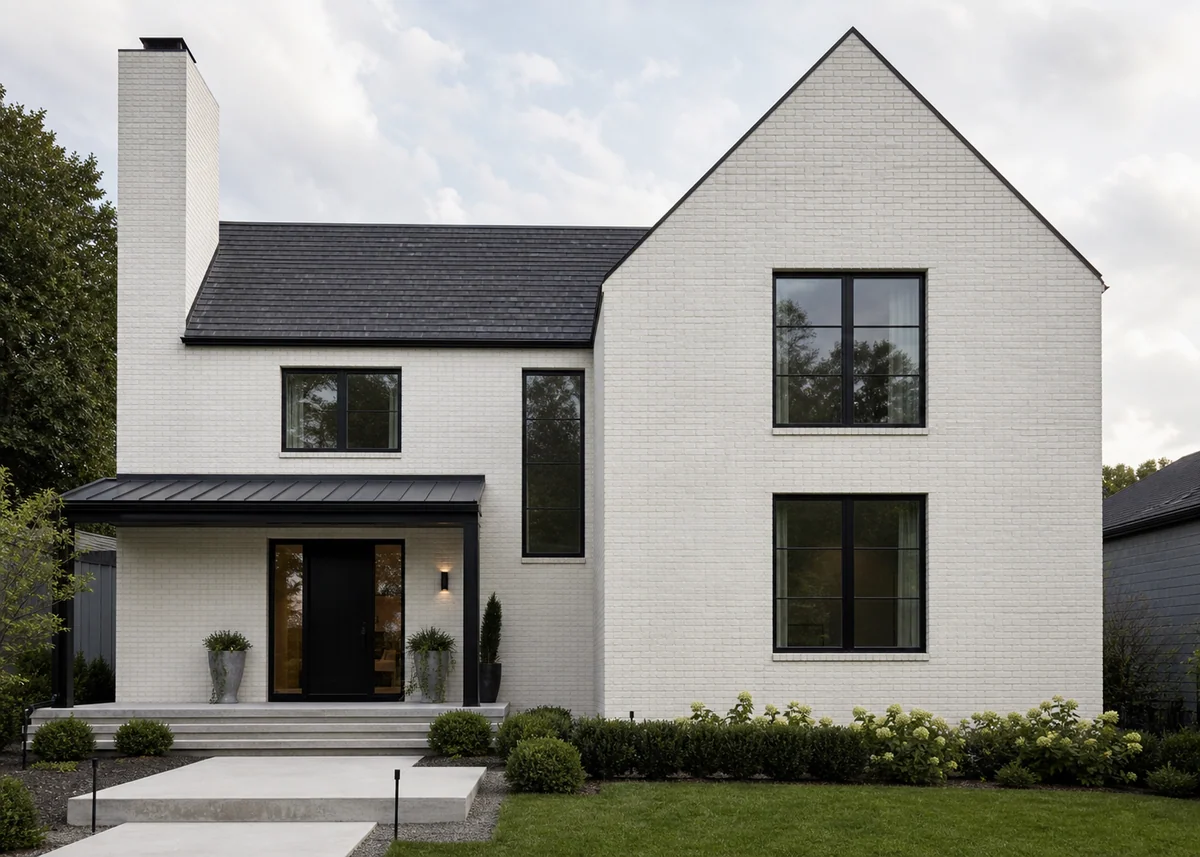
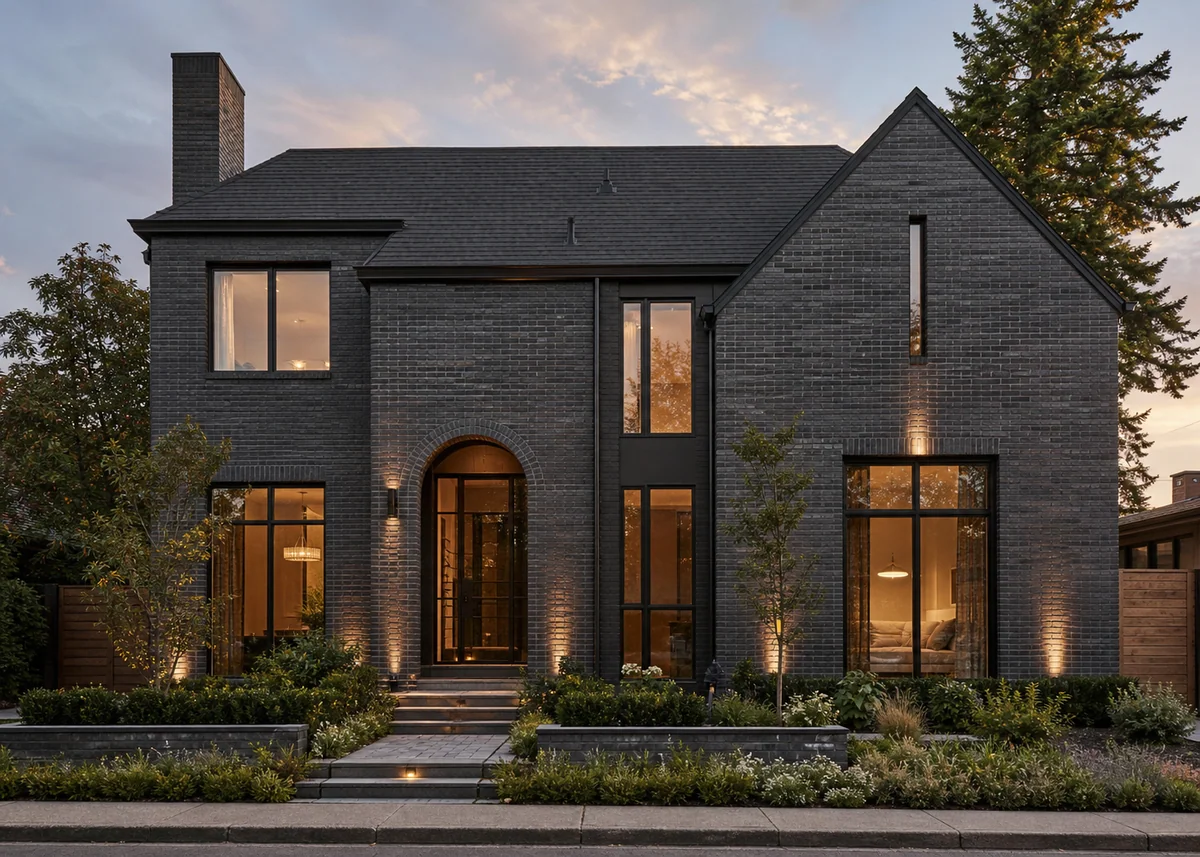
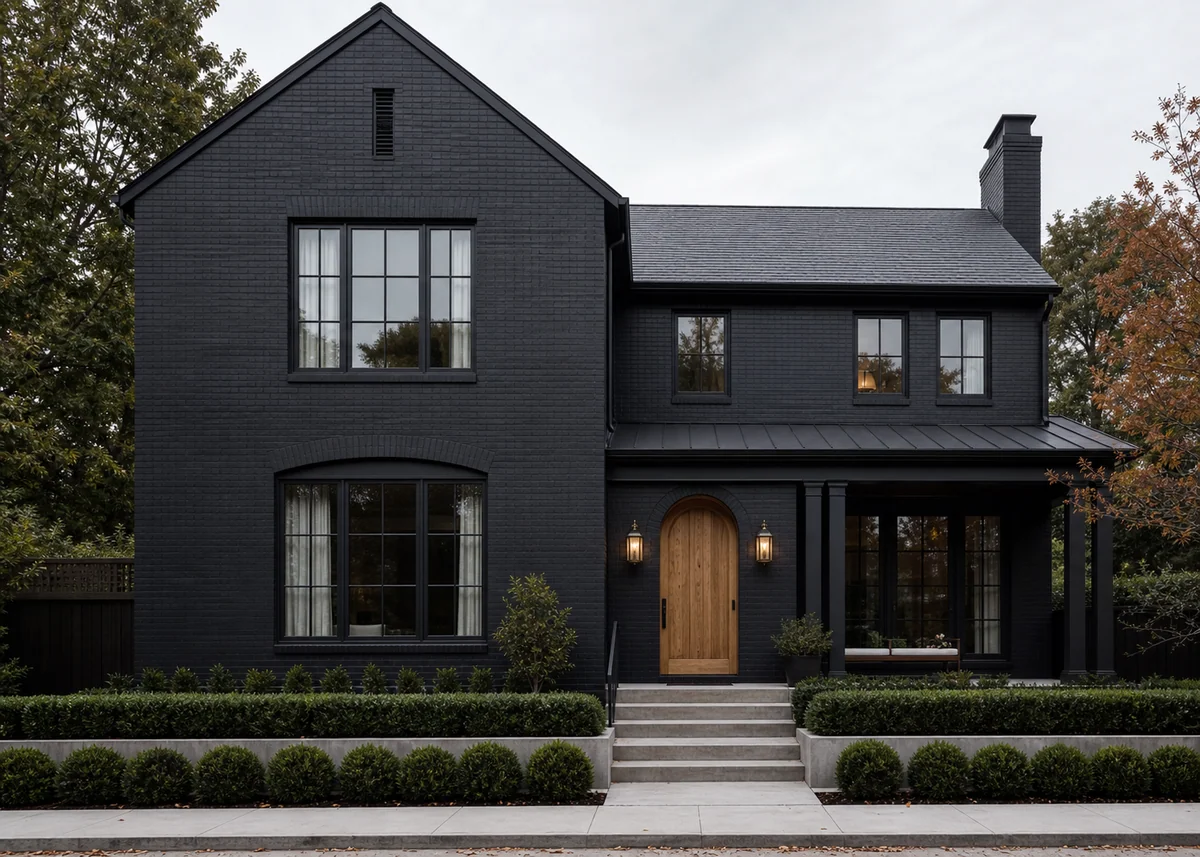
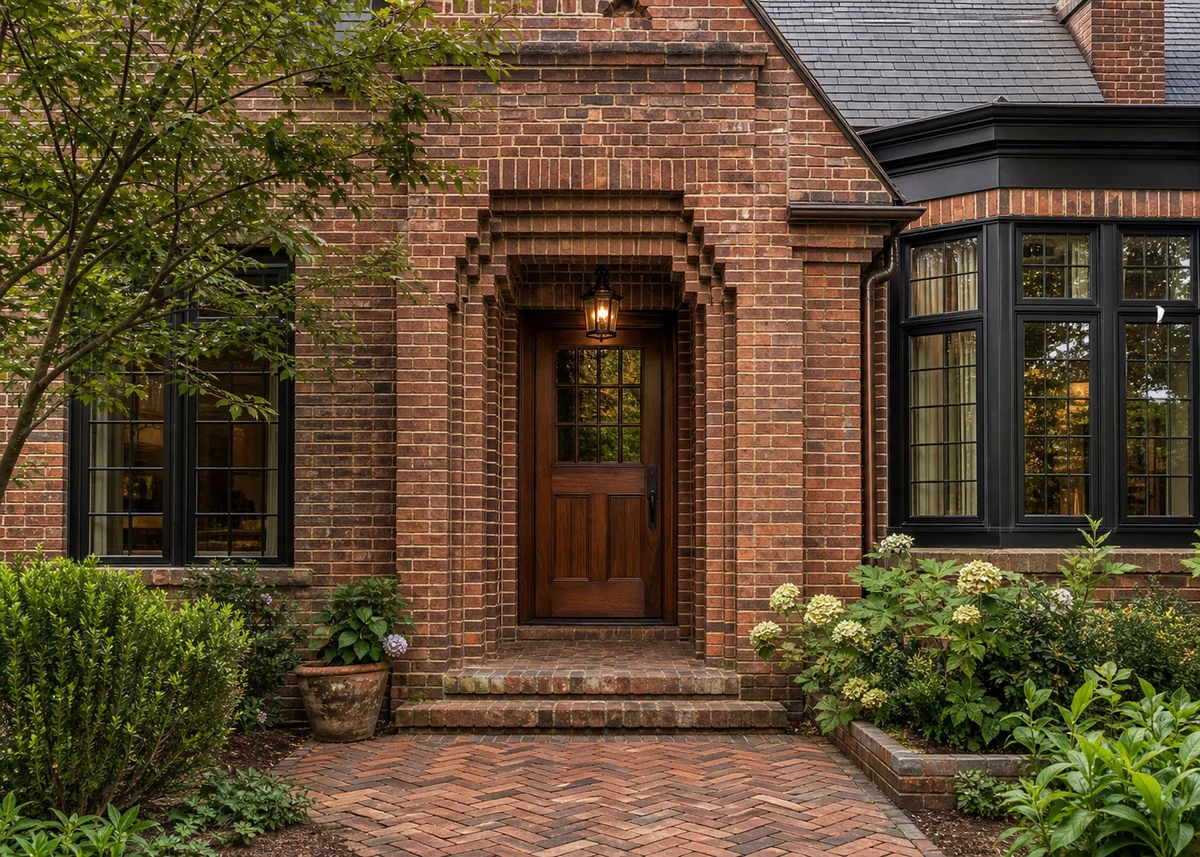
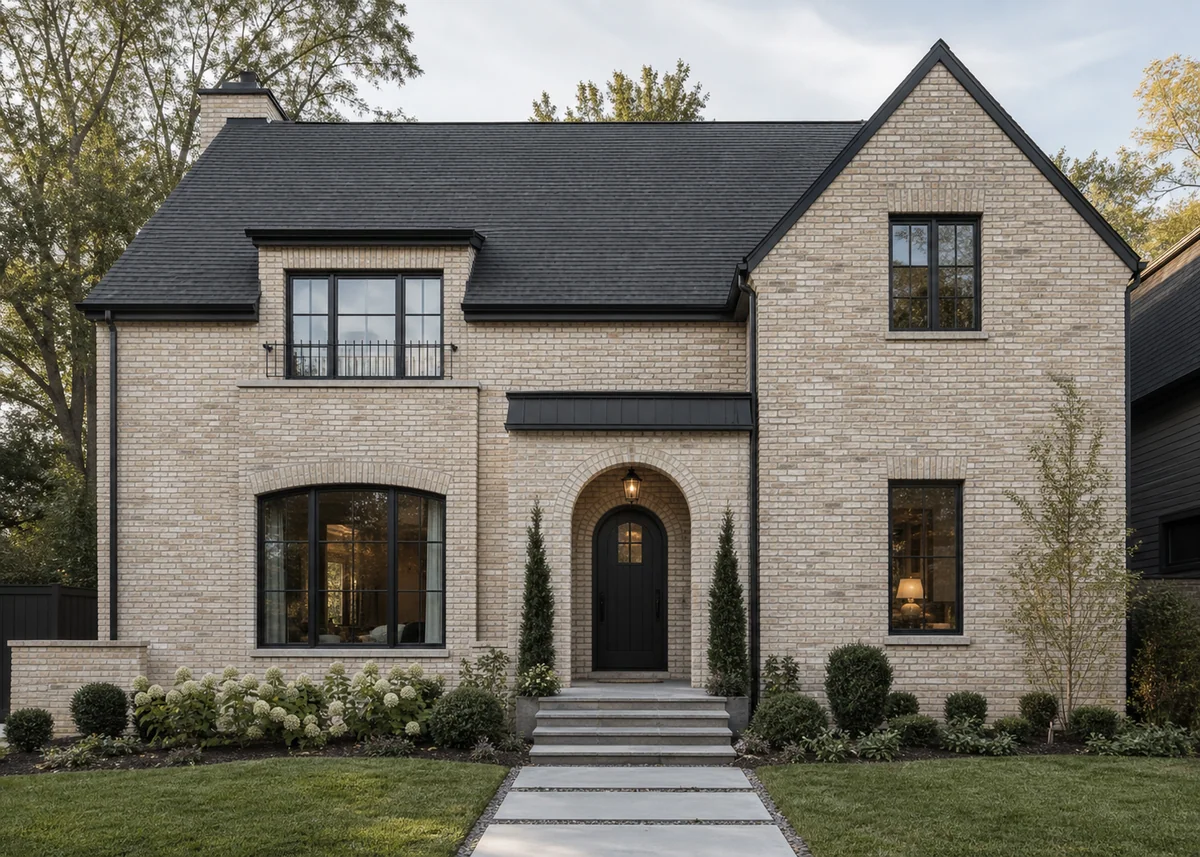
Design your own brick front
Describe your plot, materials and style — our AI turns it into a photorealistic concept in seconds.
Choosing the Brick: Colour, Blend and Texture
A brick facade is specified in three decisions: base colour (reds, buffs, browns, greys, whites), blend (single-tone for calm modern walls, multi-tone blends for traditional richness), and texture (smooth wirecut, sanded, tumbled or handmade). Handmade and tumbled bricks catch light irregularly and give even new walls an established feel.
Always judge bricks in a built panel, never a brochure: a one-square-metre sample panel with your actual mortar, viewed in sunlight and shade, is the industry's standard sanity check. Bricks read dramatically differently across a whole facade than in the hand — strong blends often calm down at distance, while subtle ones can vanish.
Mortar: The Secret 20% of the Facade
Mortar occupies roughly a fifth of a brick wall's surface, and its colour changes everything. Matching mortar to brick creates a monolithic, contemporary block of colour; contrasting mortar (white joints with dark brick, charcoal joints with cream brick) emphasises every unit and reads more traditional and textured.
Joint profile matters too: raked joints throw shadow lines that dramatise texture; flush joints calm the wall; struck weathered joints shed water best in exposed climates. On renovation projects, simply repointing tired brickwork in a considered mortar colour rejuvenates a facade for a fraction of recladding cost.
Bonds, Patterns and Projections
Stretcher bond is the economical default, but pattern is brick's native ornament. Flemish bond alternates headers and stretchers for classical richness; stack bond aligns joints in a crisp modern grid; herringbone and basketweave panels accent gables and entries. A soldier course over openings and a corbelled band at the eave cost little and give the wall grammar.
Projection brings brickwork alive: bricks corbelled out in patterns cast shifting shadows through the day, while hit-and-miss screens — bricks laid with gaps — create breathing veils for porches, stairs and privacy zones. These techniques turned brick into the darling of contemporary architects; they need a skilled bricklayer, but no exotic materials.
Painted, Limewashed and German Schmear
Painting brick delivers instant transformation — white and black painted brick fronts are enduringly popular — but it is effectively permanent and converts a maintenance-free wall into a repainting cycle. Reserve paint for brick that is mismatched, patched or genuinely unattractive; good brick is worth keeping bare.
Limewash and German schmear offer half-steps with more soul: limewash soaks in and weathers back patchily for a time-softened European look, while a schmear of mortar smeared across the face gives rustic, partially-covered texture. Both are breathable, age gracefully and suit heritage and farmhouse fronts far better than plastic-flat paint.
Brick in Contemporary Composition
Modern brick fronts treat the material as taut skin: single-tone bricks (white, pale grey, deep charcoal) in stretcher or stack bond with matched mortar, window frames recessed deep into the reveal, and no trim at all — the wall turns crisp corners and meets glass in clean shadow gaps. Long-format Roman bricks stretch facades horizontally and read instantly current.
Brick also excels as the grounded half of mixed facades: a brick ground floor under a rendered, timber or standing-seam upper level gives the composition weight where it meets the earth. Keep the junction on a clean architectural line and repeat the brick somewhere else — a boundary wall, a chimney — to tie the design together.
Longevity, Maintenance and Renovation
Brick's business case is its century-plus lifespan with near-zero upkeep: no painting, no rot, no fading to chalk. Care amounts to keeping weep holes clear, repointing eroded joints every few decades with compatible mortar (soft lime mortar for old walls — hard cement pointing damages heritage brick), and gentle cleaning without aggressive pressure washing.
Renovating a tired brick front rarely requires recladding. Repointing in a better mortar colour, replacing rusted lintels, adding a corbelled or soldier detail at the entry, painting just the trim and door, and lighting the texture with a grazing wall light — together these read as a new facade at a small fraction of the cost.
Frequently Asked Questions
What brick colour is best for a house front?+
Multi-tone red and brown blends for traditional warmth; single-tone white, grey or charcoal for contemporary calm; buff and cream for sunny softness. Judge from a built sample panel with your actual mortar — never from a brochure.
How much does mortar colour matter?+
Enormously — mortar is about 20% of the wall's surface. Matched mortar reads monolithic and modern; contrasting mortar emphasises each brick and reads traditional. Repointing alone can transform a tired facade.
Should I paint my brick house front?+
Only if the brick is mismatched or genuinely unattractive — paint is effectively permanent and adds a repaint cycle forever. Limewash or German schmear give softer, breathable alternatives that age gracefully.
What is hit-and-miss brickwork?+
Brick laid with regular gaps to form a perforated screen — used for porches, stair enclosures and privacy veils. It filters light and air while keeping brick's texture, and needs only a skilled bricklayer, not special products.
How long does a brick facade last?+
A century or more with minimal care: keep weep holes clear, repoint eroded joints every few decades with compatible (lime-based for heritage) mortar, and avoid aggressive pressure washing.
Can brick look modern?+
Emphatically — single-tone brick with matched mortar in stack bond, deep recessed windows, zero trim and long Roman formats are staples of current architecture. Brick screens and corbelled texture panels are signature contemporary moves.