Mediterranean House Front Design Ideas
Mediterranean house front design bottles the light of the world's most romantic coastlines: thick white or earth-toned walls, deep arched openings, terracotta barrel-tile roofs and courtyards where life happens in shade. Evolved across Spain, Italy, Greece and North Africa, the style is fundamentally climatic — every beautiful gesture began as a way to live well in heat.
This collection ranges from whitewashed island simplicity to Tuscan stone warmth and grand Spanish revival fronts. Alongside the gallery you'll find the proportions that keep arches graceful, the palette rules that keep earth tones sophisticated, and the planting — cypress, olive, bougainvillea — that completes the picture.
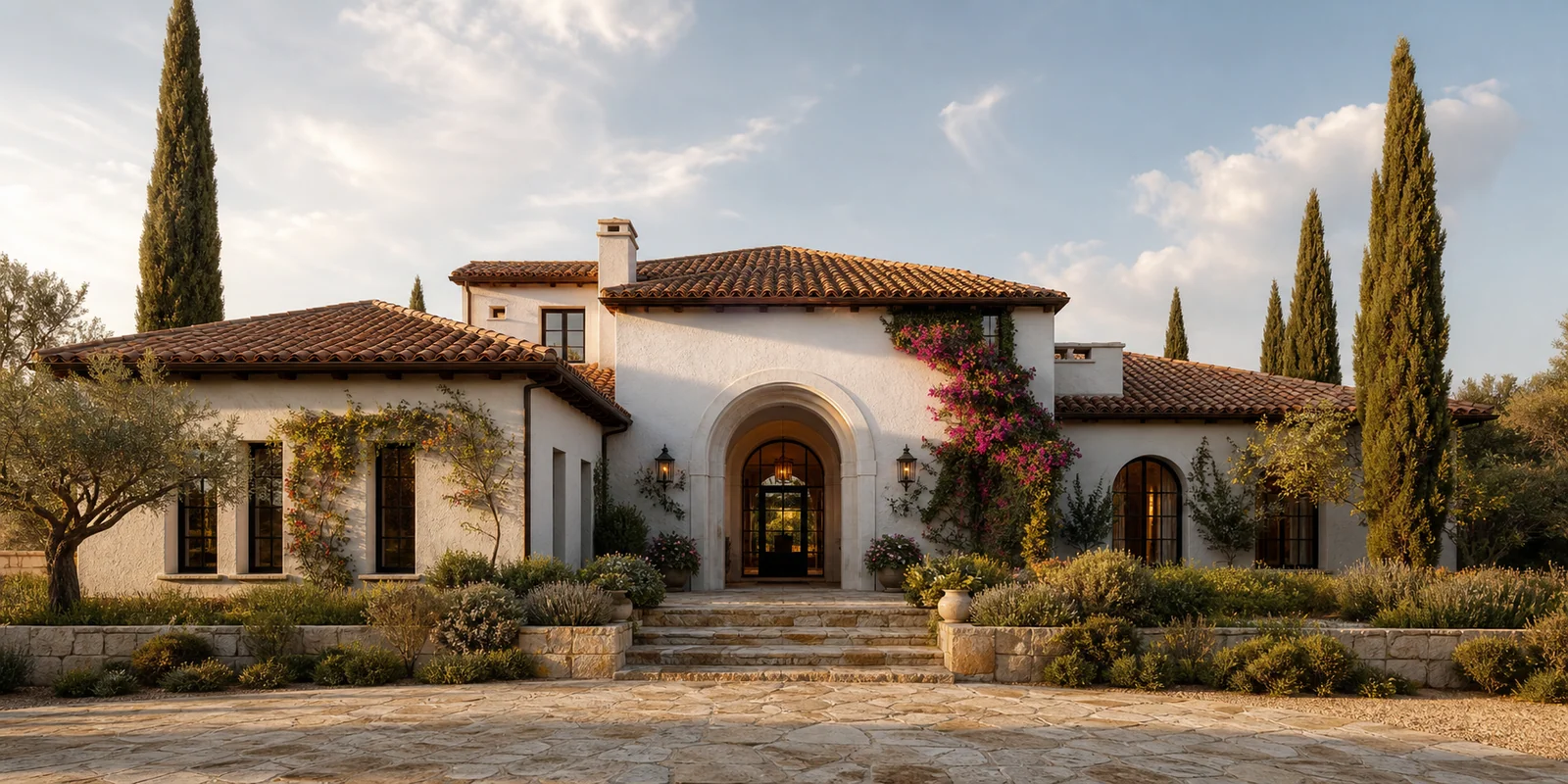
Mediterranean House Front Design Gallery
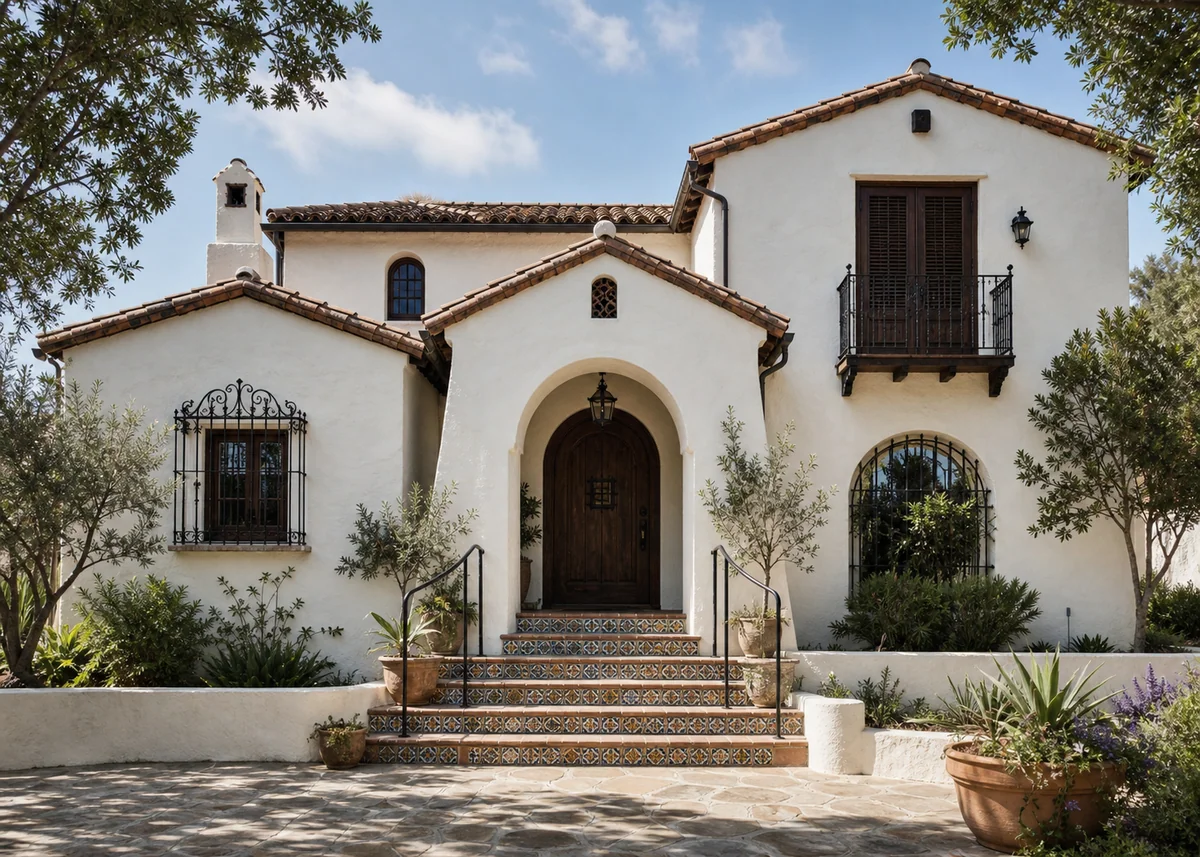
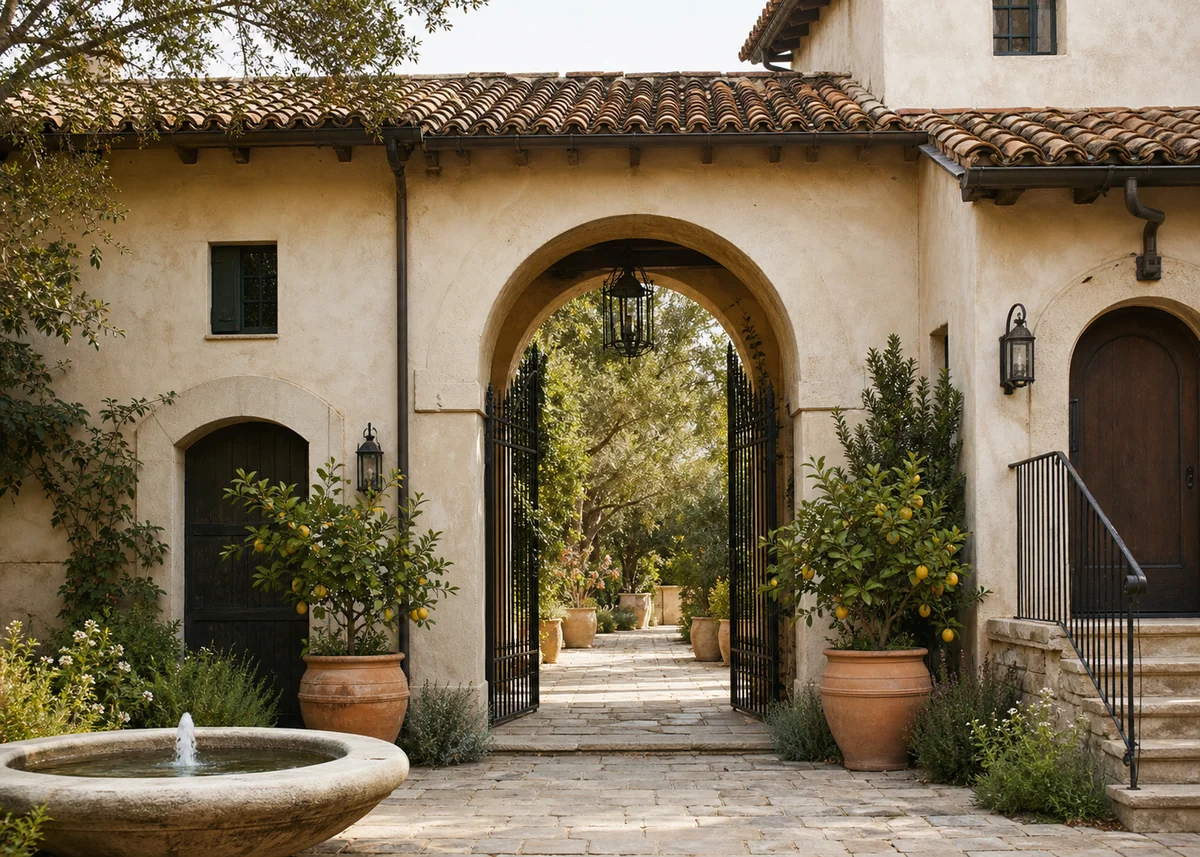
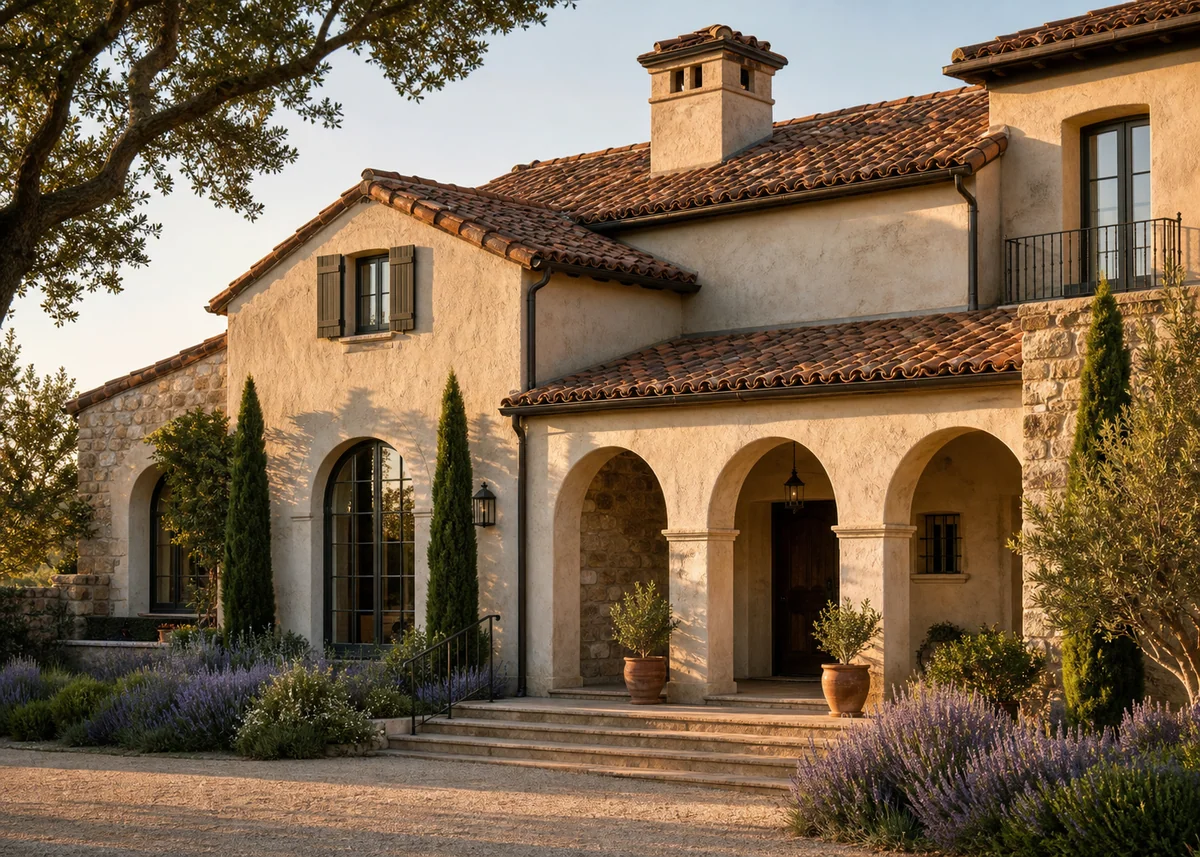
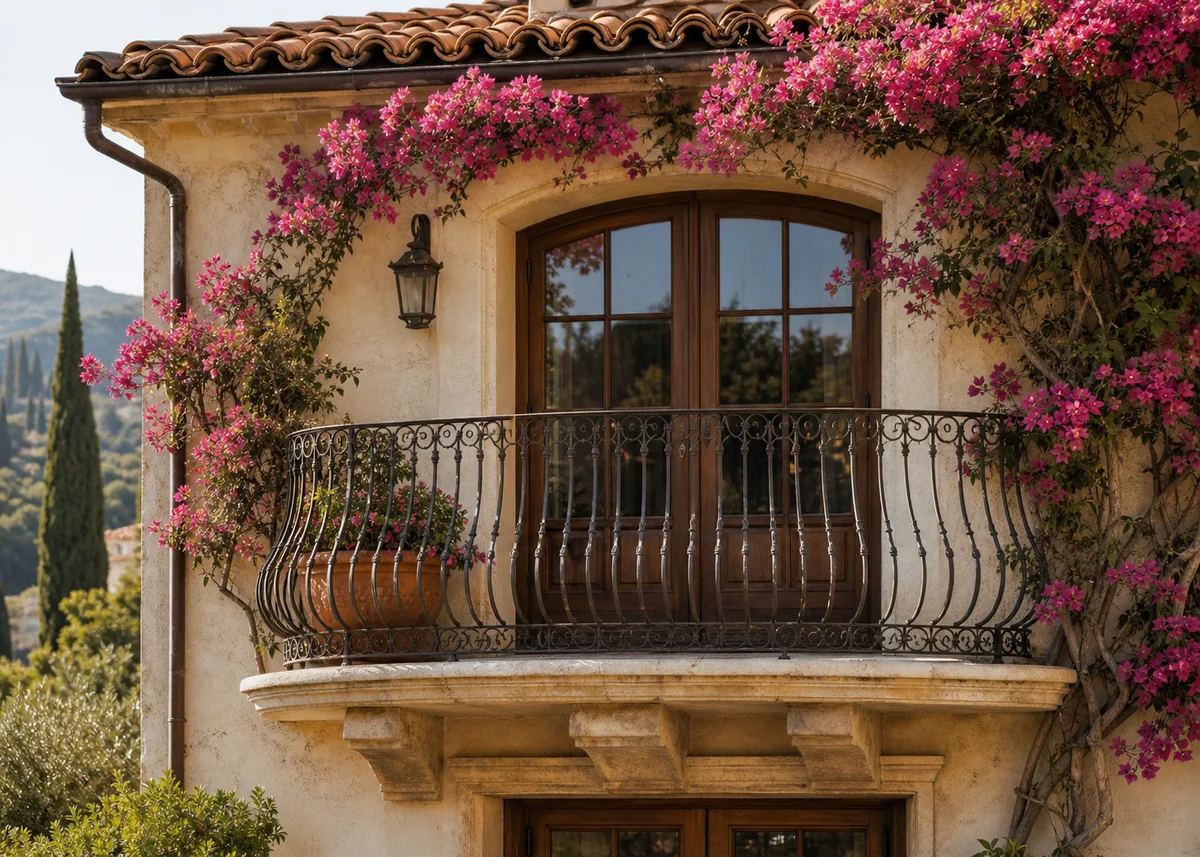
Every image below is a unique AI-created design concept. Love one? Use its caption as a starting prompt in our free AI generator and make it yours.
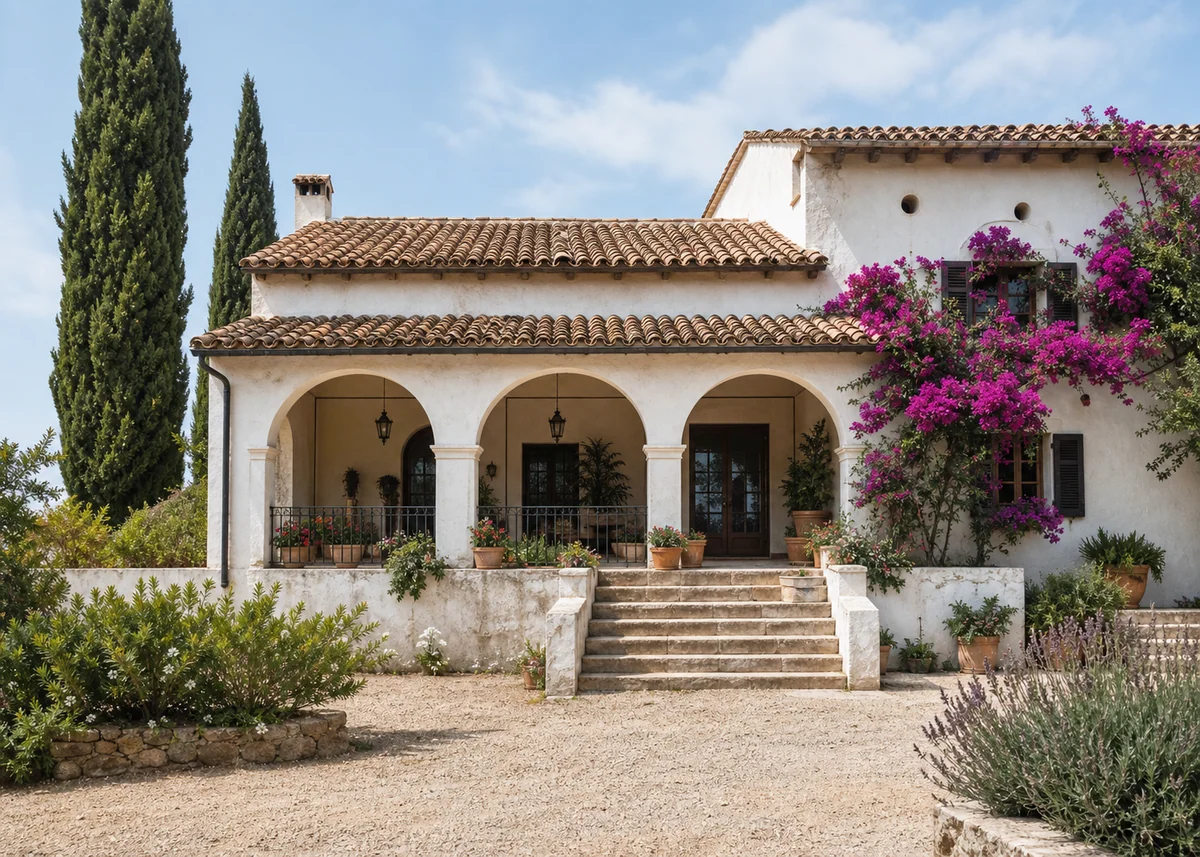
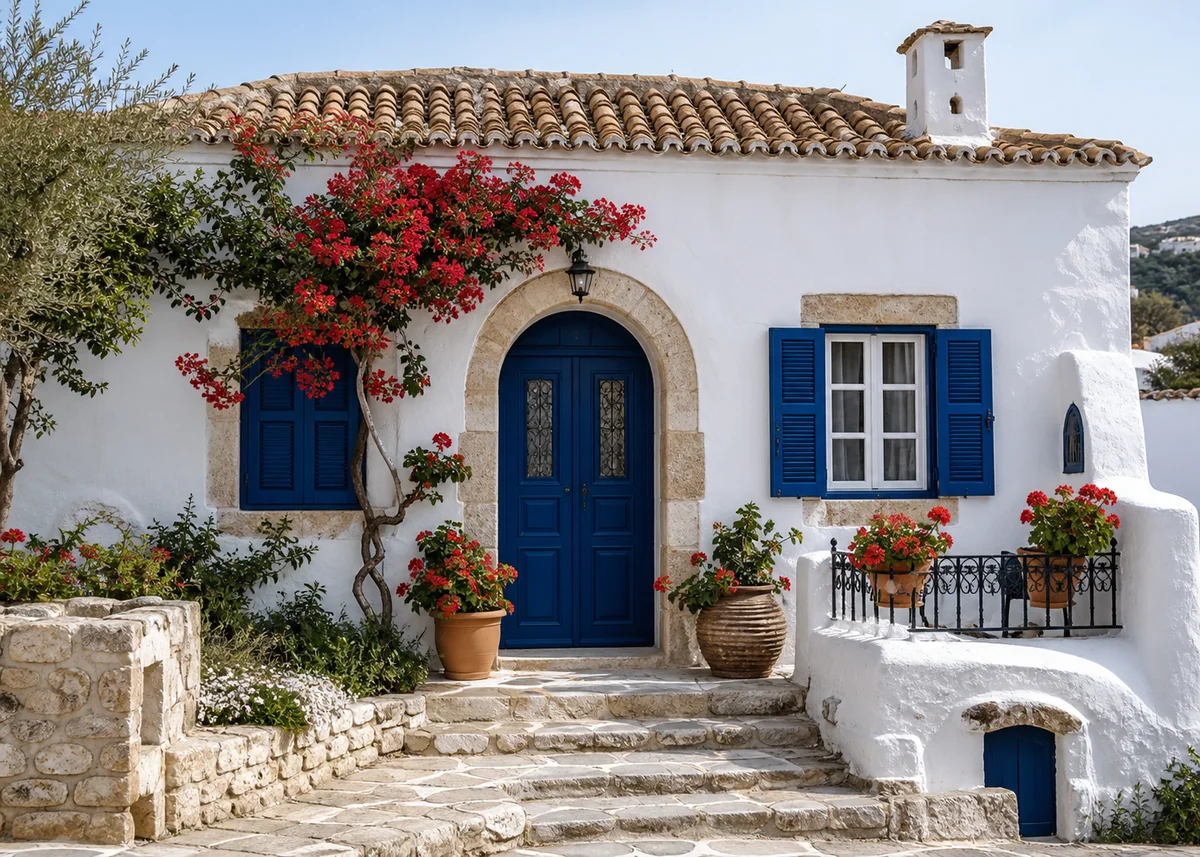
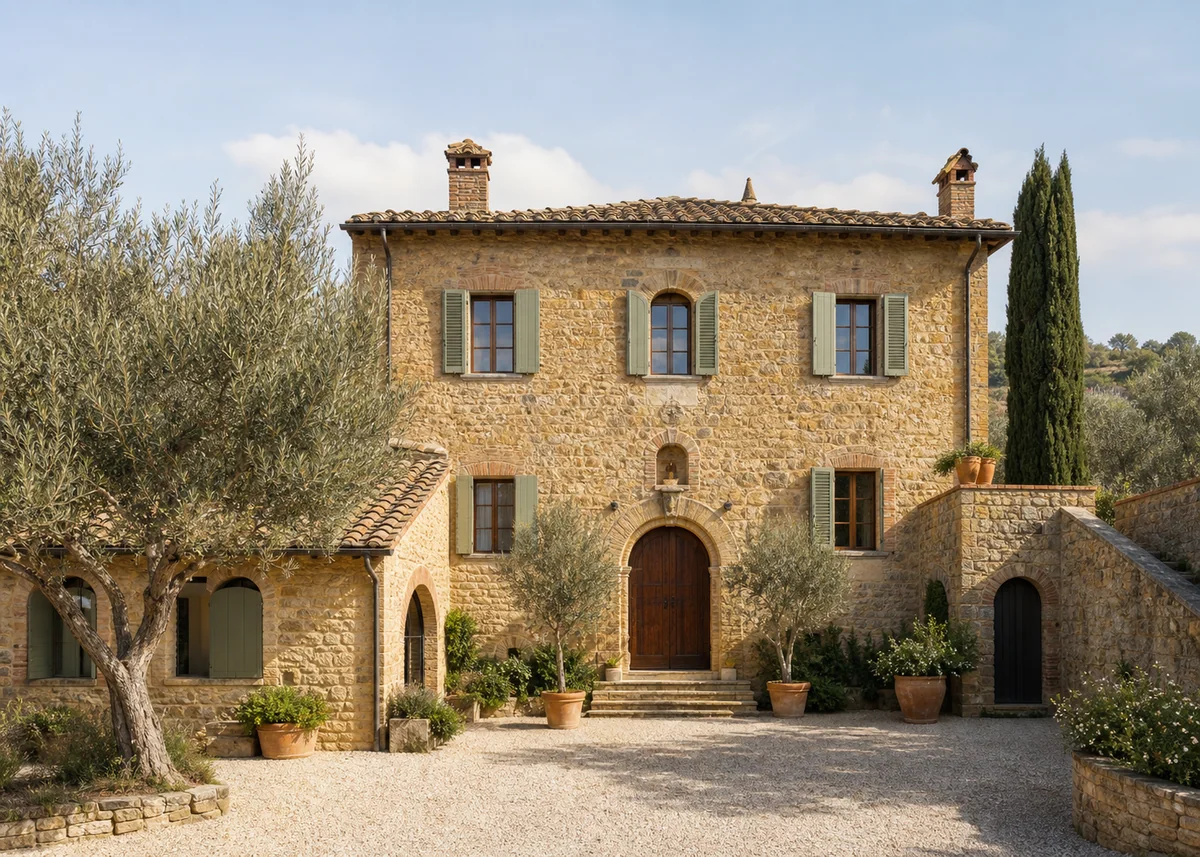
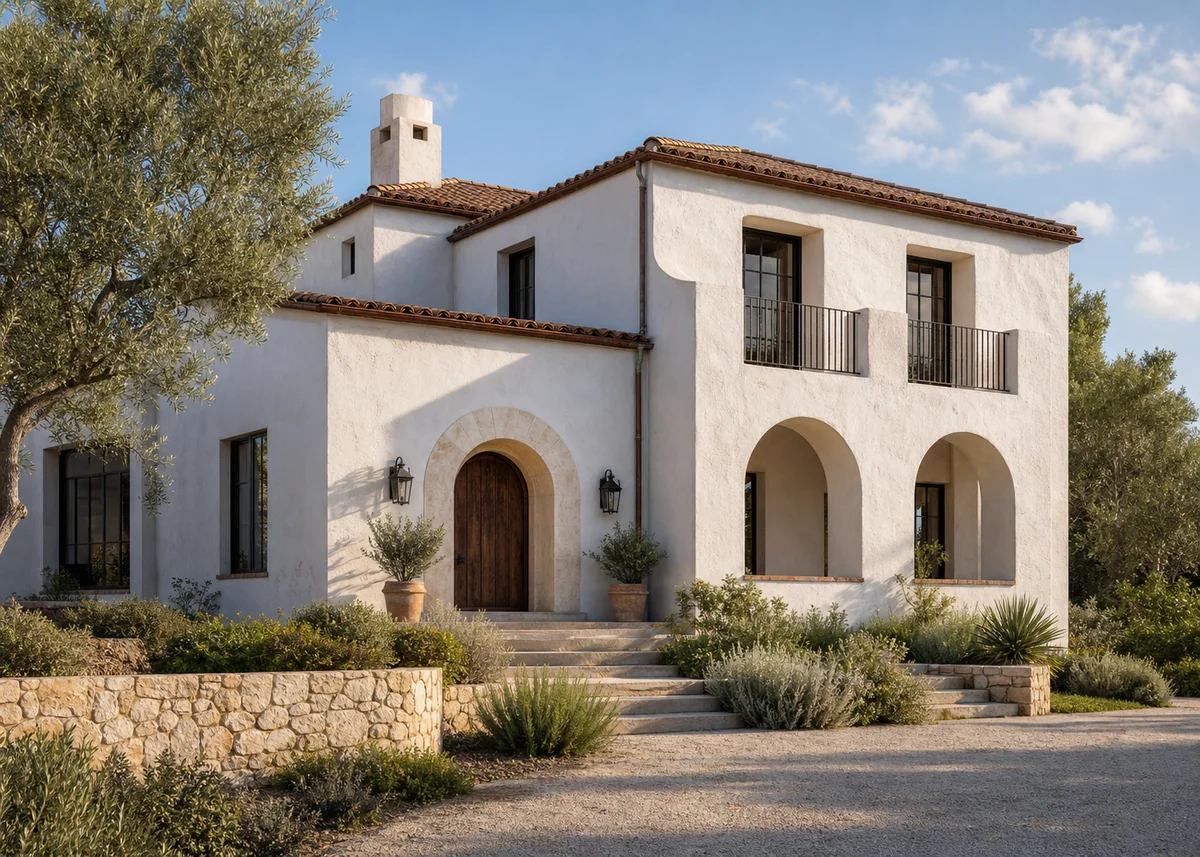
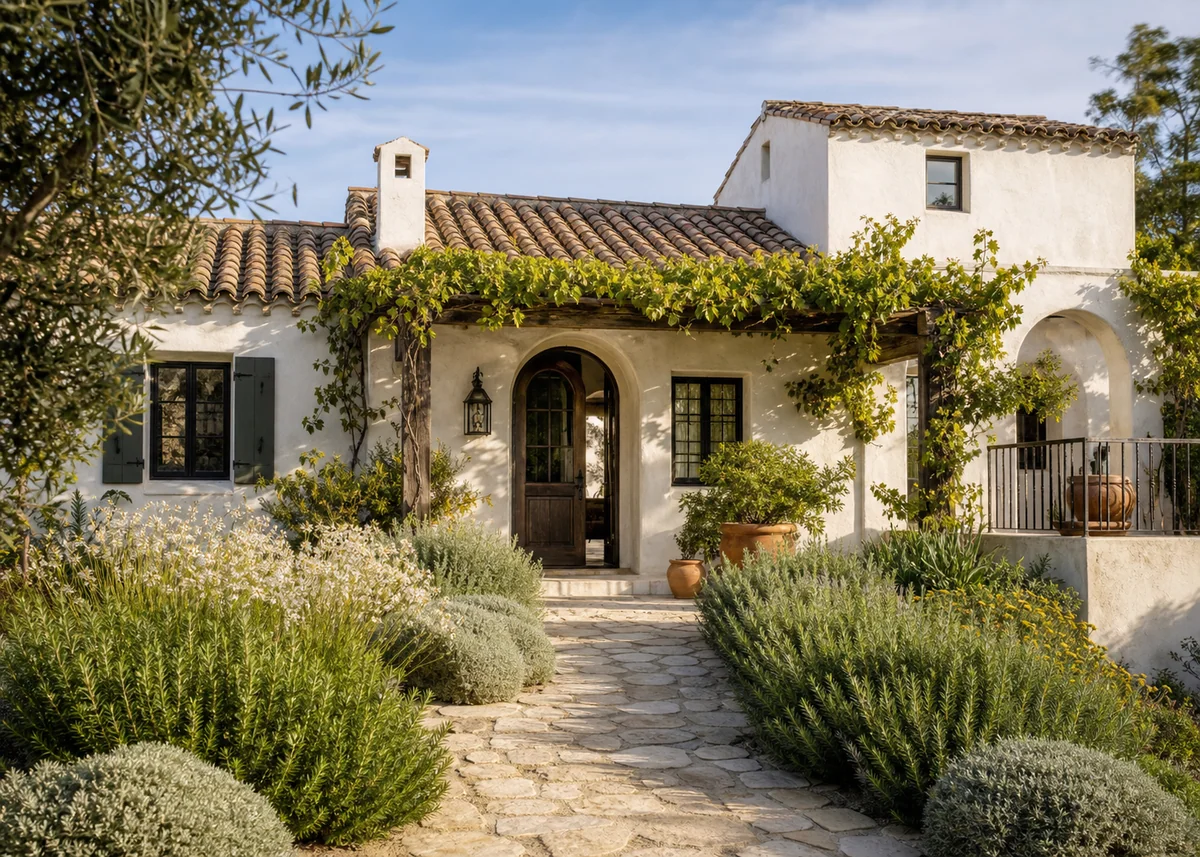
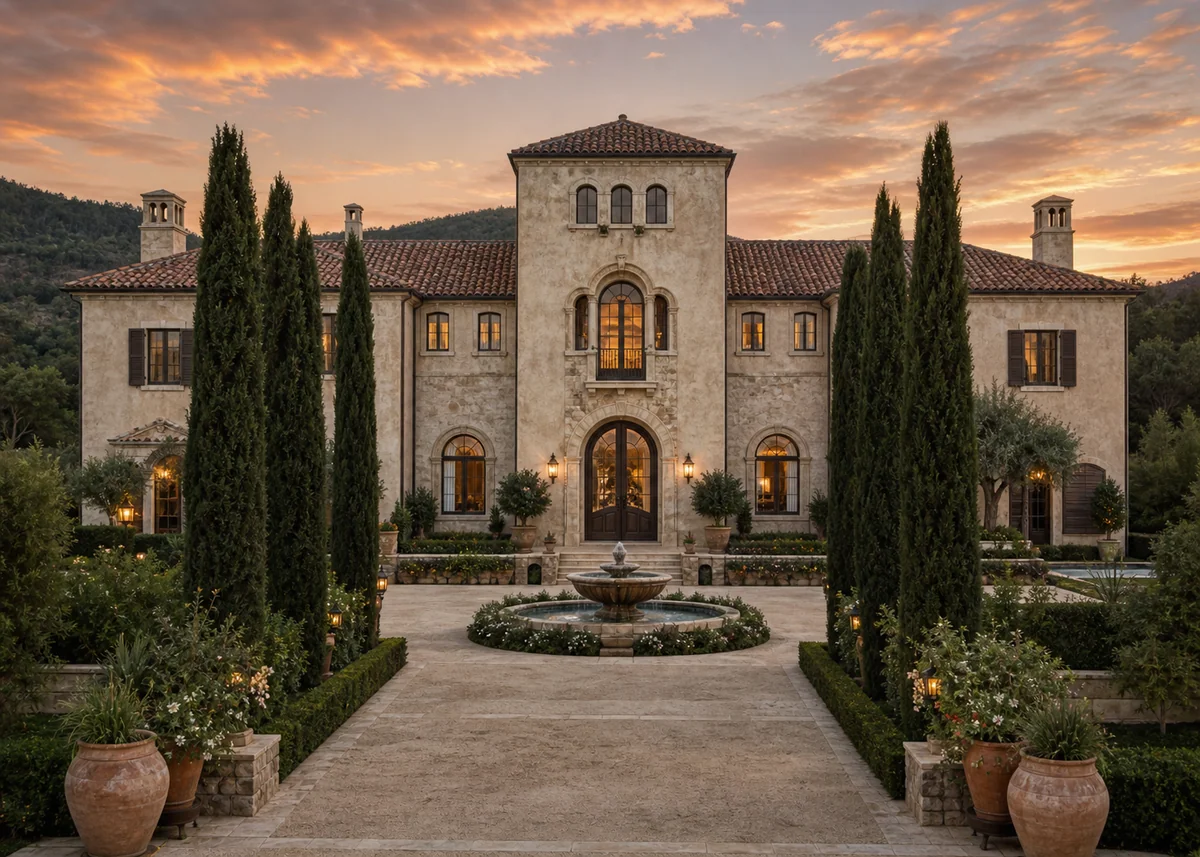
Design your own mediterranean front
Describe your plot, materials and style — our AI turns it into a photorealistic concept in seconds.
A Style Born from Climate
Every Mediterranean signature is functional first. Thick masonry walls buffer heat and carve deep shaded reveals around windows. White lime render reflects sun; small openings on the hottest faces keep interiors cool; courtyards and loggias create outdoor rooms in permanent shade. The romance is a by-product of intelligence about heat.
Design with that logic and the style feels authentic anywhere warm: orient the biggest openings away from harsh afternoon sun, give every window a deep reveal or shutter, and provide at least one covered outdoor space on the front — an arched porch, a loggia, a vine-covered pergola over the entry.
Arches Done Right
The arch is the style's signature, and proportion is everything. Semi-circular arches suit generous openings — entries, loggia bays — while gentle segmental arches sit comfortably over windows. Keep spring lines (where the curve begins) at a consistent height across the facade so multiple arches read as one family.
Depth sells the arch: reveal thicknesses of 300mm or more cast the shadowed curves that make Mediterranean fronts photograph so richly. A flat wall with skin-deep arch cutouts is the giveaway of thin imitation — if the construction is a modern frame, build out the entry and loggia walls to authentic thickness where it counts.
The Palette: White, Earth and Sea
Three palettes cover the tradition. Island Greek: pure white lime walls with cobalt or turquoise doors and shutters. Tuscan: exposed golden stone or ochre-and-cream render with sage shutters and aged timber. Spanish revival: warm white or sand stucco, dark walnut doors, wrought iron and painted tile accents. Choose one and commit — mixing dialects muddies the effect.
Texture completes colour: hand-troweled or lime-washed render with soft movement, never machine-flat acrylic; unfilled travertine underfoot; timber with visible grain. Mediterranean surfaces are meant to show the human hand and improve as they weather.
Terracotta Roofs and Iron Details
The barrel-tile roof in weathered terracotta is half the style's identity. Choose blended-tone tiles (never uniform orange), low pitches of 18–25 degrees, and simple hipped or gabled forms. Exposed rafter tails or a corbelled cornice finish the eave with craft; in the whitewashed island dialect, flat roofs behind parapets are equally authentic.
Wrought iron provides the jewellery: window grilles with gentle belly curves, balcony railings, lantern sconces and gate hardware in matte black or aged bronze. Real forged iron has visible joints and slight irregularity; keep patterns simple — vertical bars with a scroll moment — rather than ornate catalogue curls.
Courtyards, Loggias and the Entry Sequence
Grand Mediterranean homes rarely put their best rooms on the street; they wrap them around courtyards. Even a modest front can borrow the move: a walled forecourt with a fountain bowl, an arched gate revealing a planted path, or a loggia — three arched bays deep enough for a table — as the facade's centrepiece.
The classic entry sequence layers thresholds: street gate of timber and iron, shaded path under vines or citrus, then a heavy studded door in a deep arched surround. Terracotta pots massed at each threshold — geraniums, agave, lemon — mark the journey the way lanterns do in other styles.
Planting the Mediterranean Picture
Few styles depend on planting so completely. The essential cast: pencil cypress for vertical exclamation points, olive trees for silver-green canopy, bougainvillea flooding a wall in magenta, and rosemary, lavender and santolina spilling over gravel. All are drought-hardy — the palette is beautiful because it belongs to the climate.
Ground surfaces stay warm and permeable: decomposed granite or gravel courts, terracotta or reclaimed brick paths, stone risers. Irrigation drips discreetly rather than sprays. The finished frontage should look sun-struck and slightly abundant — clipped perfection belongs to other traditions.
Frequently Asked Questions
What defines Mediterranean house front design?+
Thick light-toned masonry walls, arched openings with deep reveals, terracotta barrel-tile or parapet roofs, wrought iron details, shaded loggias or courtyards, and drought-hardy planting like cypress, olive and bougainvillea.
Does Mediterranean style work outside hot climates?+
The vocabulary travels, but it reads most authentic where the climate justifies it. In cooler regions, borrow selectively — arched entry, lime render, terracotta tones — rather than transplanting the full formula.
How do I keep arches from looking fake?+
Give them depth (300mm+ reveals), keep spring lines consistent across the facade, and limit yourself to one arch family. Thin arch-shaped cutouts in a flat wall are the classic imitation giveaway.
Which Mediterranean palette should I choose?+
Pick one dialect: Greek island (white + cobalt), Tuscan (golden stone + sage), or Spanish revival (sand stucco + walnut + iron). Committing to a single tradition keeps the facade coherent.
What roof suits a Mediterranean front?+
Blended-tone terracotta barrel tiles at 18–25 degrees with simple hipped or gabled massing — or flat parapet roofs in the whitewashed island style. Avoid uniform bright-orange tiles and complex rooflines.
What are the essential Mediterranean plants?+
Pencil cypress, olive, bougainvillea, citrus in terracotta pots, and aromatic groundcovers — lavender, rosemary, santolina — over gravel. All thrive on little water, which is why the palette exists.