House Front Gate Design Ideas
The gate is the handshake of the house — the one element every visitor touches and every passer-by judges. House front gate design has evolved far beyond catalogue grills: today's main gates are architectural objects in slatted steel, laser-cut pattern, warm timber and glass, increasingly automated, and designed as a single composition with the compound wall and facade behind.
Here you'll find main gate designs for every frontage — swing, sliding and folding formats, pedestrian wickets, material and finish guidance, automation practicalities and the details (piers, lighting, hardware, numbers) that make a gate feel resolved. Use their captions as briefs in our design matcher to find related wall and house styles.
House Front Gate Design Gallery
Every image below is a unique AI-created design concept. Love one? Use its caption as a starting prompt in our free AI generator and make it yours.
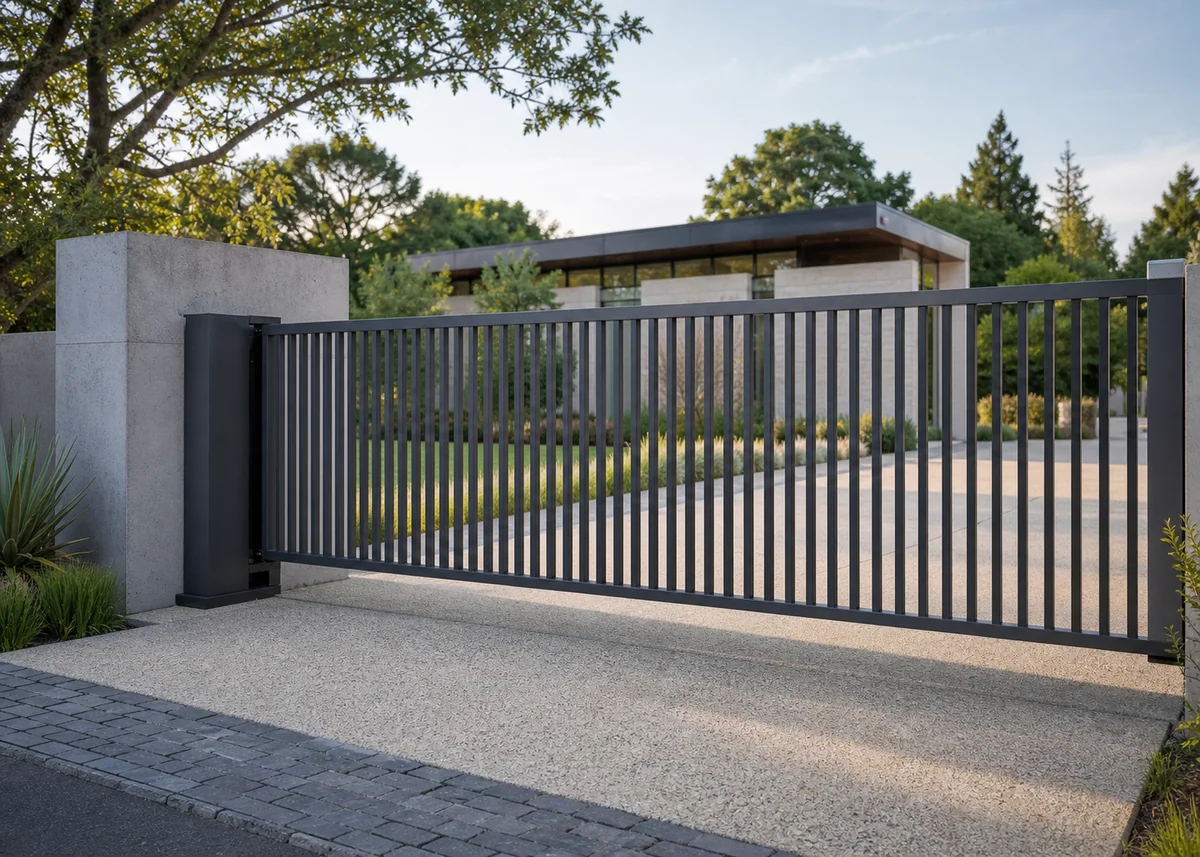
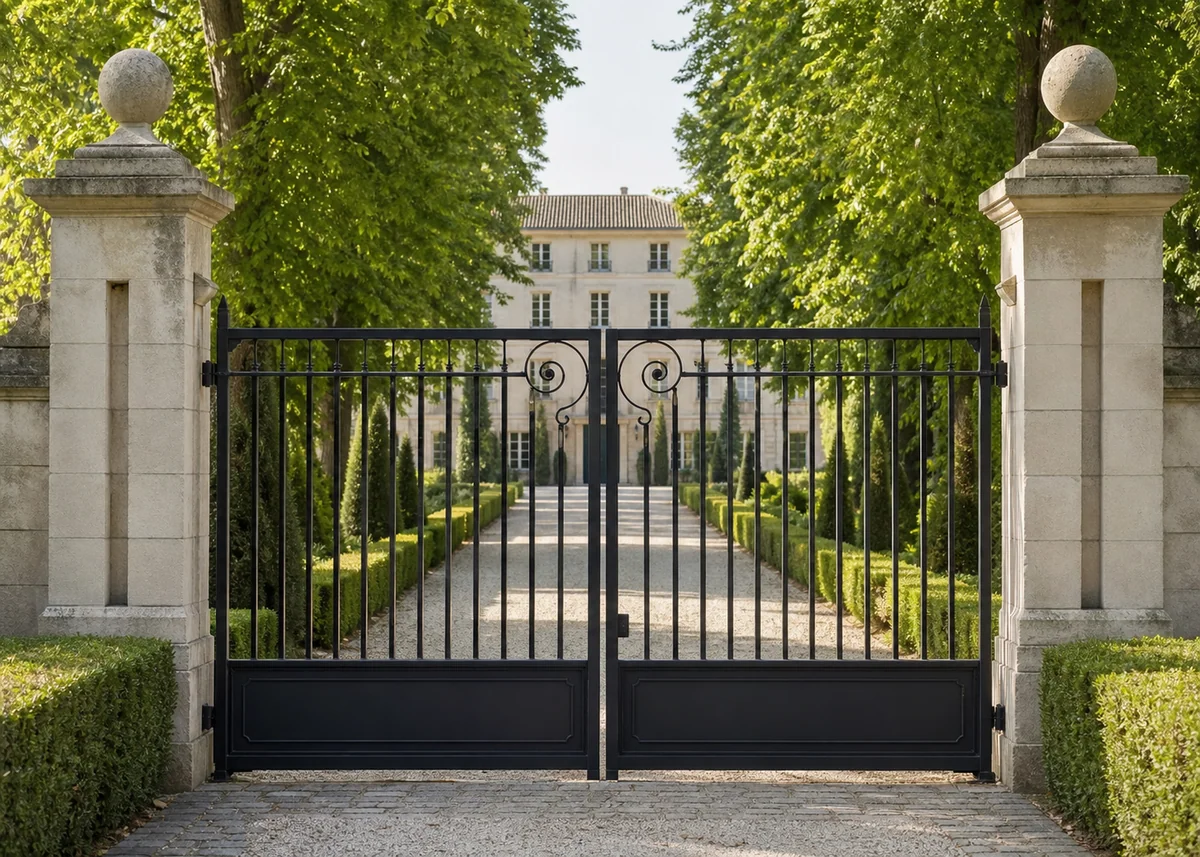
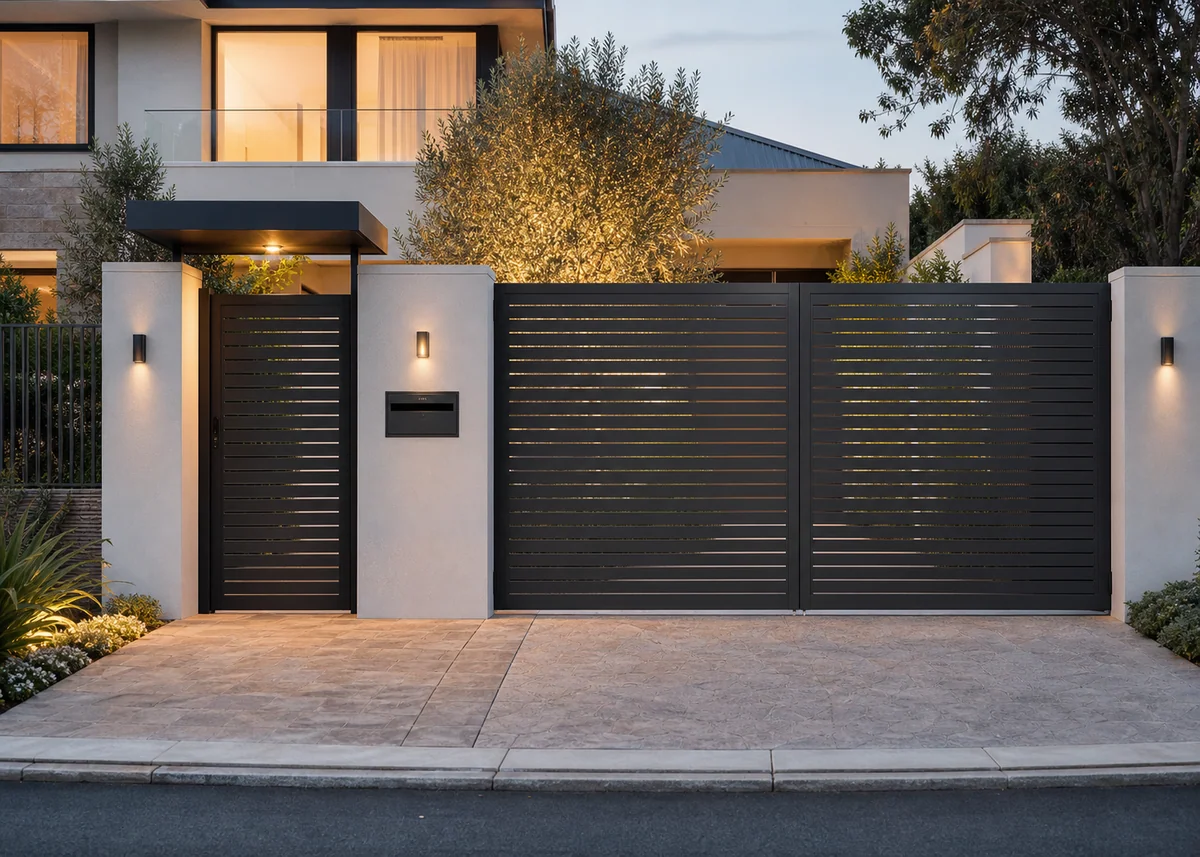
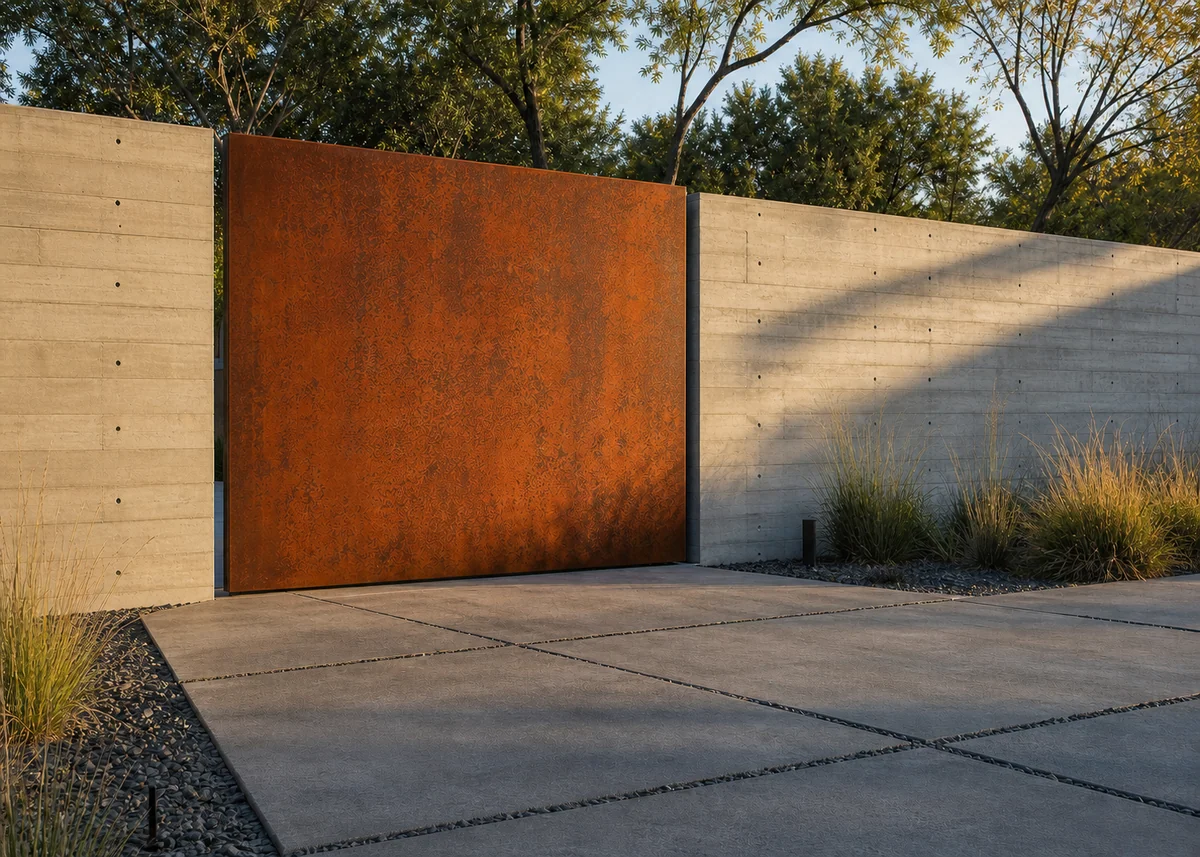
Design your own house front gate front
Describe your plot, materials and style — our AI turns it into a photorealistic concept in seconds.
Gate Format: Swing, Slide or Fold
Format follows the driveway. Swing gates — single or double leaf — are the classic, cheapest to build and most gracious in operation, but need clear arc space and level ground. Sliding gates suit sloped drives, short forecourts and wide openings, running on a floor track or cantilevering track-free above the ground. Folding (bi-fold) gates compress the swing arc for tight urban plots and open fast for daily traffic.
Plan the pedestrian entry separately: a wicket gate beside the main gate — or a framed pedestrian door within one leaf — keeps daily foot traffic from cycling the big leaves, saves automation wear, and lets the main gate stay closed and composed. It's the single most under-specified element in gate design.
The Modern Slat Gate and Its Relatives
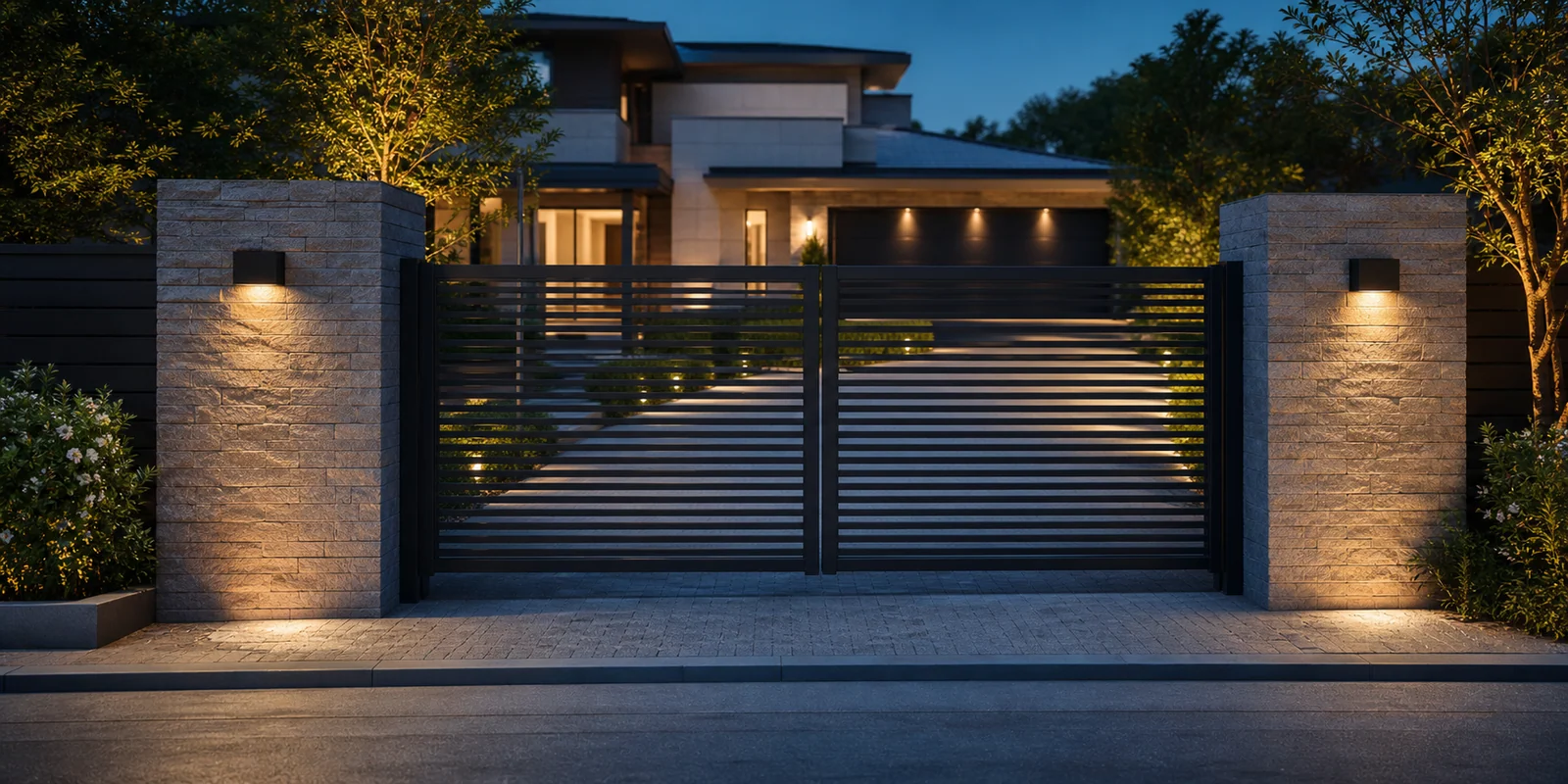
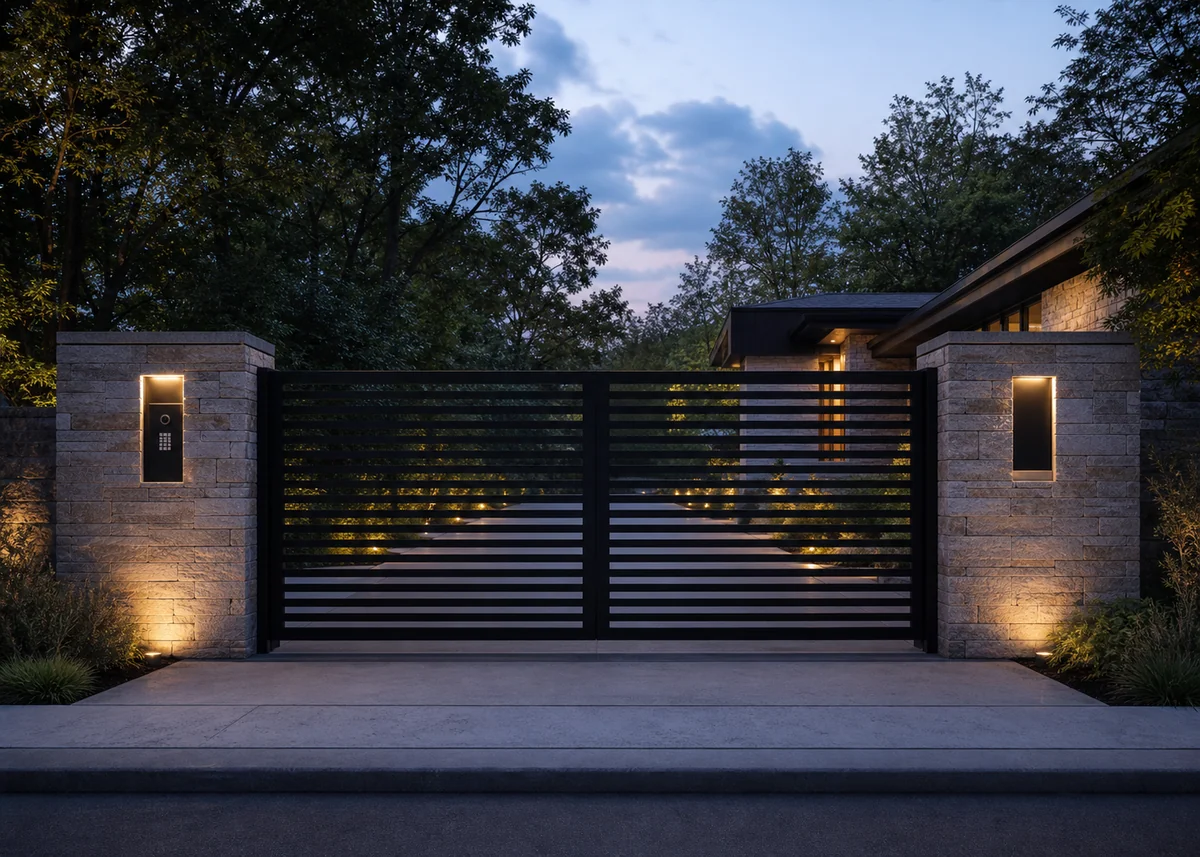
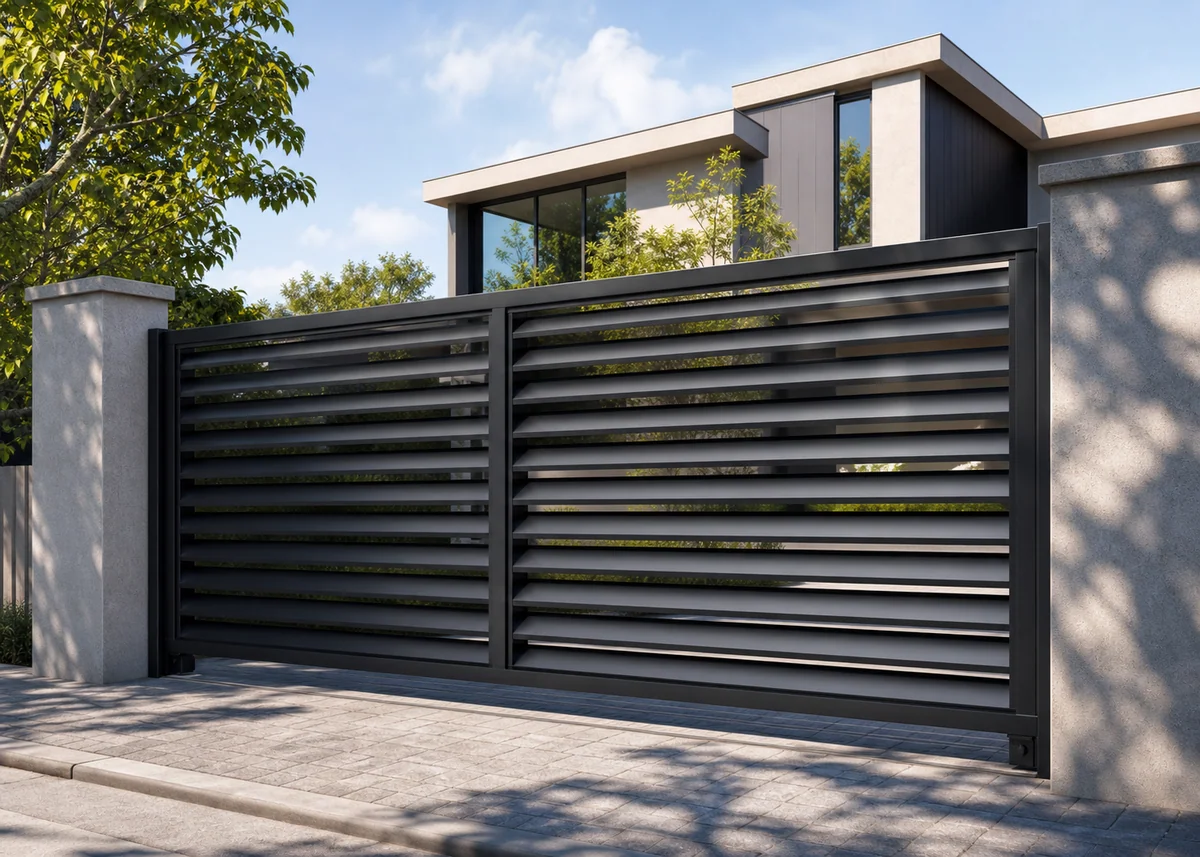
The horizontal slat gate in powder-coated steel or aluminium is the contemporary default for good reason: it matches modern window frames, scales from modest to grand, ventilates while screening, and automates cleanly. Vary slat width and gap to tune privacy — tight 20mm gaps read solid at an angle while passing breeze and glimpses straight on.
Its relatives extend the family: vertical baluster gates for a crisper, more formal rhythm; louvre-bladed gates angling vision away from the street; and mixed compositions where a solid panel carries the number and letterbox beside a slatted field. Keep the metal finish identical to the house's frames and railings — matte black, graphite or bronze — for the unified look.
Laser-Cut, Timber and Statement Gates
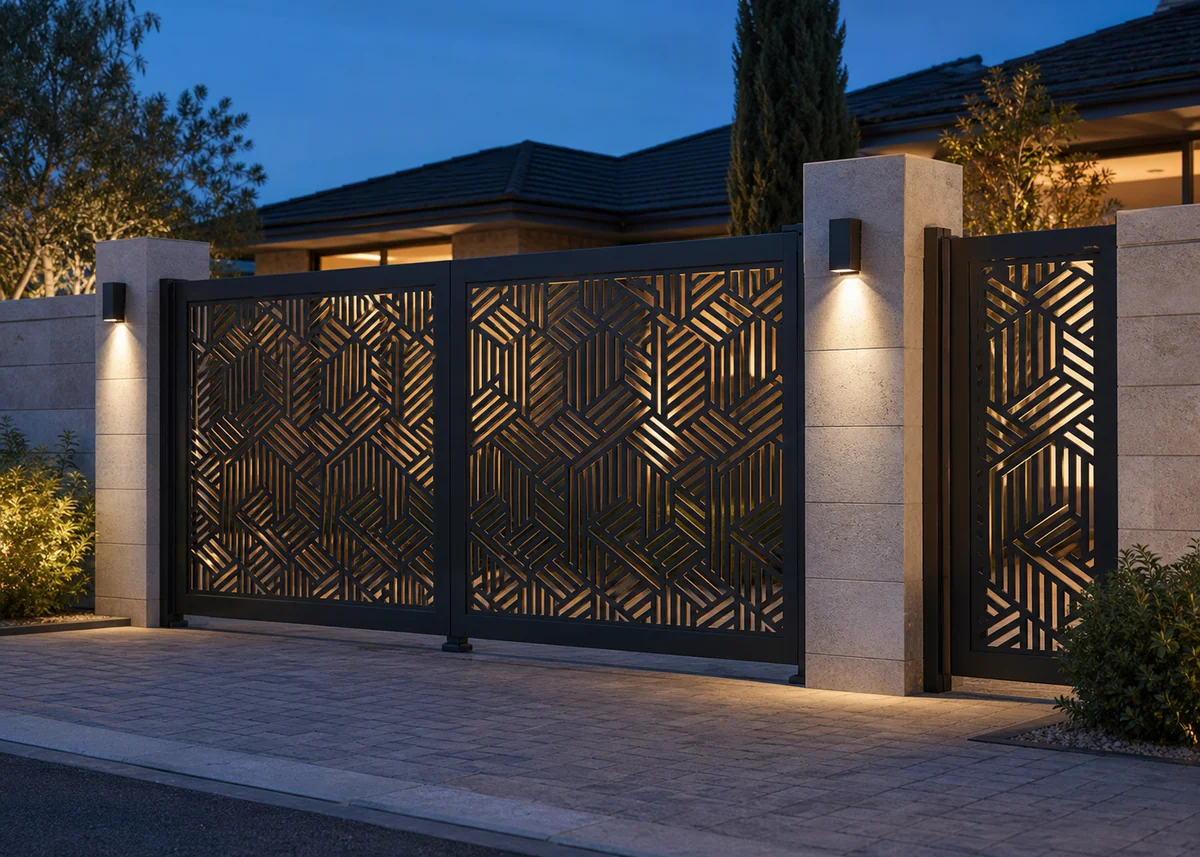
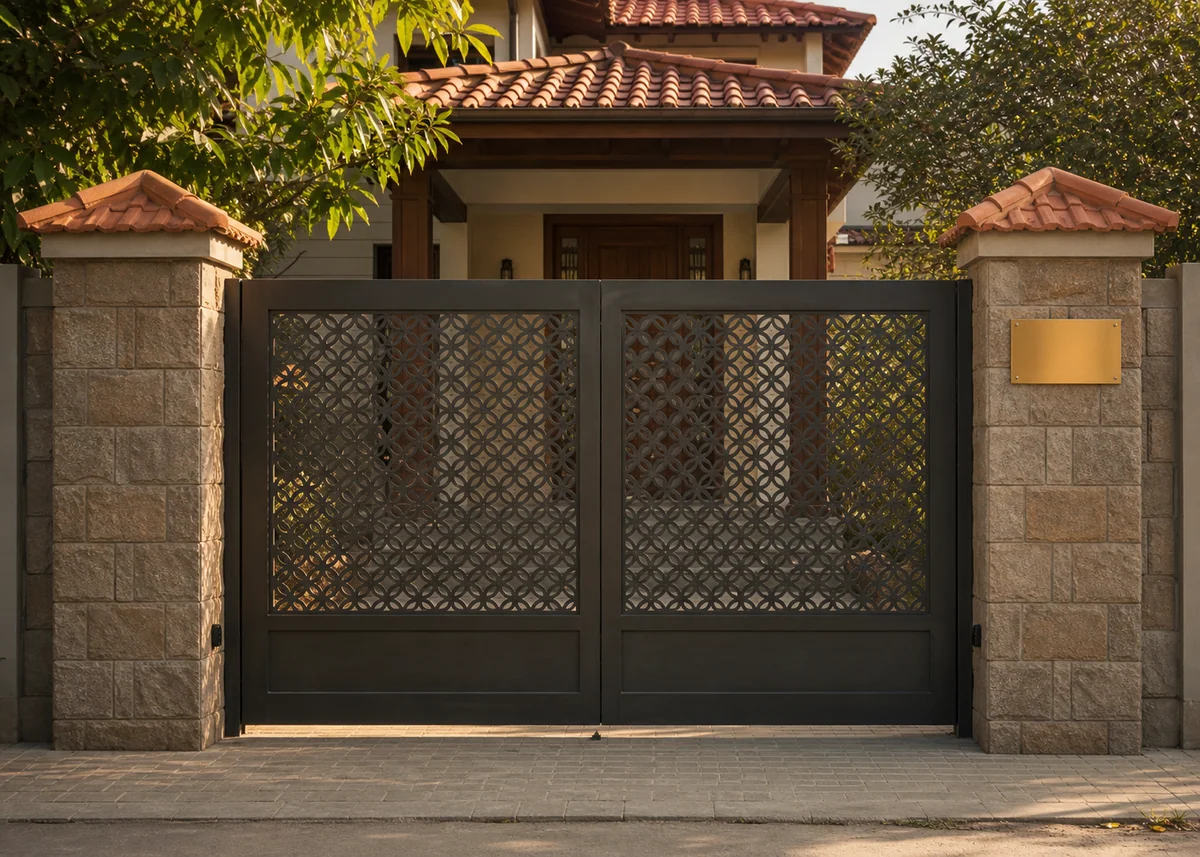
Laser-cut gates turn steel sheet into pattern — geometric lattices, leaf motifs, traditional jaali adaptations — and glow spectacularly when backlit. Use pattern with discipline: one patterned leaf or panel against calm slatted or solid company, and a pattern scale bold enough to read from across the street rather than fussy filigree.
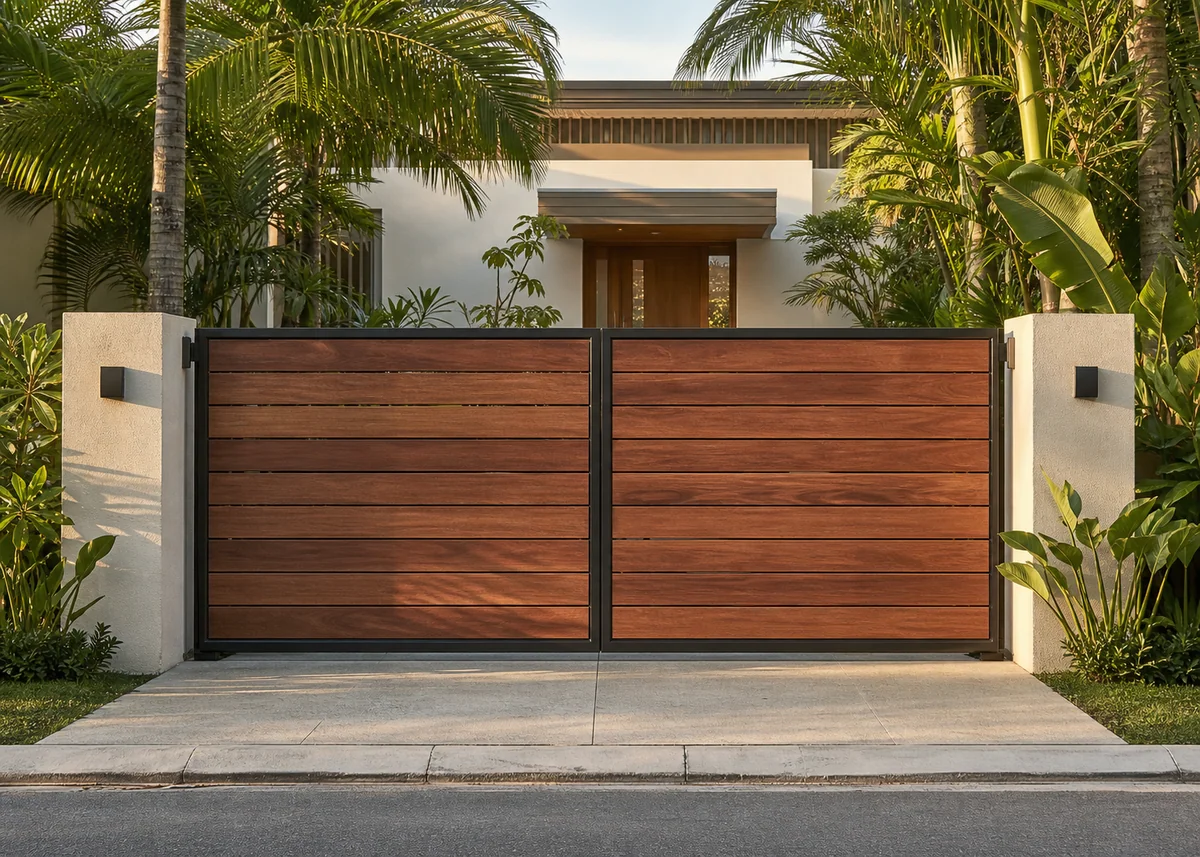
Timber gates bring the warmth metal can't: hardwood boards behind a steel frame (the honest hybrid that keeps geometry true), horizontal or chevron layouts, and oil finishes that age to silver or stay nourished brown. For statement entrances, oversized pivot gates, corten steel leaves with living rust patina, and glass-and-steel compositions announce contemporary confidence — at prices to match.
Piers, Hardware and the Frame Around the Gate
A gate is only as good as its frame. Piers in stone cladding or crisp render — 350 to 450mm square minimum for visual substance — carry the leaves, the intercom, the number and the light. Align pier caps with the wall coping, and size piers up when the gate is tall or the leaves heavy; skinny piers under a grand gate read exactly as wrong as they are.
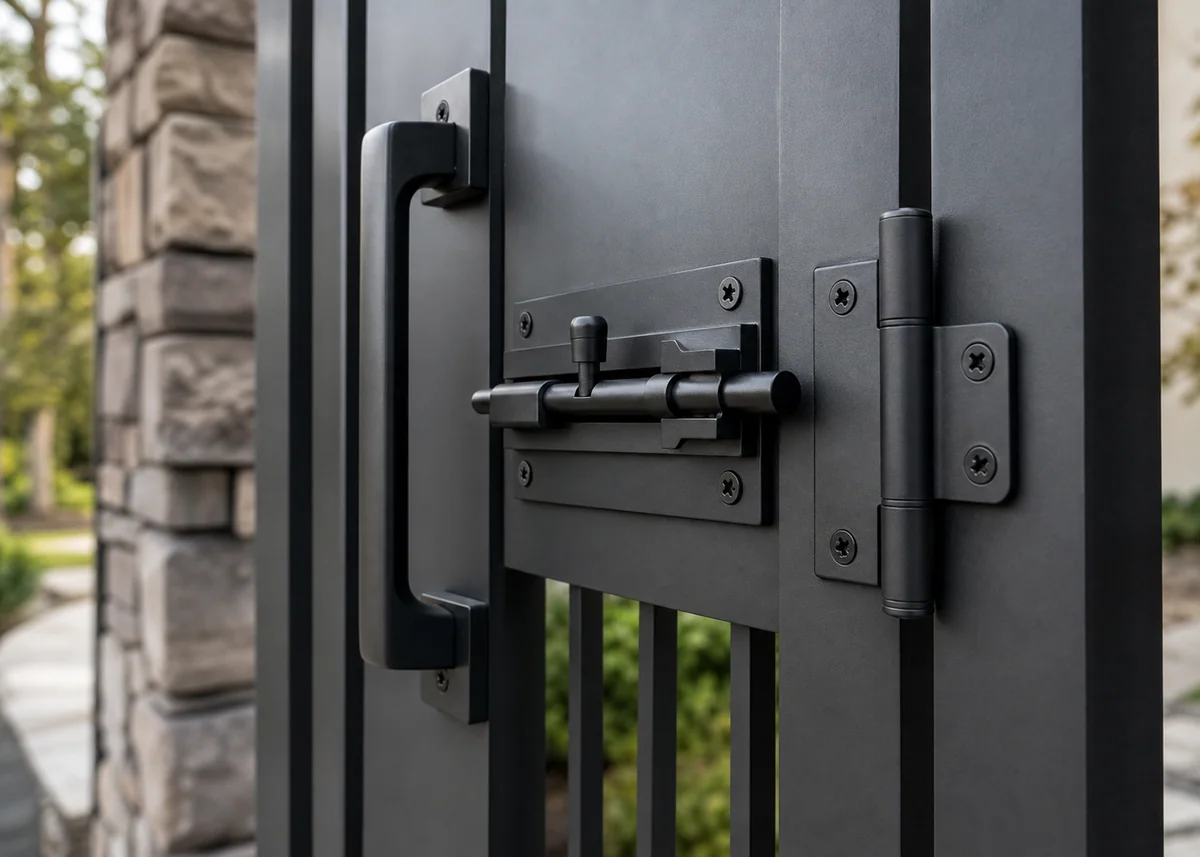
Hardware is the tactile interview: a substantial pull or lever in the gate's finish metal, a slide bolt that moves like machinery rather than rattling, concealed hinges or clean pivot plates, and a latch that closes with one confident click. Budget gates with excellent hardware outperform expensive gates with tinny fittings every single day.
Automation, Access and Security
Automation has become standard sense: swing arms or underground motors for swing gates, rack-driven motors for sliders, all with obstacle detection, manual release for power cuts, and weather-rated enclosures. Specify soft start/stop — the slow, quiet glide is half the luxury impression — and a motor duty cycle matched to your household's real traffic.
Access control layers convenience over security: video intercom at the pedestrian pier, keypad or fob for family, app control for gates you can watch remotely, and a letter/parcel solution that doesn't require opening anything. Lighting doubles as security's cheapest layer — a lit gate zone with a camera-visible approach deters more reliably than spikes.
Gate + Wall + House: The Complete Frontage
Design the gate last, not first: it inherits its palette from the house (frame metal, timber tone, accent colour) and its proportions from the wall (heights, pier rhythm, coping line). A gate chosen from a catalogue in isolation is why so many frontages feel assembled from parts — the gate should feel inevitable, not selected.
Complete the composition at night: a downlight or strip washing the gate face, the number lit legibly for visitors and deliveries, and a warm glow through slats or pattern from a light inside the boundary. First and last impressions of the home happen at this exact spot in darkness half the year — design for it deliberately.
Frequently Asked Questions
Which gate design is best for a modern house?+
A horizontal slat gate in powder-coated steel or aluminium, finish-matched to the window frames, on stone or crisply rendered piers. Tune slat gaps for privacy, add a matching pedestrian wicket, and light the number.
Swing or sliding gate — how do I choose?+
Swing if you have level ground and arc space: cheaper, quieter, gracious. Sliding for sloped drives, short forecourts or wide openings — cantilevered versions avoid floor tracks. Bi-fold suits tight urban plots needing fast cycles.
Is gate automation worth it?+
For daily vehicle users, yes: specify soft start/stop, obstacle detection, manual release and a duty cycle matched to real traffic. Pair with a pedestrian gate so foot traffic never cycles the motors.
What size should gate piers be?+
350–450mm square minimum for visual substance, larger for tall or heavy leaves. Align caps with the wall coping and build in the intercom, number and light rather than surface-mounting them.
How do I make the gate match the house?+
Inherit, don't select: use the house's frame metal finish, its timber tone or its accent colour; take heights and rhythm from the compound wall. The gate should feel like the facade's opening line.
What does a good main gate cost?+
Simple fabricated slat gates start modestly; laser-cut, hardwood and automated designs scale up with size and finish. Spend first on hardware and piers — a modest gate with excellent hardware outperforms the reverse.