House Front Garden Design Ideas
The front garden is the facade's living frame — the layer that makes an ordinary house look loved and a beautiful house look inevitable. House front garden design works at the intersection of architecture and horticulture: paths and walls set the structure, planting provides the seasons, and together they choreograph everyone's walk from street to door.
This guide covers front yard design from structure to softness: layout principles and path-making, layered planting formulas anyone can follow, the case for and against lawns, tree selection for every frontage size, low-maintenance and dry-climate schemes, and the lighting that lets the garden work its second shift after dark.
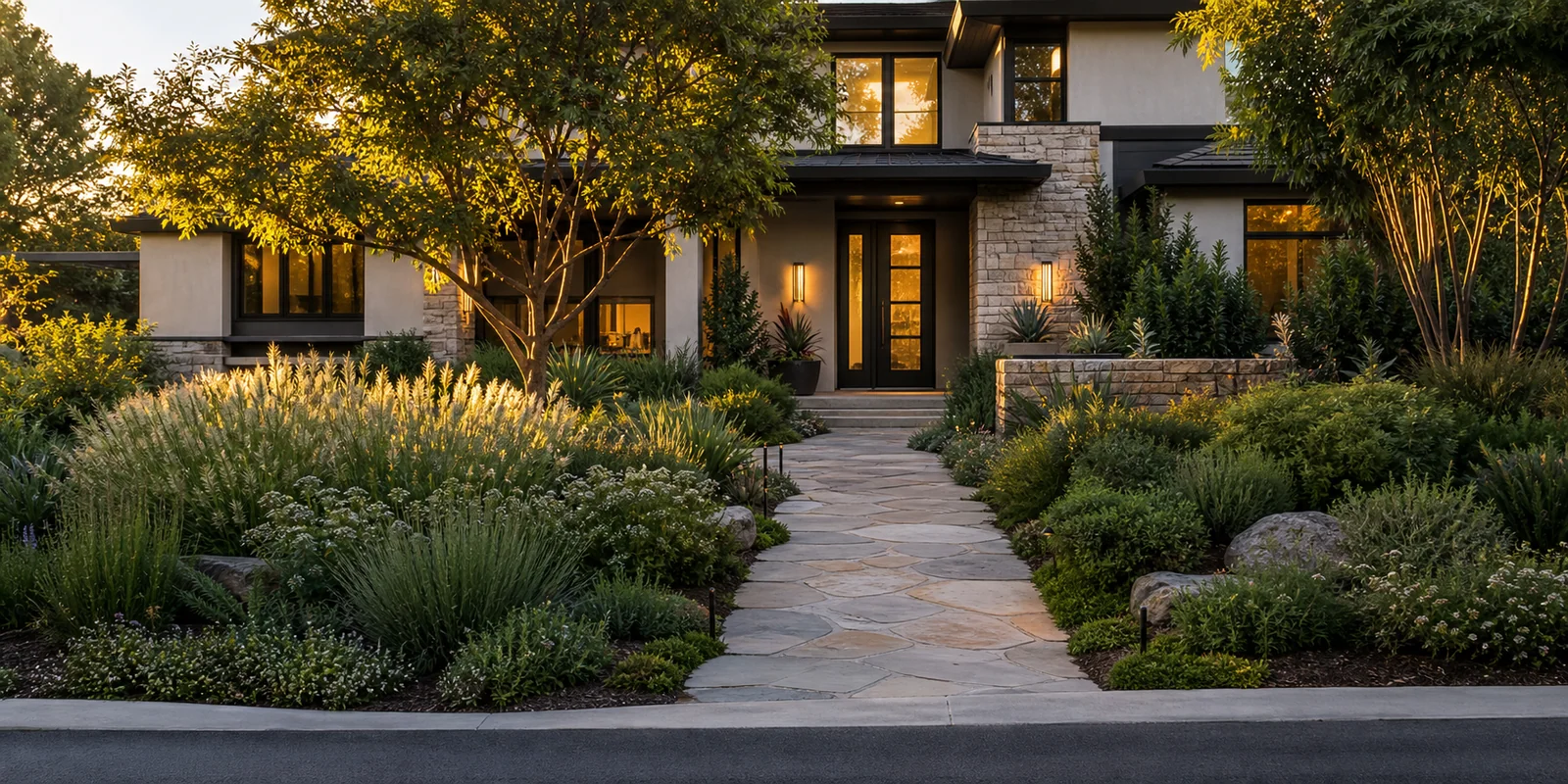
House Front Garden Design Gallery
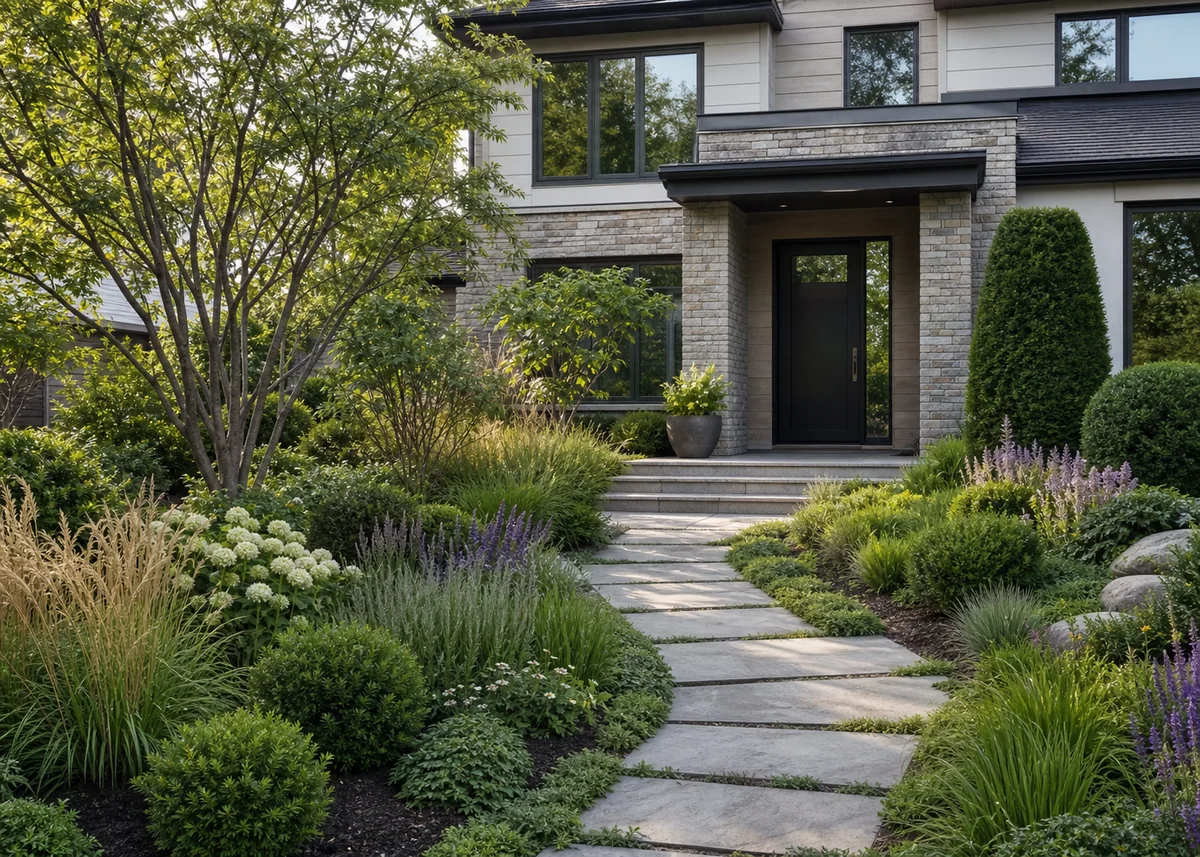
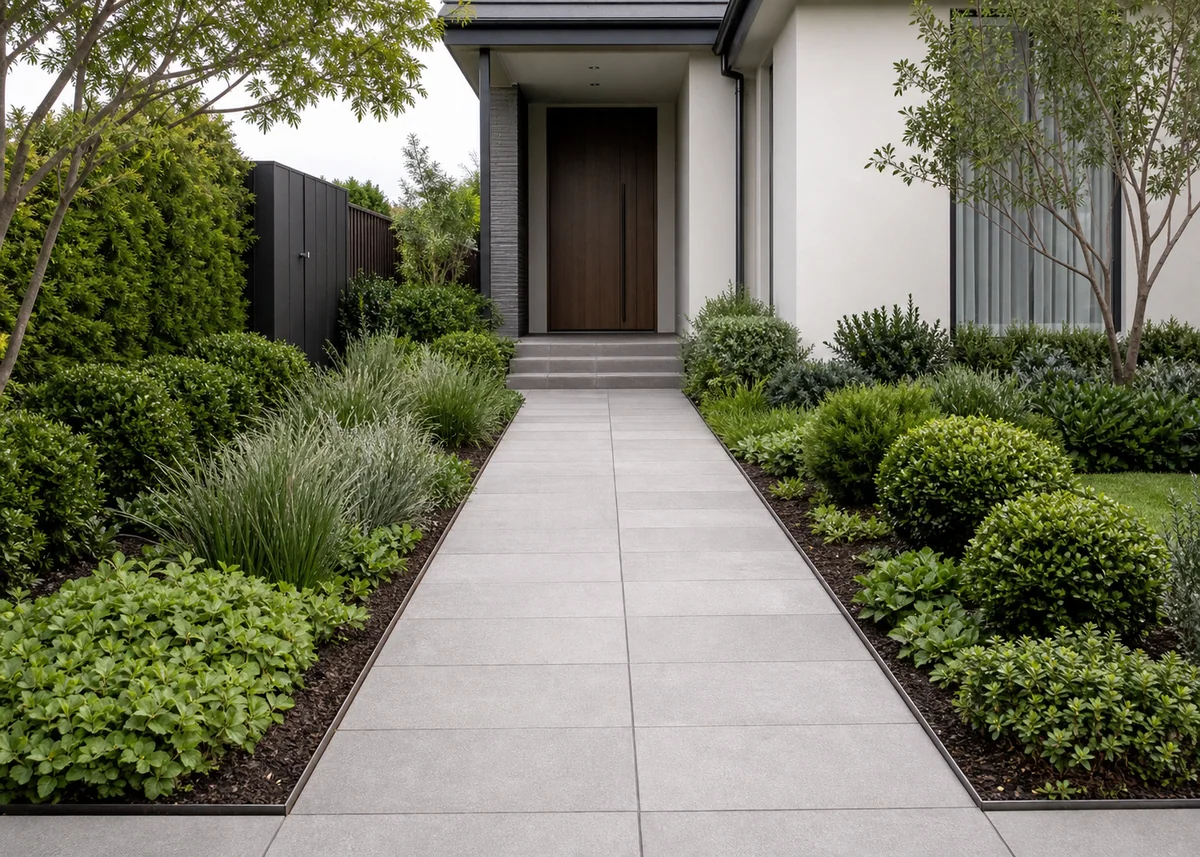
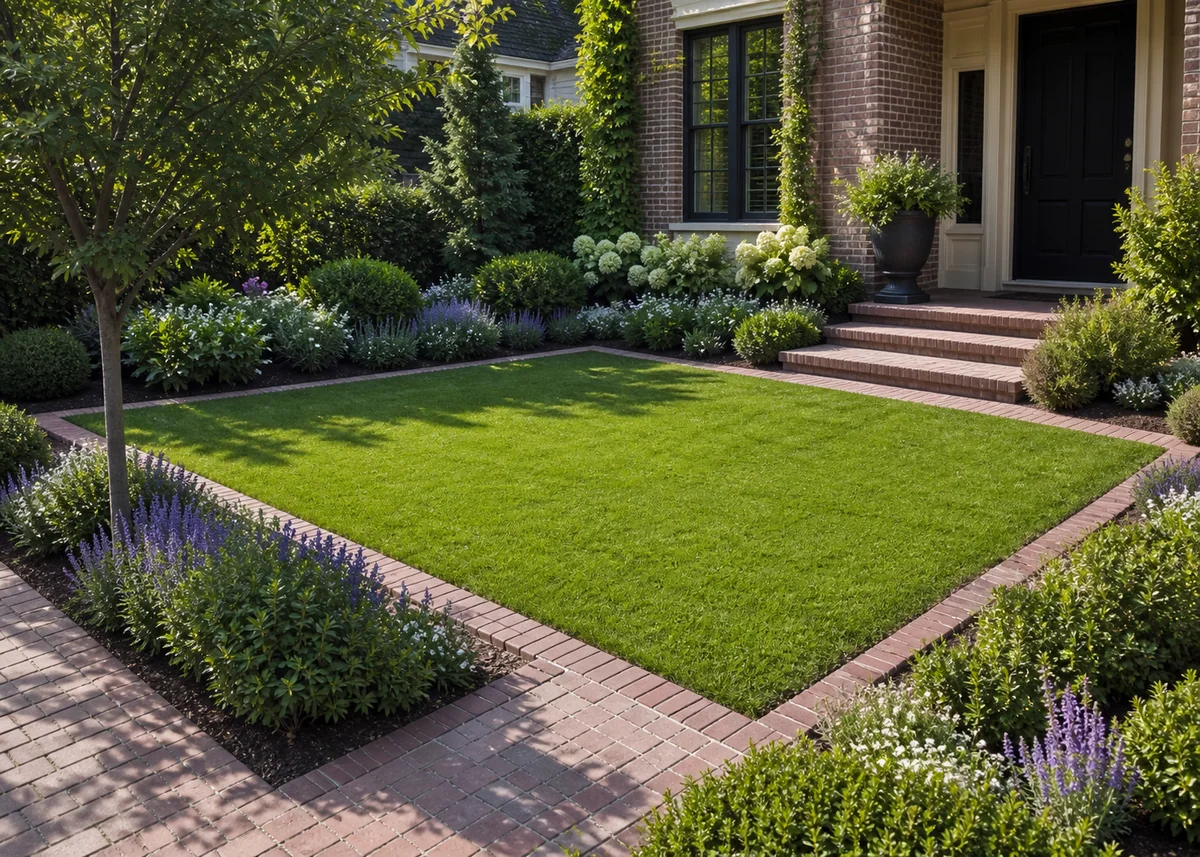
Every image below is a unique AI-created design concept. Love one? Use its caption as a starting prompt in our free AI generator and make it yours.
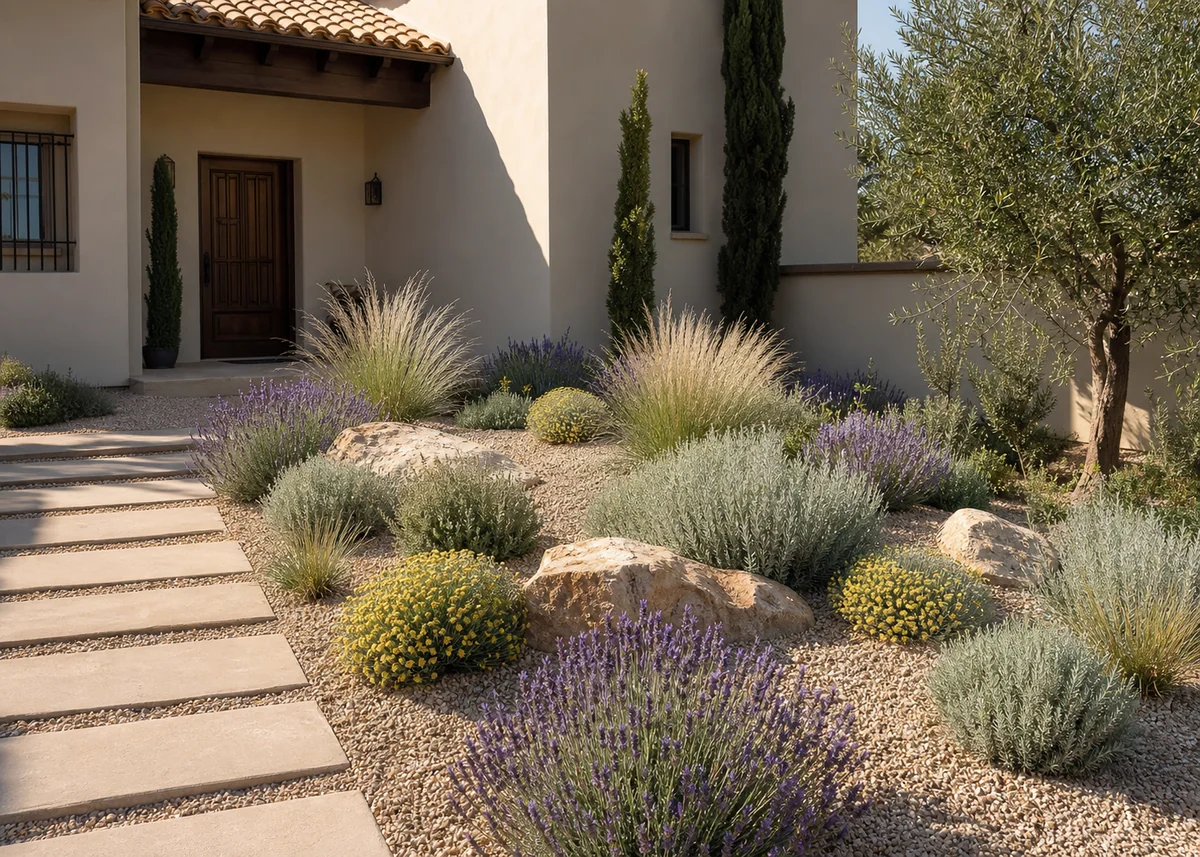
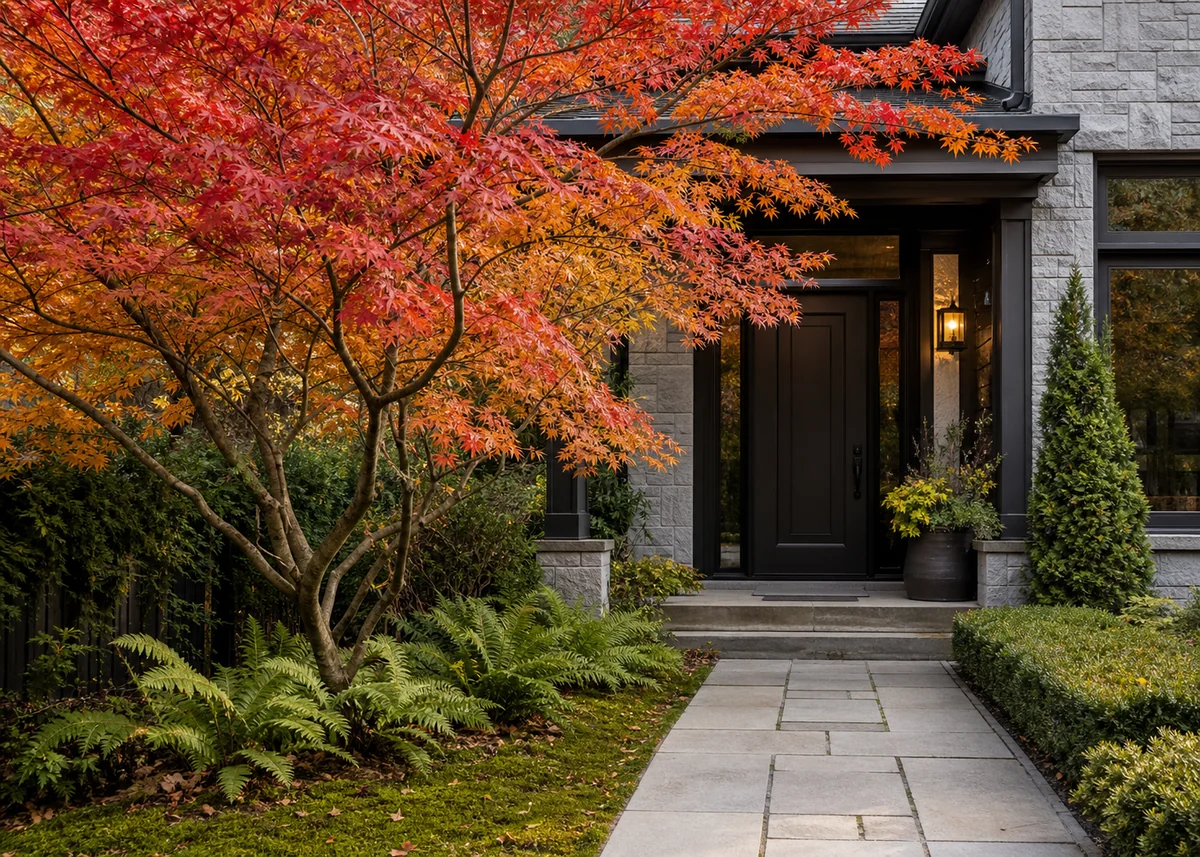
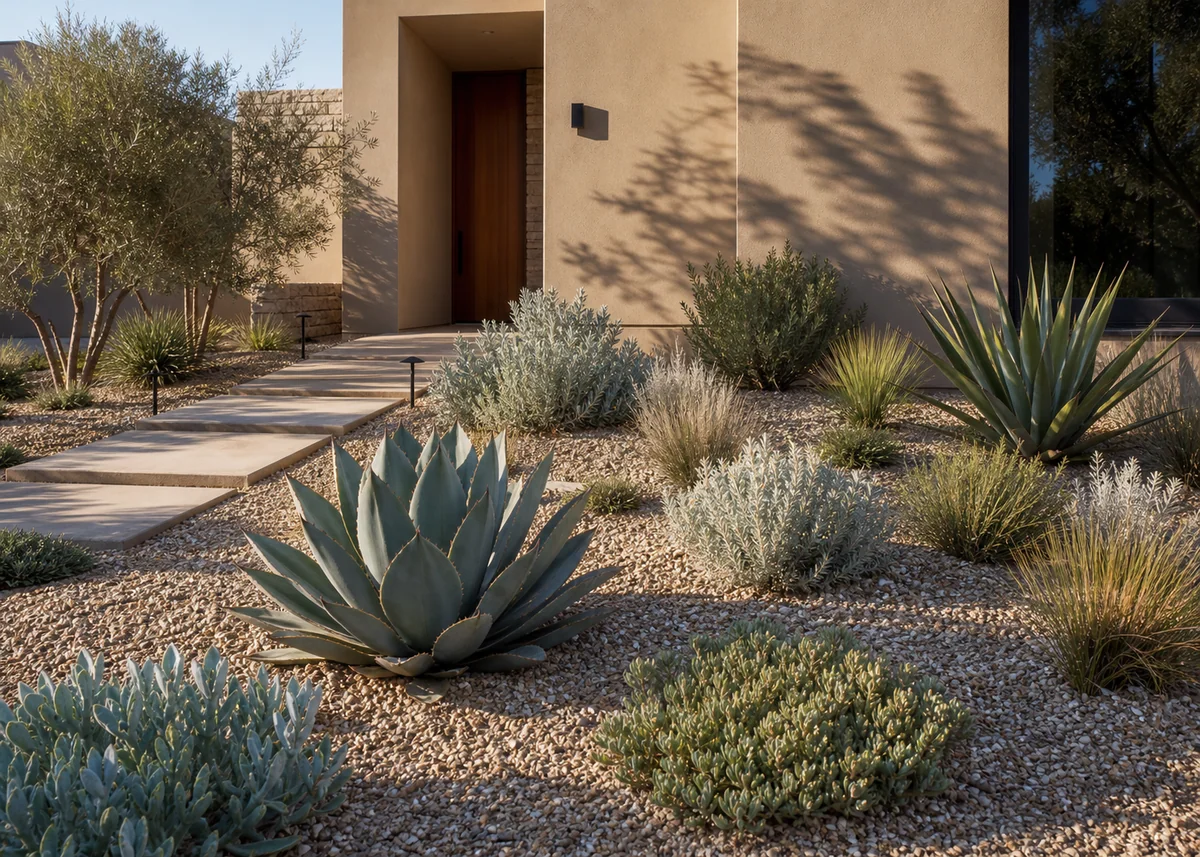
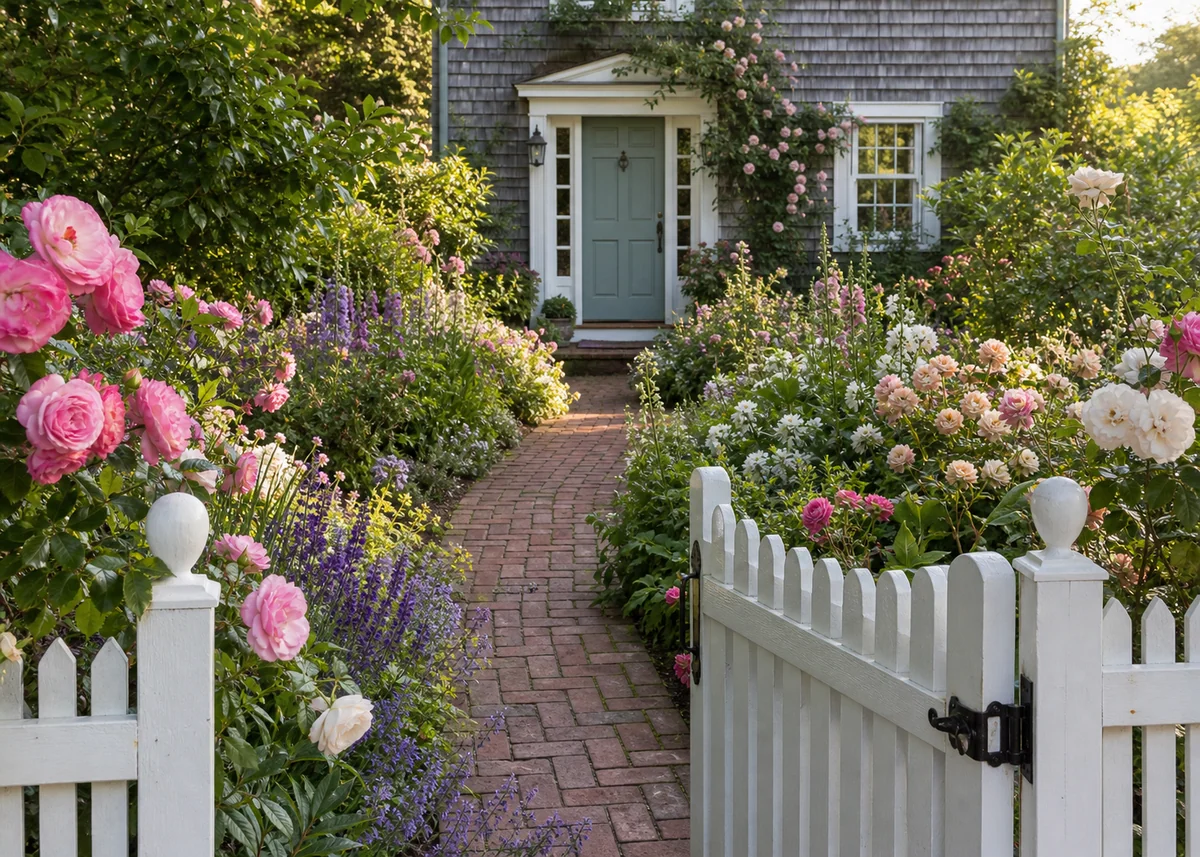
Design your own house front garden front
Describe your plot, materials and style — our AI turns it into a photorealistic concept in seconds.
Structure First: Paths, Edges and Rooms
Great front gardens are built on bones: a generous primary path (1.2m wide minimum) taking the shortest dignified line from gate to door, clean edges (steel, brick or stone) separating bed from lawn from gravel, and low walls or hedges dividing the frontage into simple 'rooms' — arrival, green frame, utility. Structure reads instantly even when planting is young or seasonal.
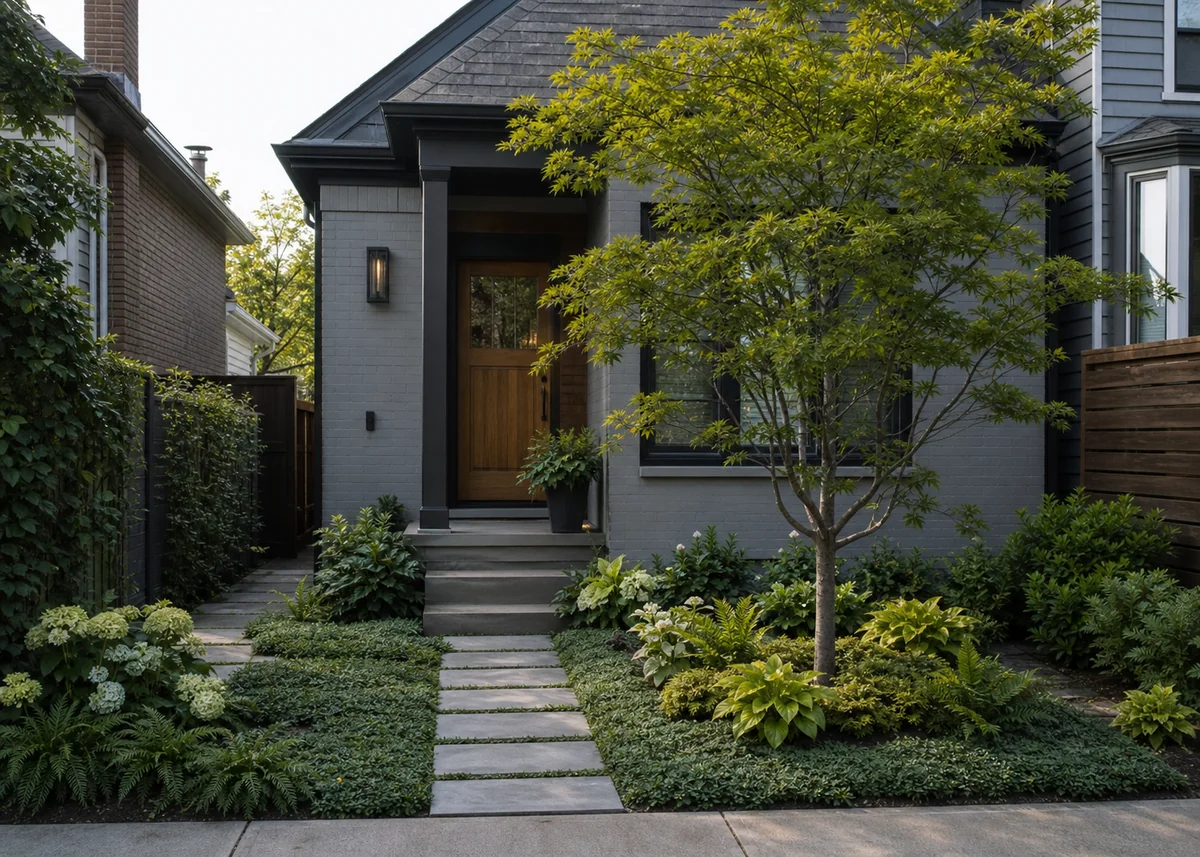
Match path materials to the architecture: large-format concrete or stone pavers for modern homes, brick or cobbles for traditional ones, decomposed granite for relaxed and Mediterranean styles. One primary material, one accent, laid with real edges — a wandering strip of odd steppers reads as indecision underfoot.
The Layered Planting Formula
Layering makes gardens look professionally designed: canopy (one ornamental tree), structure (evergreen shrubs and clipped forms holding winter shape), infill (perennials and grasses providing seasonal colour and movement), and ground (low spreaders and mulch suppressing weeds). Plant in odd-numbered drifts of each species rather than singles — repetition reads as intention.
Choose a restricted palette: five to eight species total for a small frontage, with 60% evergreen structure so the garden never collapses in the off season. Repeat the same species in at least two places — the same discipline that governs facade materials governs planting.
Lawn, Less Lawn or No Lawn
A small, sharply edged lawn still earns its place as a calm green plane that sets off planting — if the climate waters it reasonably and someone enjoys mowing it. Design lawns as deliberate shapes (rectangle, circle, generous curve), never as leftover space between beds; the edge is what makes lawn look intentional.
Lawn-free frontages have come of age: gravel gardens with Mediterranean drifts, groundcover meadows (dichondra, thyme, native mixes), and layered shrub-and-grass compositions cut water and mowing while looking richer through the year. Convert in stages — path and beds first, remove turf last — and the change feels like a redesign rather than a loss.
Choosing the Front Tree
One right tree does more for a facade than any other purchase: scale to the house (small ornamentals — crepe myrtle, Japanese maple, dogwood — for single-storey fronts; mid-size canopy — ornamental pear, jacaranda, frangipani — for two-storey), placed off-centre to frame rather than block the elevation, clear of foundations and services.
Think in seasons and silhouettes: blossom or foliage colour for spring and autumn interest, branch structure that looks sculptural bare, and canopy that shades the west glazing in summer. Plant the largest healthy specimen the budget allows — the front tree is the one place where waiting years for effect genuinely costs kerb appeal.
Low-Maintenance and Dry-Climate Schemes
Low maintenance is designed, not hoped for: 75mm of mulch on every bed, drip irrigation on a tap timer, dense planting that closes ranks against weeds, and species chosen for the site's actual sun and soil rather than the nursery's display. A well-designed low-care frontage needs a seasonal tidy, not a weekly shift.
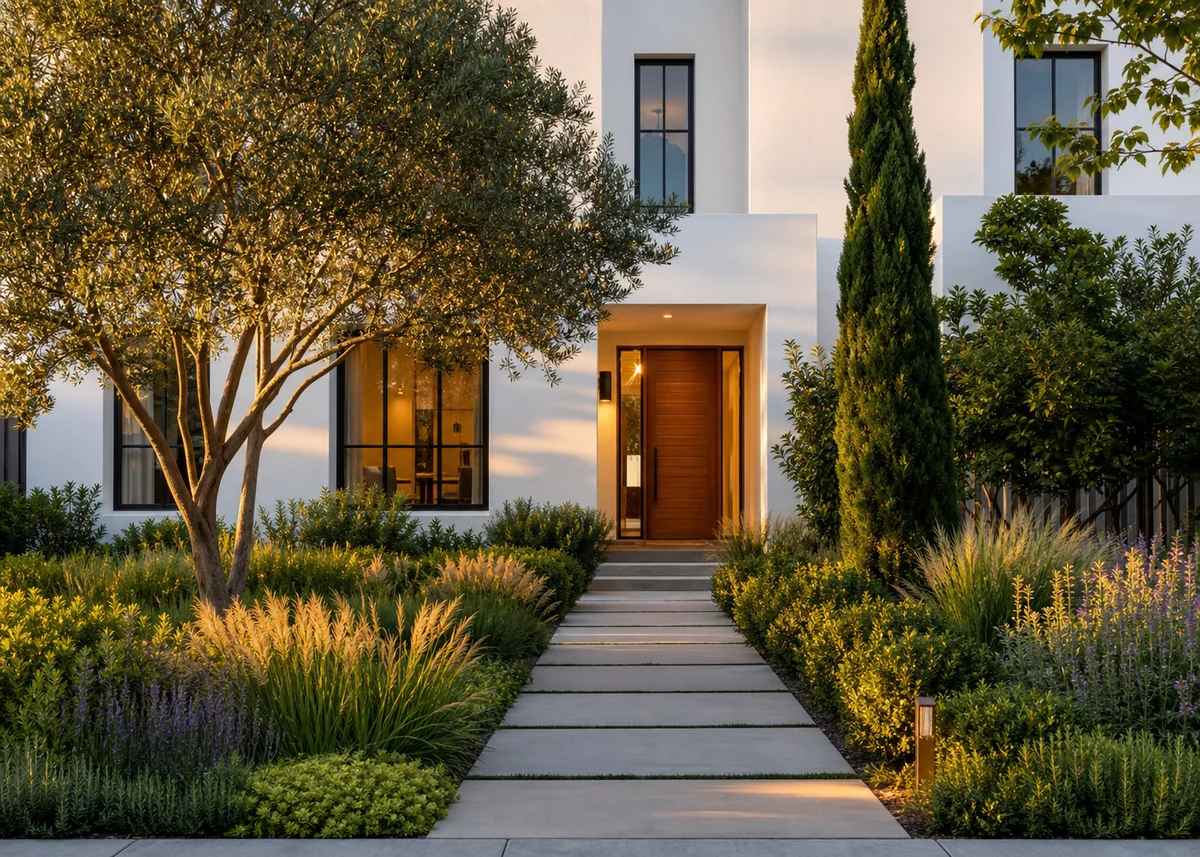
Dry-climate palettes are design opportunities: silver and sage foliage (lavender, westringia, santolina), sculptural succulents and agaves as living ornaments, ornamental grasses for movement, over gravel mulch with stone accents. The water-wise front garden, done with structure and repetition, out-styles the thirsty lawn it replaced.
Garden Lighting and the Evening Frontage
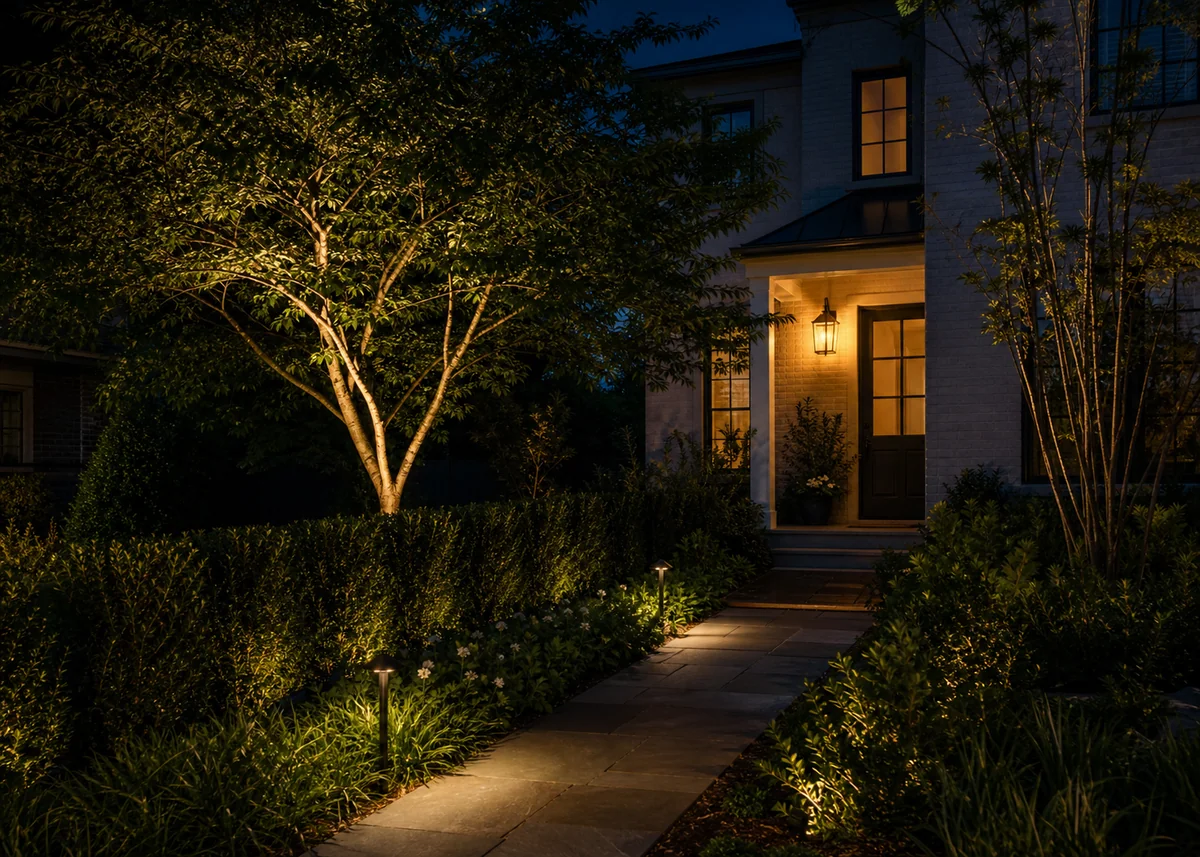
Garden lighting extends the frontage into its second shift: two or three path lights (knee height, glare-shielded) marking the walk, one uplight in the front tree — the single highest-impact fitting in landscape lighting — a soft wash on a feature wall or hedge, and the porch light warm at the destination. Fewer, better-placed fittings always beat catalogues of many.
Keep the system honest: warm colour temperature matching the house lighting (2700–3000K), fixtures aimed to light plants and path rather than eyes, everything on a dusk timer or photocell. The goal from the street: a softly glowing garden framing a welcoming door — the entire design summarised in one evening glance.
Frequently Asked Questions
How do I design a front garden that suits my house?+
Structure first: a 1.2m path in a material matching the architecture, clean edges, then layered planting (tree, evergreen structure, seasonal infill, groundcover) in a palette of five to eight species with 60% evergreen.
Should I keep the front lawn?+
Keep it if it's small, sharply edged and genuinely enjoyed; otherwise gravel gardens, groundcover meadows and layered beds look richer with less water and mowing. Convert in stages, structure before turf removal.
What's the best tree for a front yard?+
Scaled to the house: Japanese maple, crepe myrtle or dogwood for single-storey; ornamental pear, frangipani or jacaranda for two-storey. Off-centre placement, clear of services, largest healthy specimen you can afford.
How do I make a front garden low maintenance?+
Design it in: 75mm mulch everywhere, drip irrigation on a timer, dense planting that shades out weeds, and site-matched species. Aim for a seasonal tidy rather than weekly labour.
How should a front garden be lit?+
Two or three shielded knee-height path lights, one uplight in the feature tree, a soft wash on one wall or hedge, warm porch light at the destination — all 2700–3000K on a dusk timer.
What front garden works in dry climates?+
Gravel-mulched beds with silver-sage drifts (lavender, westringia, santolina), sculptural agaves, and ornamental grasses for movement — structured with paths and repetition so water-wise reads designed, not deprived.