Simple House Front Design Ideas
A simple house front design is not a compromise — it is a discipline. The most loved streetscapes in the world are lined with modest homes whose beauty comes from good proportions, honest materials and careful maintenance rather than expensive features. Simplicity also pays practical dividends: fewer junctions to waterproof, fewer surfaces to repaint and a build cost that stays predictable.
This gallery collects simple front elevation ideas for small and mid-size homes, with an emphasis on designs that a local contractor can execute without specialist trades. Alongside the photos you will find advice on choosing a two-colour palette, getting the roofline right, and the handful of small upgrades — door, lights, house number — that lift a plain facade into a charming one.
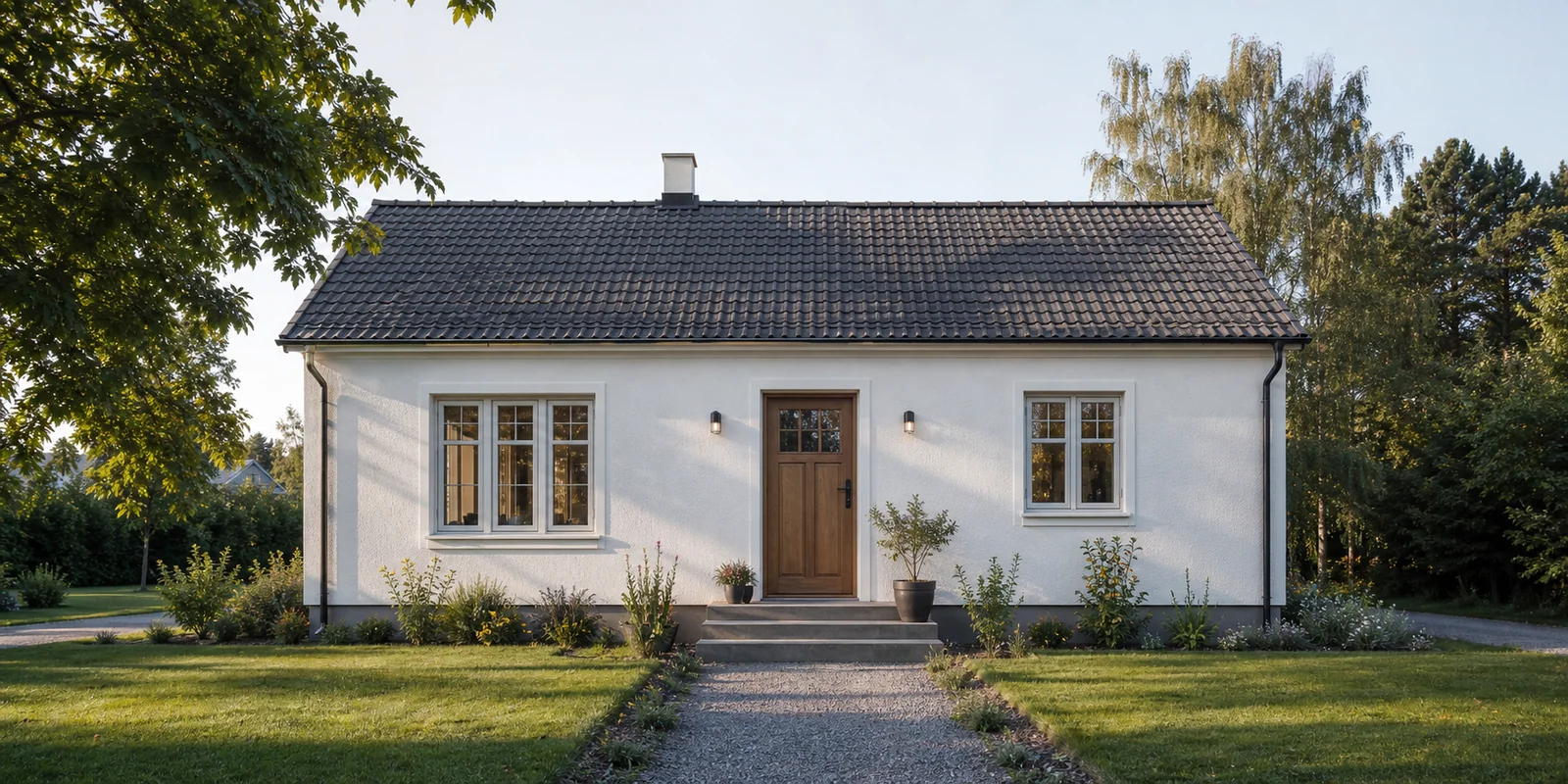
Simple House Front Design Gallery
Every image below is a unique AI-created design concept. Love one? Use its caption as a starting prompt in our free AI generator and make it yours.
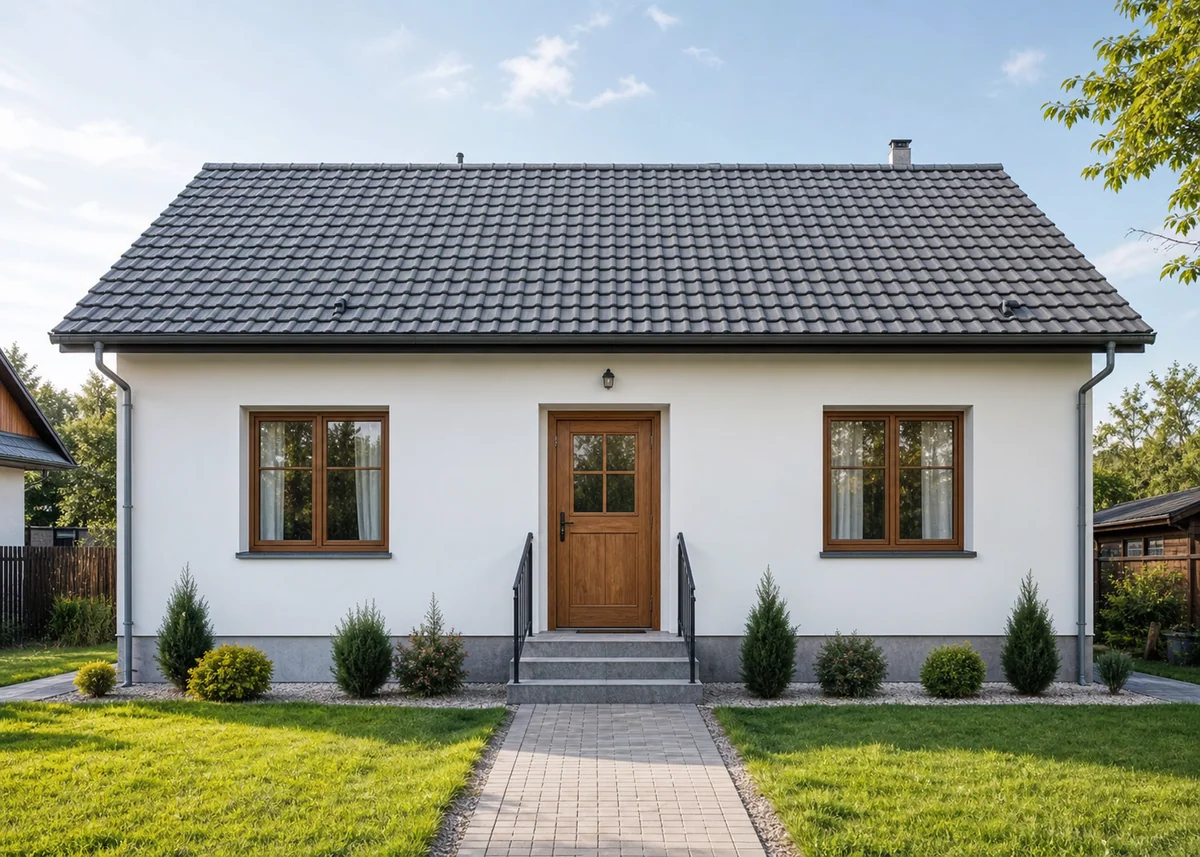
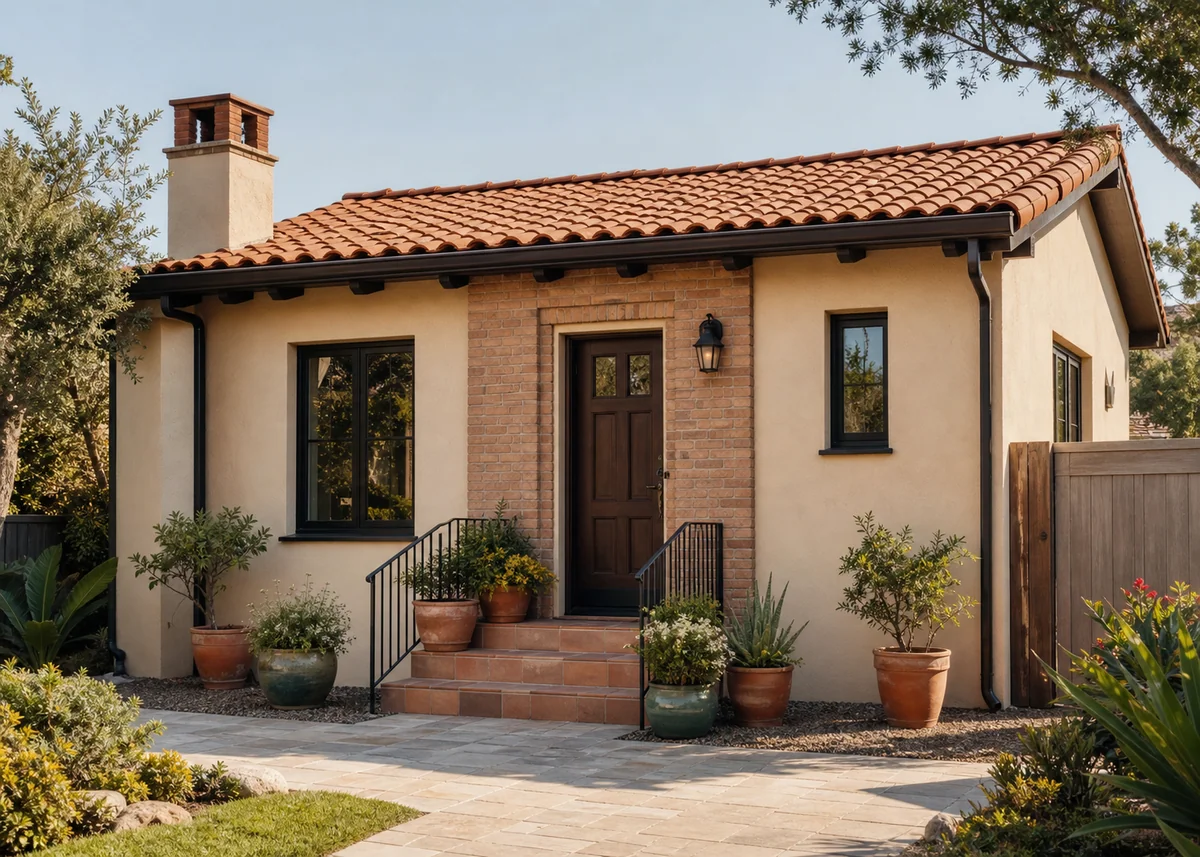
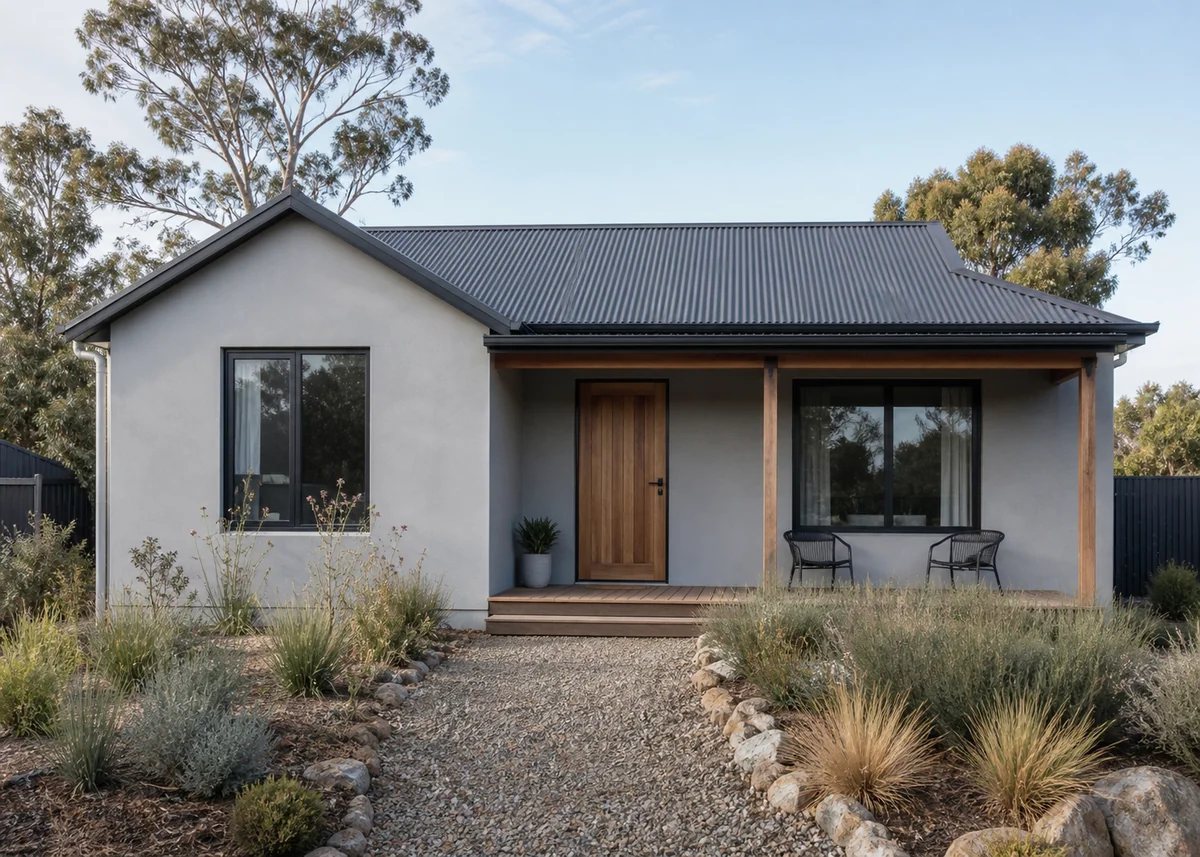
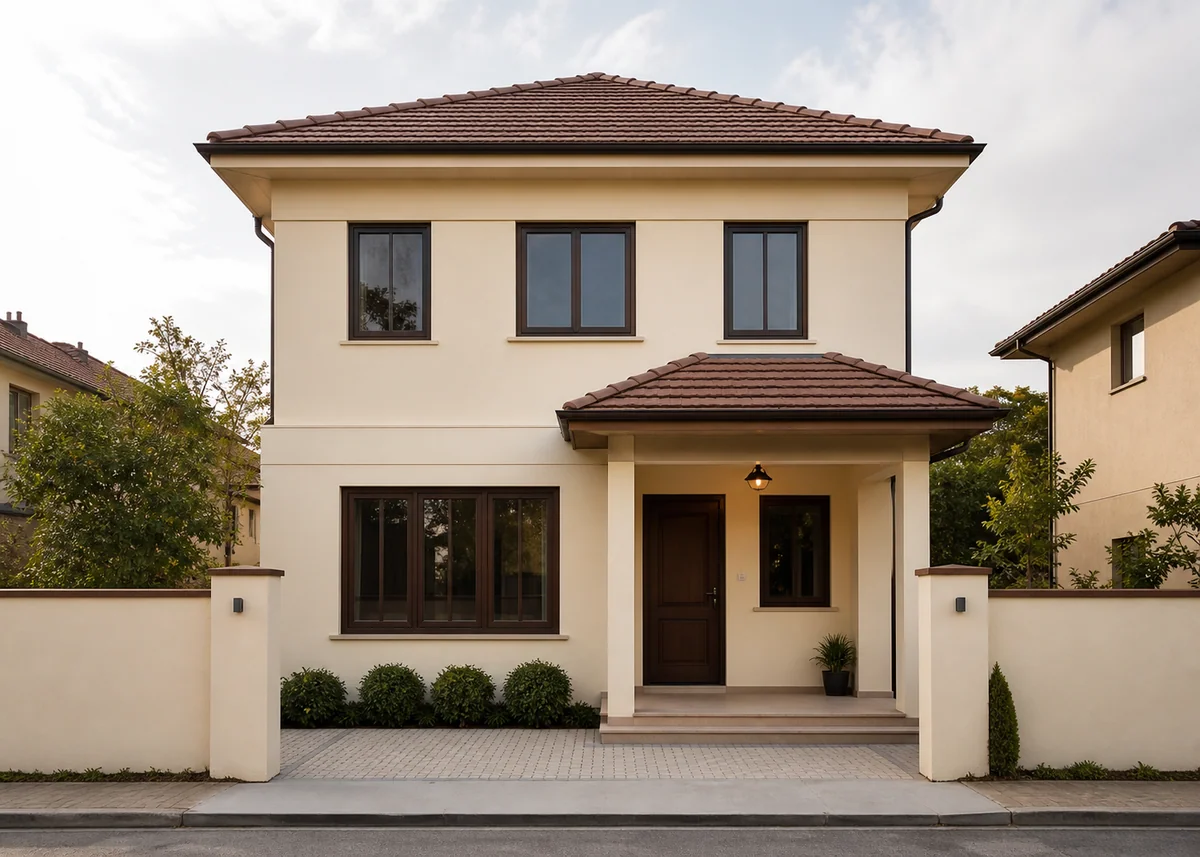
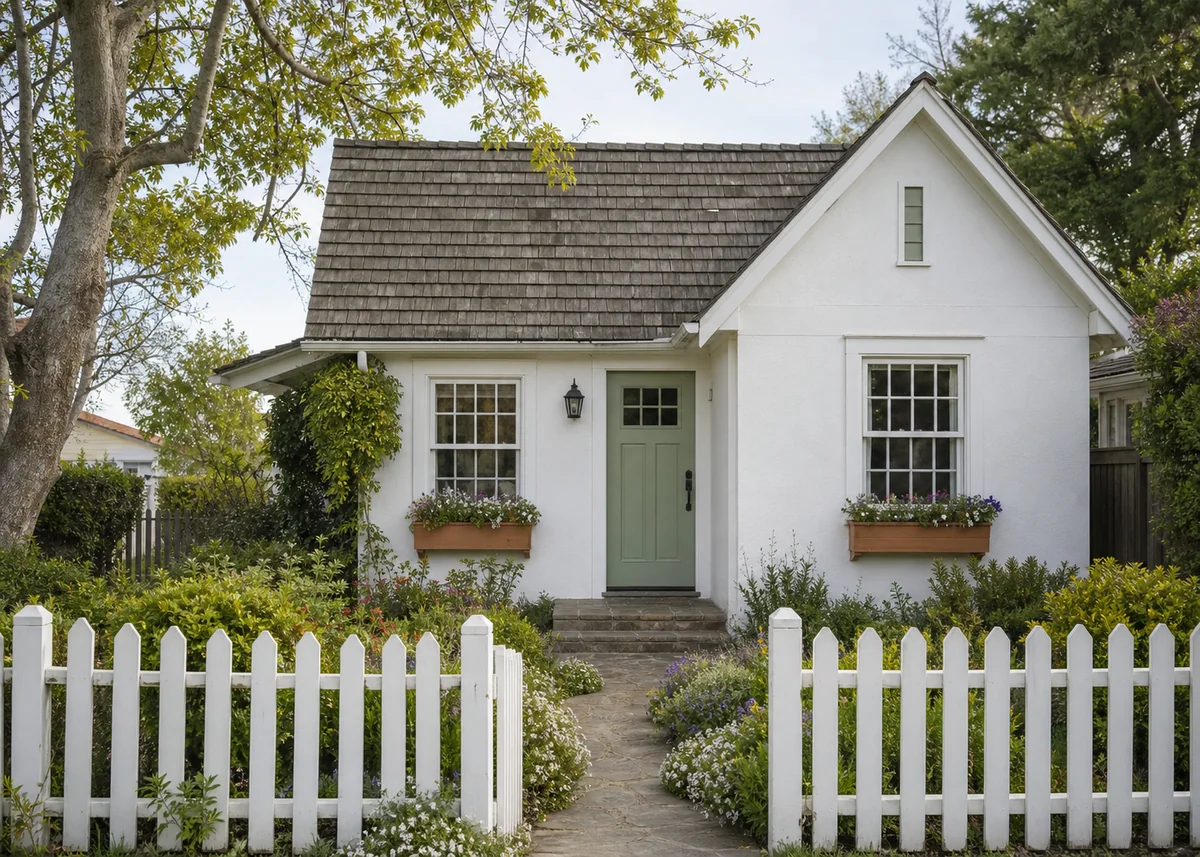
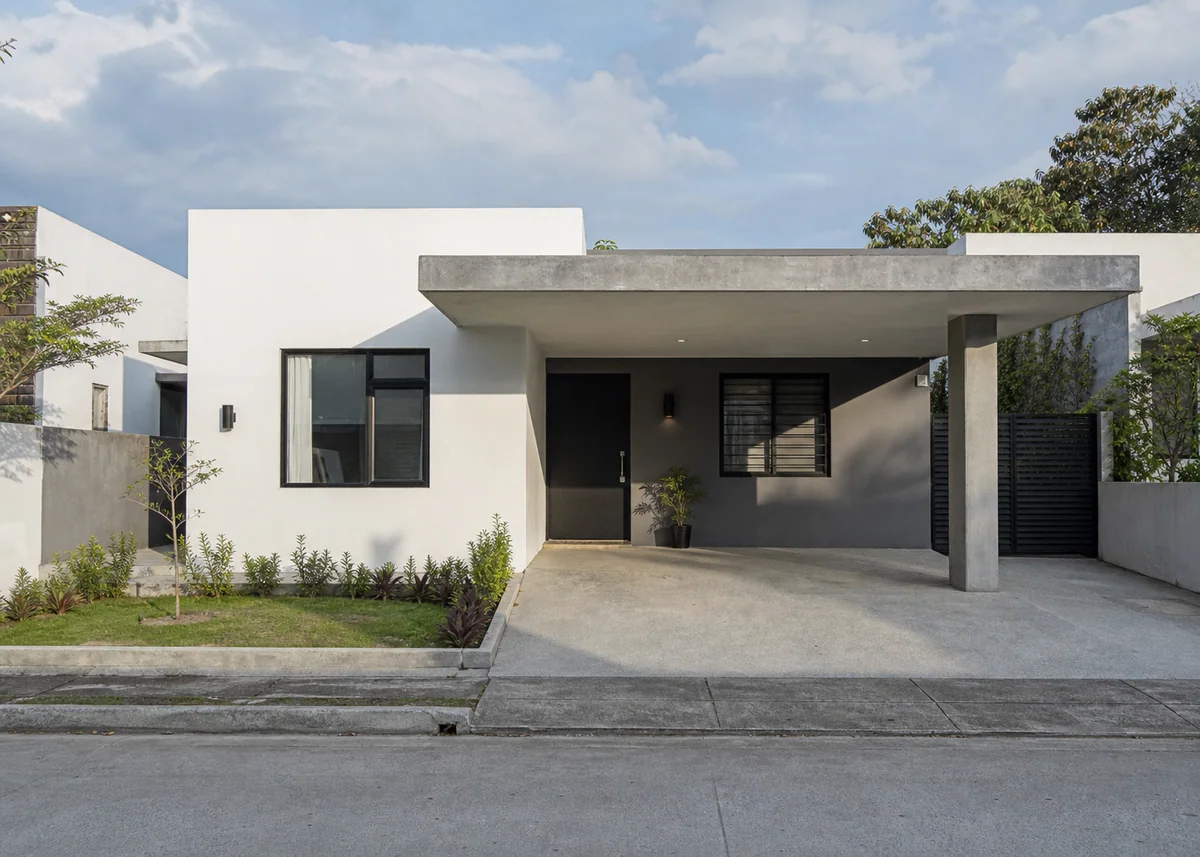
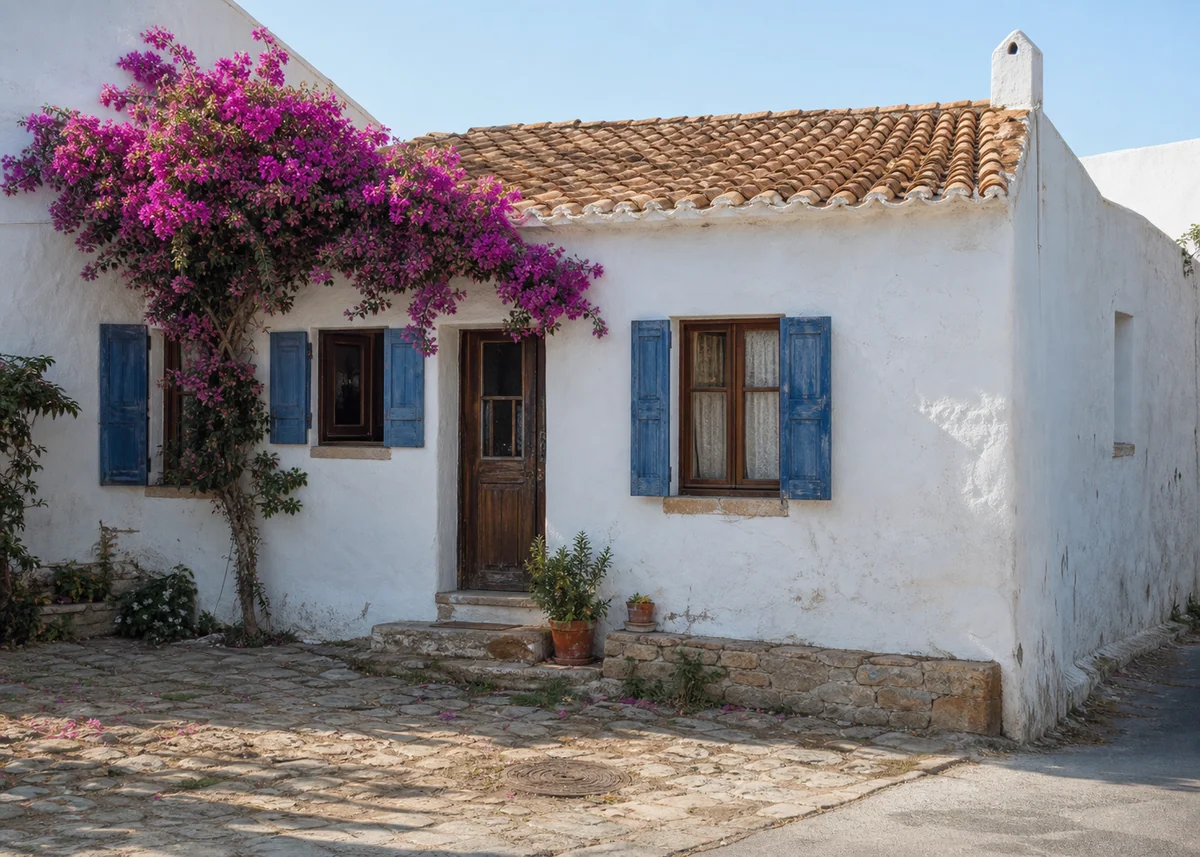
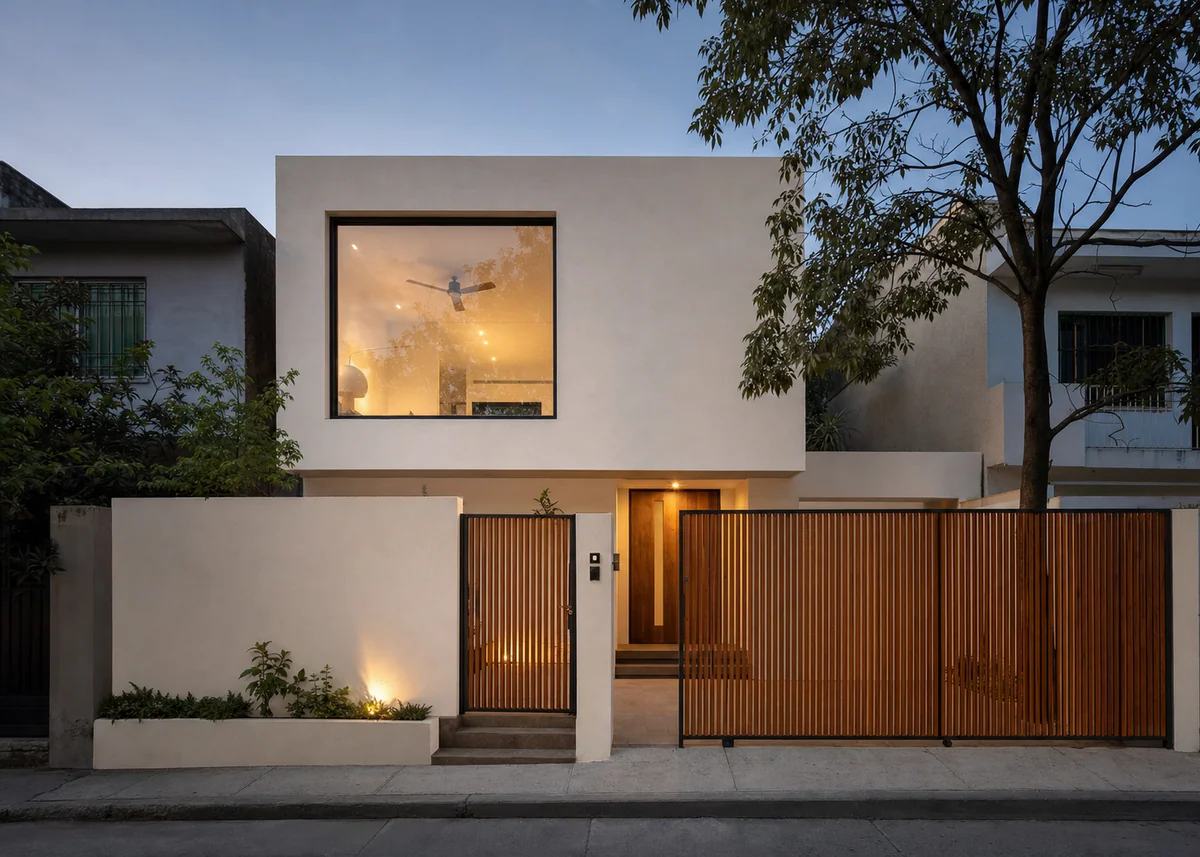
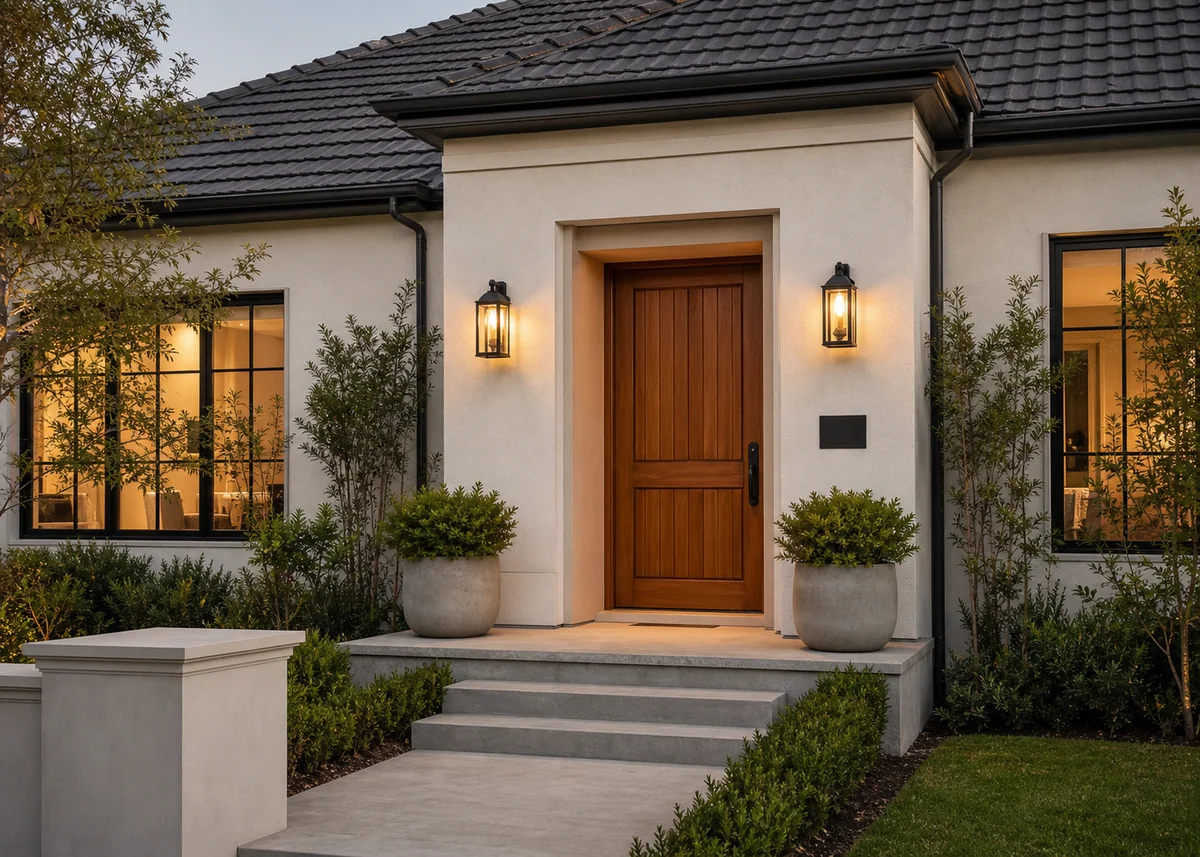
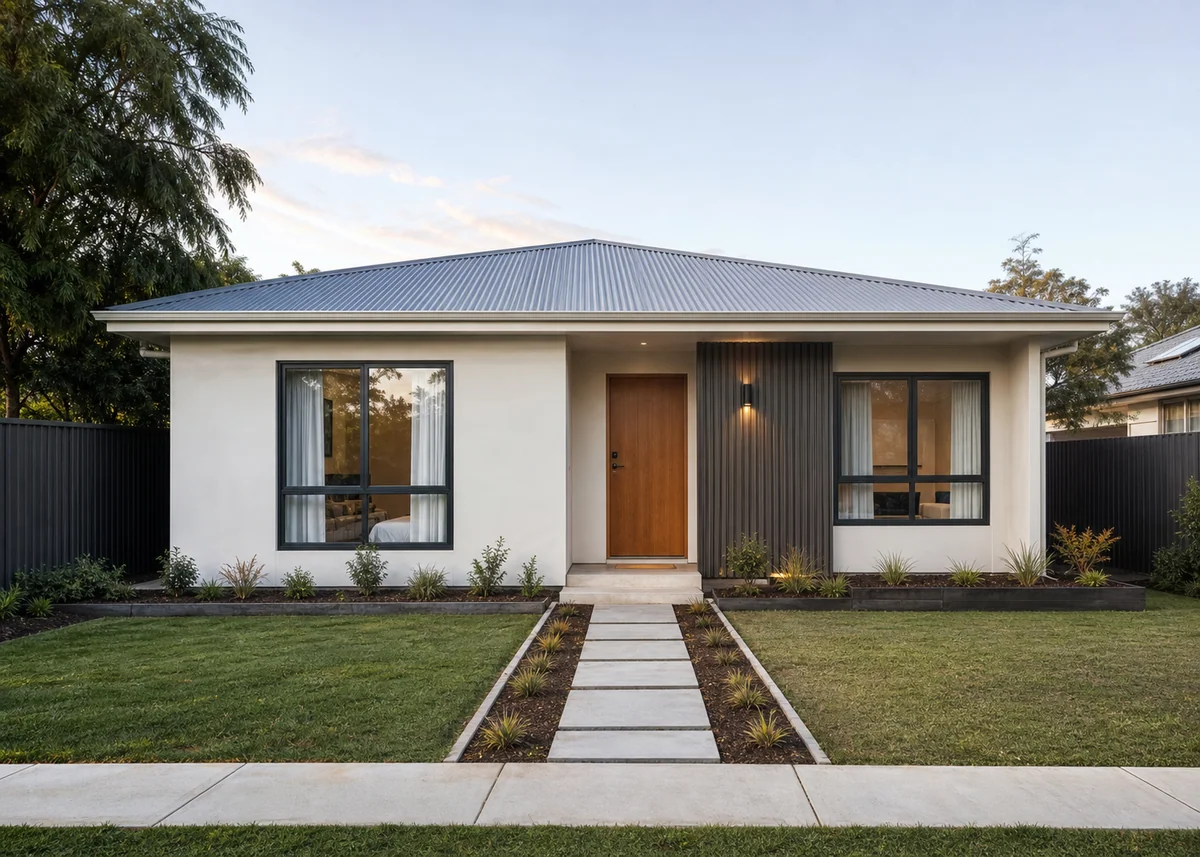
Design your own simple front
Describe your plot, materials and style — our AI turns it into a photorealistic concept in seconds.
The Power of Good Proportions
Before you think about materials or colour, look at proportions. A simple rectangle with a centred door, evenly sized windows and a roof pitch between 25 and 35 degrees is almost impossible to get wrong. Problems appear when elements fight each other — a huge garage door beside a tiny entry, or windows of five different sizes scattered across one wall.
A useful rule is the 'rule of thirds': divide the facade vertically into three zones and let the entrance occupy the middle or one clear side. Align window heads at the same height, and keep a consistent margin between openings and corners. These invisible disciplines are what make a simple elevation feel calm instead of cheap.
Budget-Friendly Materials That Look Great
Painted render remains the best value facade finish in most markets: inexpensive, easily repaired and available in any colour. Pair it with one textured accent — a band of local brick, a panel of cement board battens, or simple stone tile around the entrance — and the facade immediately gains depth without serious cost.
Roofing choice shapes the whole character of a simple home. Plain concrete tiles or corrugated metal in charcoal read neat and contemporary; terracotta tiles feel warm and traditional. Whichever you pick, keep gutters, downpipes and fascia in one colour matched to the roof so the utility items visually disappear.
Two-Colour Palettes for Simple Facades
The safest scheme is a light body with a darker trim: warm white walls with charcoal window frames, or soft beige with deep brown. This creates definition without demanding attention. If the house sits among greenery, muted sage or clay tones connect it to the landscape beautifully.
Resist the urge to add a third or fourth colour. On a small facade every extra colour fragments the composition and makes the house look smaller. Let texture — the shadow of a brick band, the grain of a wooden door — provide the variety instead of paint.
Entrances That Welcome
On a simple house, the front door carries most of the personality. A solid timber door, oiled rather than painted, is the single highest-impact upgrade available. Add a generous landing — at least 1.2 metres deep — so guests are not greeted on a narrow step, and a small canopy or roof extension to keep rain off.
Details finish the picture: a wall-mounted lantern on each side of the door, a clearly legible house number in a simple typeface, and a doormat-width path of concrete pavers leading straight from the gate. None of these cost much; together they signal a cared-for home.
Low-Maintenance Landscaping
A simple facade deserves simple planting. One small tree placed off-centre, a strip of low shrubs under the windows and a neatly edged lawn or gravel bed cover ninety percent of situations. Choose native, drought-tolerant species so the garden looks intentional even in dry months.
Hard surfaces matter as much as plants. Keep the driveway in plain broom-finished concrete or compacted gravel, and use the same paver for every path so the ground plane reads as one design. A tidy boundary — low painted wall, simple steel gate — frames the whole composition like a picture frame.
Small Upgrades With Outsized Impact
If you can only do three things: repaint the facade in one fresh light tone, replace or refinish the front door, and install two matching exterior lights. These three moves address colour, focal point and evening presence — the trio that determines how a house is judged from the street.
Next-tier upgrades include replacing rusted railings with simple horizontal bars, boxing untidy cables into a painted conduit, and adding a slim planter bed along the base of the facade. Each is a weekend project, and together they compound into a transformation that neighbours will assume cost far more than it did.
Frequently Asked Questions
What is the cheapest way to make a house front look good?+
Fresh paint in a single light tone, a refinished or new front door, and two matching wall lights. These three upgrades cost little, require no structural work, and change how the entire house reads from the street.
Which colour is best for a simple house front?+
Warm white and soft beige are the most forgiving body colours, paired with charcoal or deep brown trim. In leafy settings, muted sage and clay tones also work beautifully. Keep it to two colours total.
How do I design a simple front elevation for a small plot?+
Keep one roof form, align all window heads, centre or clearly offset the door, and use a light body colour to make the facade feel larger. Avoid balconies and projections that fragment a small frontage.
Is render or brick better for a simple facade?+
Painted render is cheaper and easy to refresh; face brick costs more upfront but never needs painting. Many of the best simple designs combine the two — a rendered body with a brick accent band or plinth.
How important is landscaping in a simple design?+
Very. Because the architecture is quiet, a neat lawn edge, one well-placed tree and a straight paved path do a disproportionate share of the visual work. Untidy landscaping undermines even a perfect simple elevation.
Can AI help me visualise a simple facade before painting?+
Yes. Use our design matcher with a brief such as 'simple single-storey house, white walls, charcoal roof, timber door' to find a relevant concept, then compare colour and material options before spending on the real thing.