Farmhouse Front Design Ideas
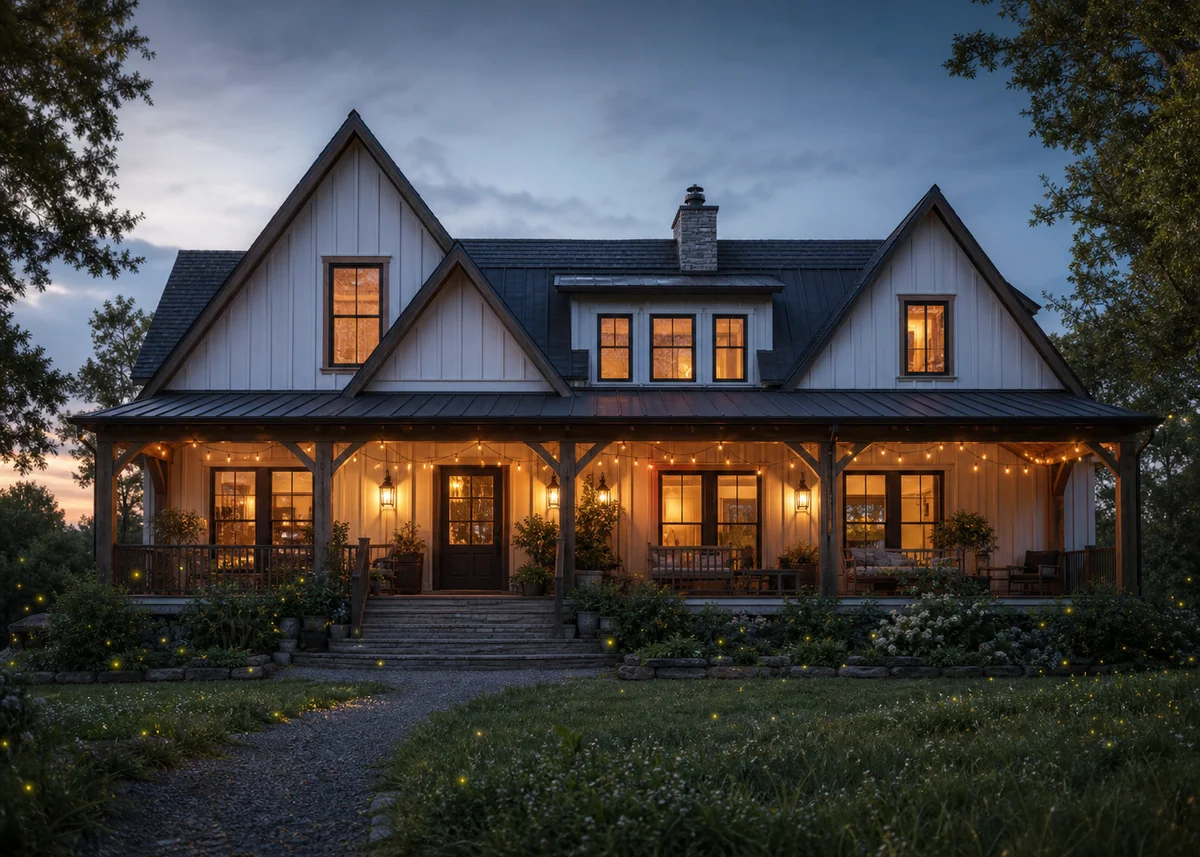
Farmhouse front design carries the memory of working homesteads — steep gables, deep porches, practical materials — refined into one of the most beloved residential styles of the past decade. The modern farmhouse formula of white board-and-batten, black window frames and standing-seam metal roofing dominates new builds, while heritage farmhouse fronts keep their unhurried, generational charm.
Here you'll find farmhouse elevations across that whole spectrum, plus the details that separate an authentic-feeling farmhouse front from a builder cliché: honest gable proportions, porches deep enough to live on, lighting that glows like oil lamps, and landscapes that lean cottage rather than corporate.
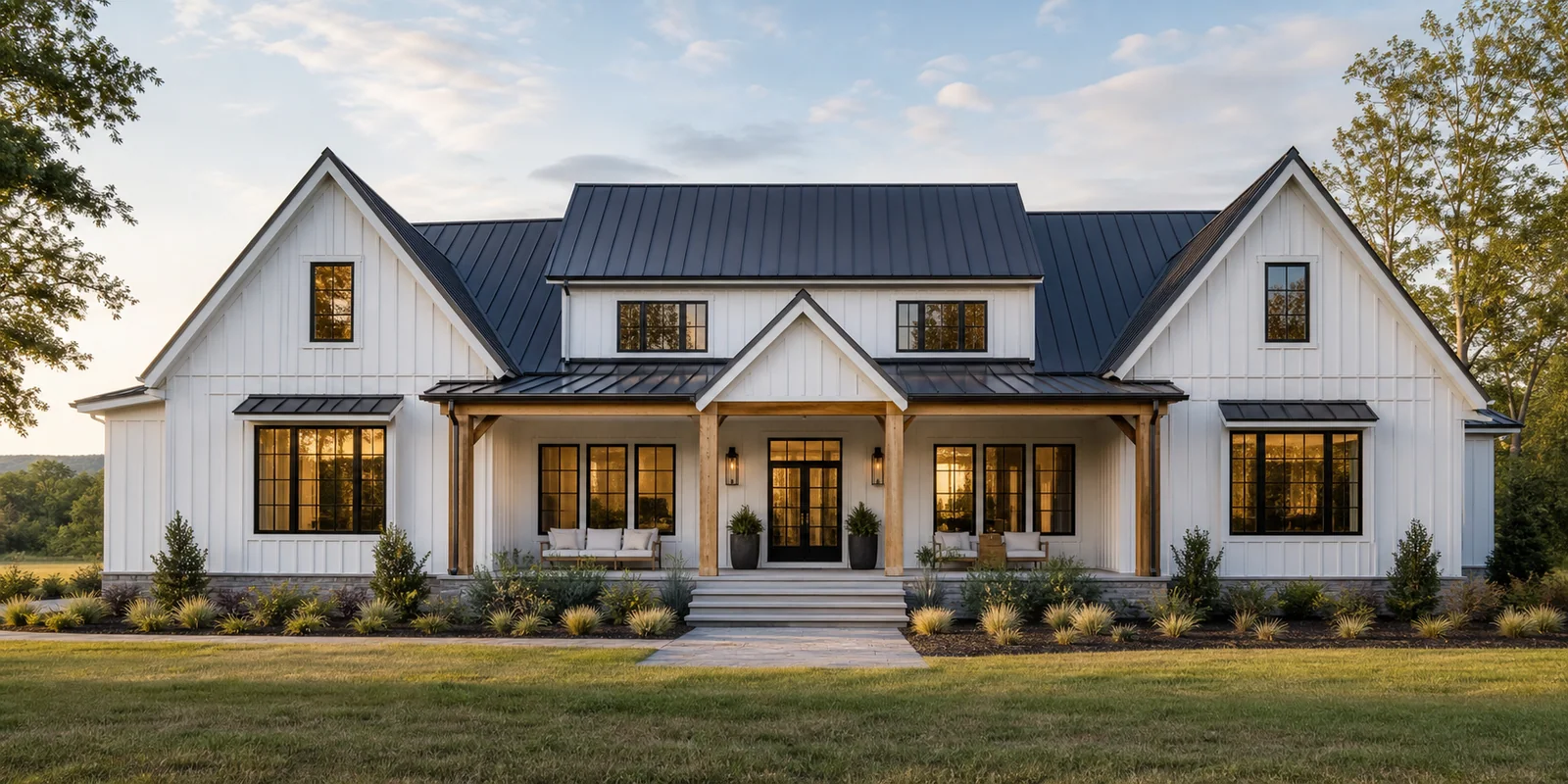
Farmhouse Front Design Gallery
Every image below is a unique AI-created design concept. Love one? Use its caption as a starting prompt in our free AI generator and make it yours.
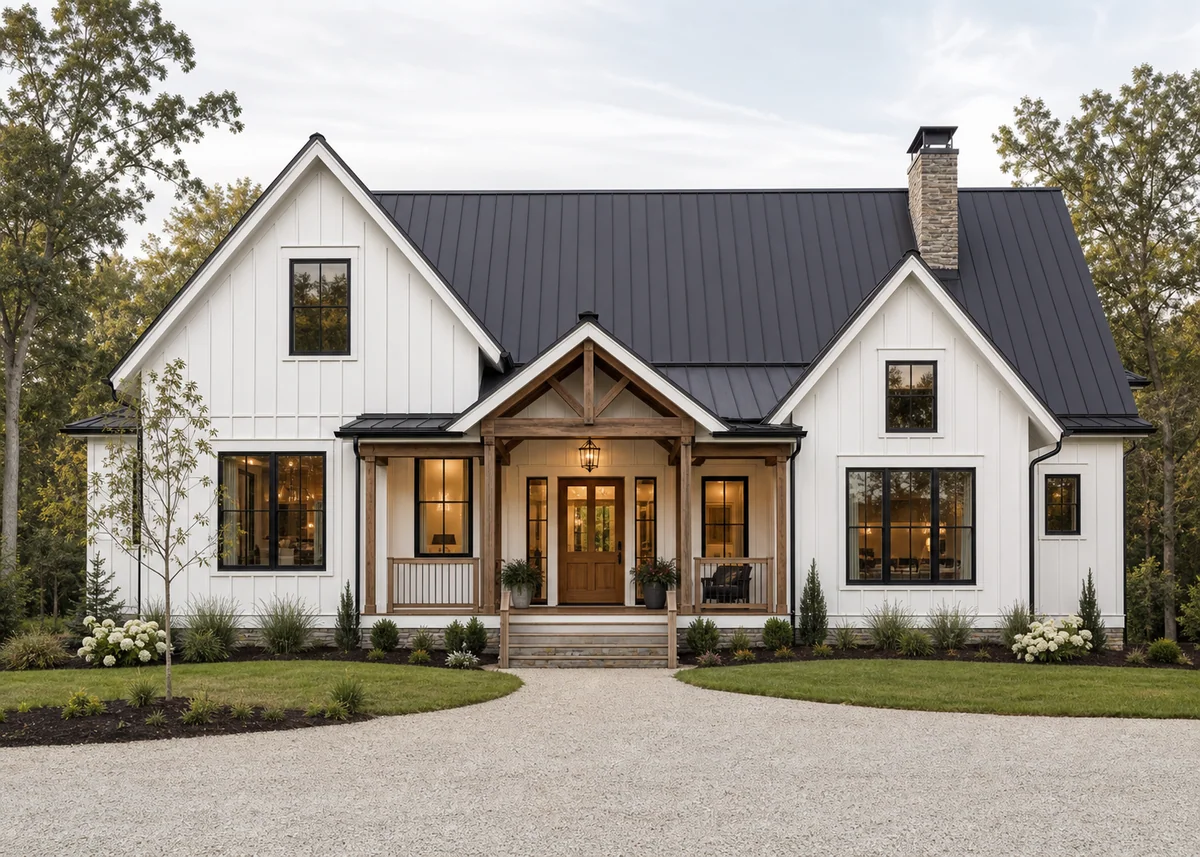
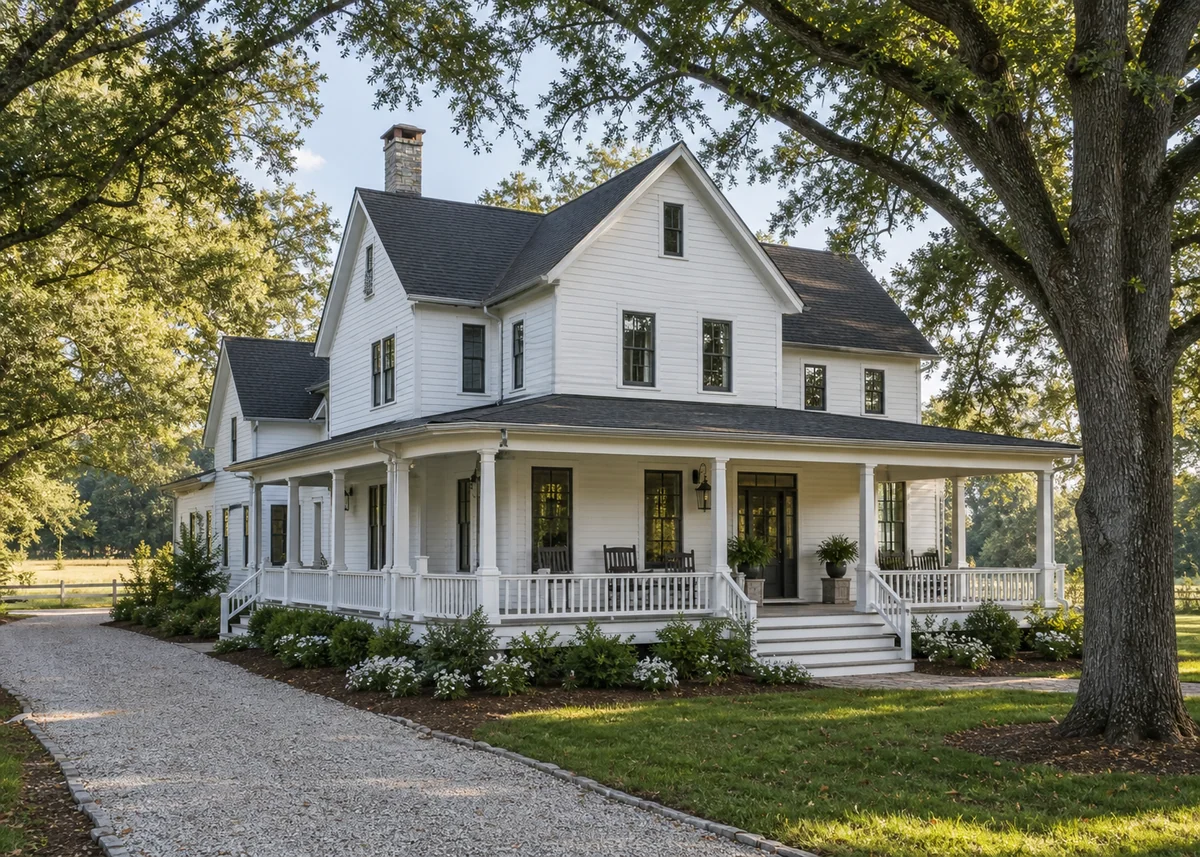
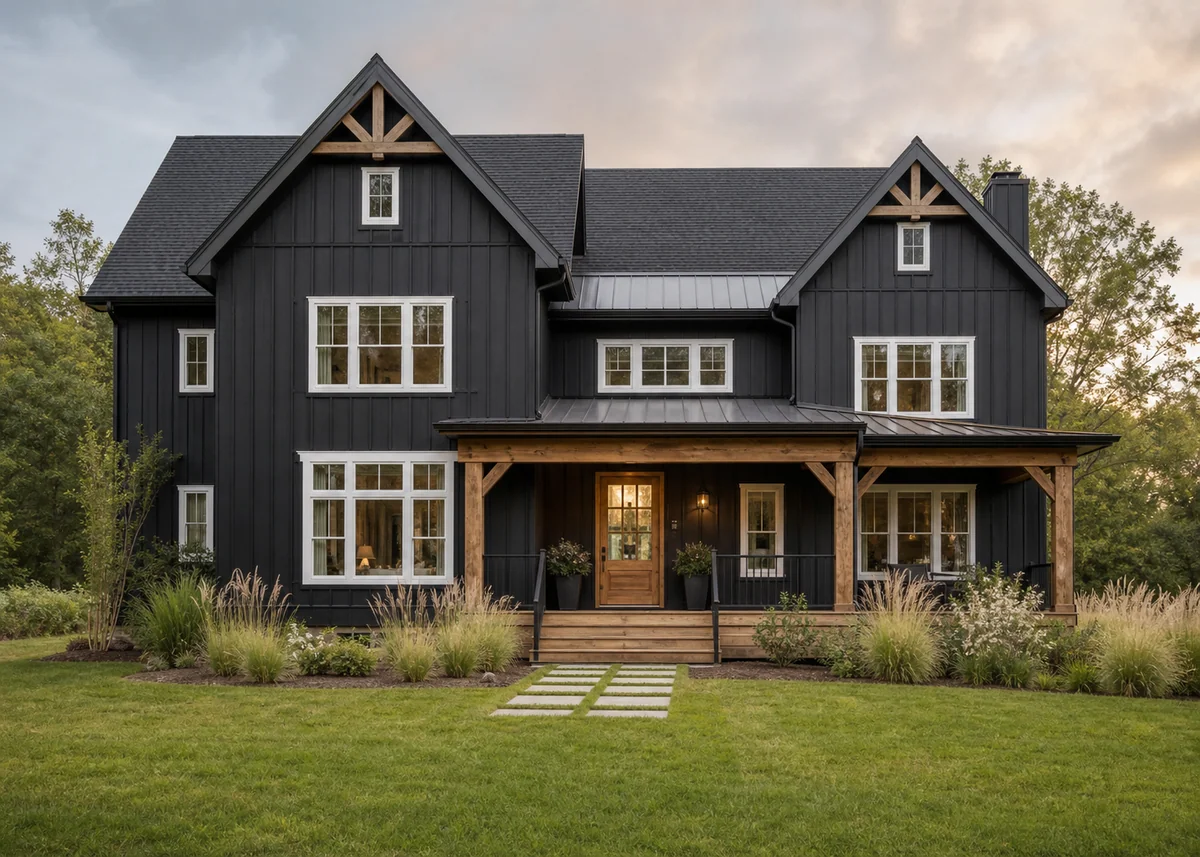
Design your own farmhouse front
Describe your plot, materials and style — our AI turns it into a photorealistic concept in seconds.
The Modern Farmhouse Formula — and How to Elevate It
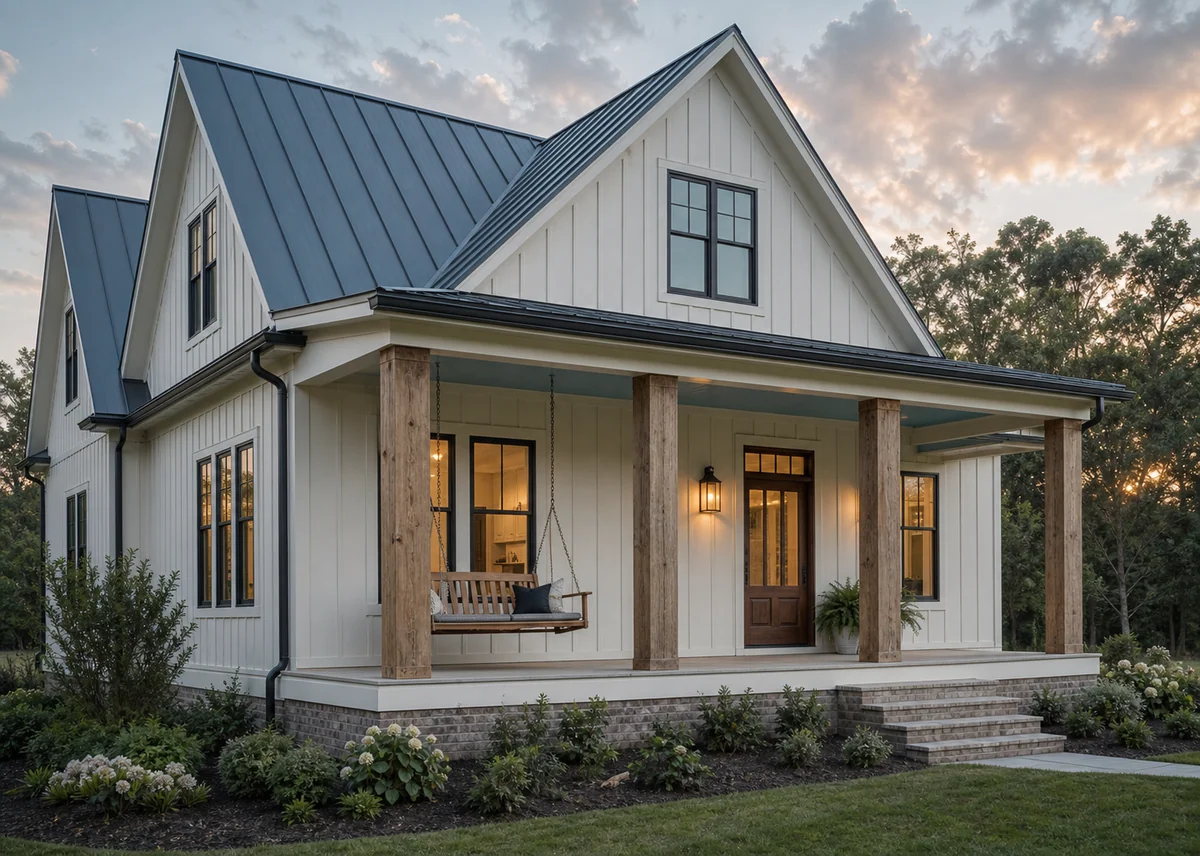
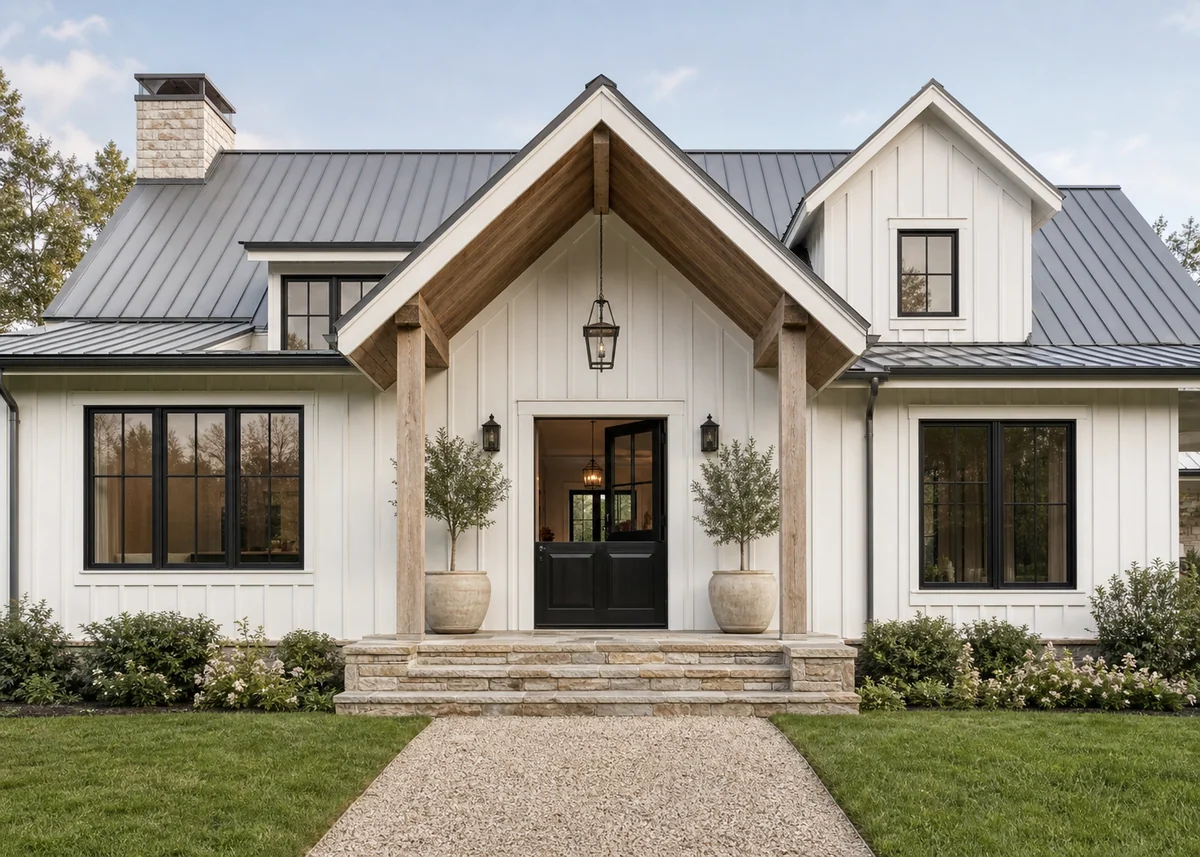
The core recipe is famous: crisp white vertical board-and-batten siding, matte black window frames and gutters, a charcoal or galvanised standing-seam metal roof, and a gabled entry porch. It photographs beautifully and suits almost any plot, which is exactly why it risks feeling generic when applied without care.
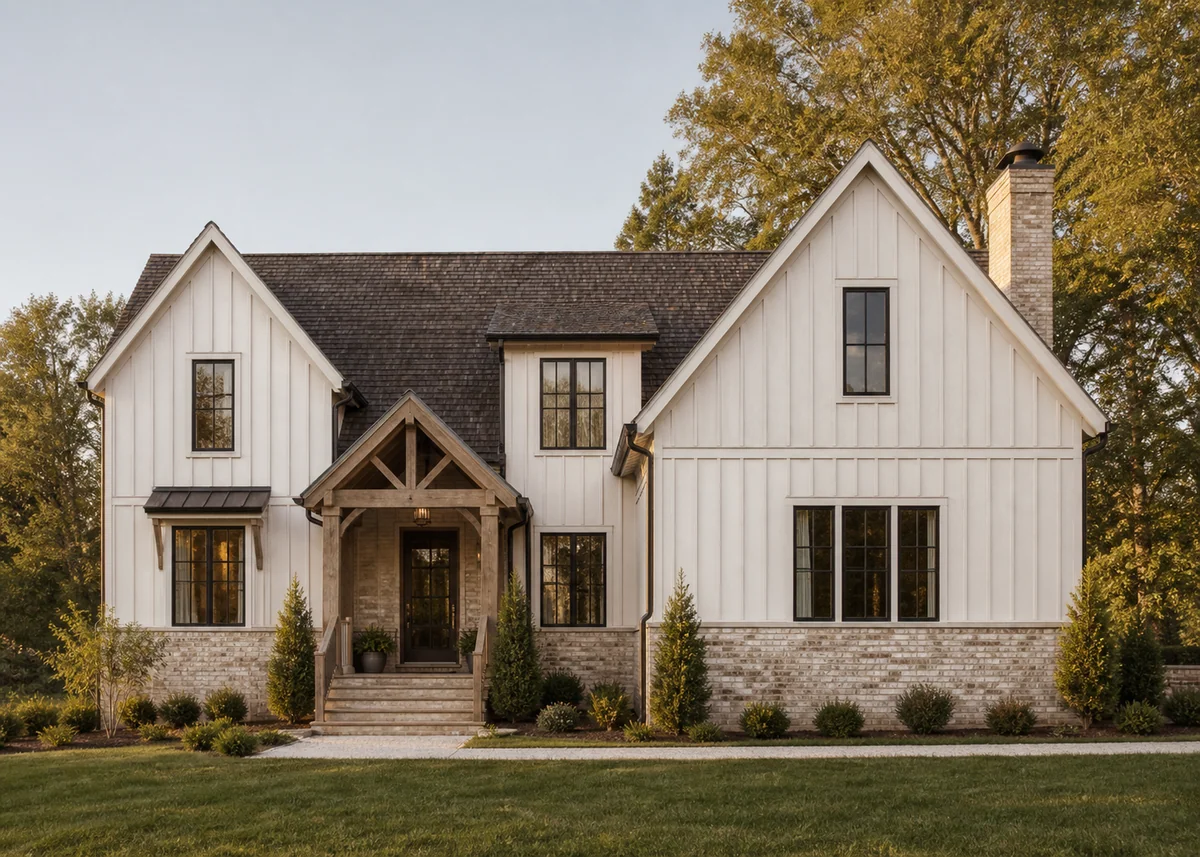
Elevation comes from texture and variation: mix in a cedar-wrapped porch ceiling or gable accent, swap some white for warm limewash or greige, use real dimension in the battens rather than flat trim, and choose windows with substantial frames instead of skinny builder units. One aged material — reclaimed brick plinth, weathered timber beams — grounds the crispness in history.
Gables: The Farmhouse Silhouette
Farmhouse fronts are compositions of gables — usually one dominant street-facing gable marking the entry or living space, supported by the long eave of the main roof. Keep pitches steep and consistent, 40 degrees or more; shallow gables instantly dilute the farmhouse character into generic suburbia.
Resist gable multiplication. Builder elevations often pile up four or five competing gables to seem interesting; authentic farmhouses grew one addition at a time, so their rooflines read as a calm main mass with one or two subordinate gables. Fewer, better-proportioned gables always win.
Porches Built for Living
The farmhouse porch is an outdoor room, not a decoration. Two and a half metres deep or more, running most of the frontage or wrapping a corner, floored in timber or brushed concrete, with ceiling fans in warm climates and space for a swing or pair of rockers. It shades the interior in summer and puts daily life on friendly display.
Detail it honestly: square timber posts (150mm minimum — spindly posts are the most common farmhouse mistake), simple horizontal rail balustrades, exposed rafter tails and a tongue-and-groove ceiling. A gas or electric lantern by the door and a ceiling painted soft haint blue complete the ritual.
Materials: Board-and-Batten and Beyond
Vertical board-and-batten is the signature skin, available in timber, engineered wood and fibre cement — the latter delivering the look with decades-long paint life. Combine it with lap siding on secondary volumes, brick or stone on plinths and chimneys, and cedar accents in gable peaks for the layered, grown-over-time effect.
Standing-seam metal roofing completes the identity, in charcoal, black or classic galvalume. It sheds snow and rain, lasts half a century and its vertical seams echo the batten rhythm below. Where budget forces asphalt shingles on the main roof, keep metal for porch roofs where it's seen close-up.
Colour Beyond White
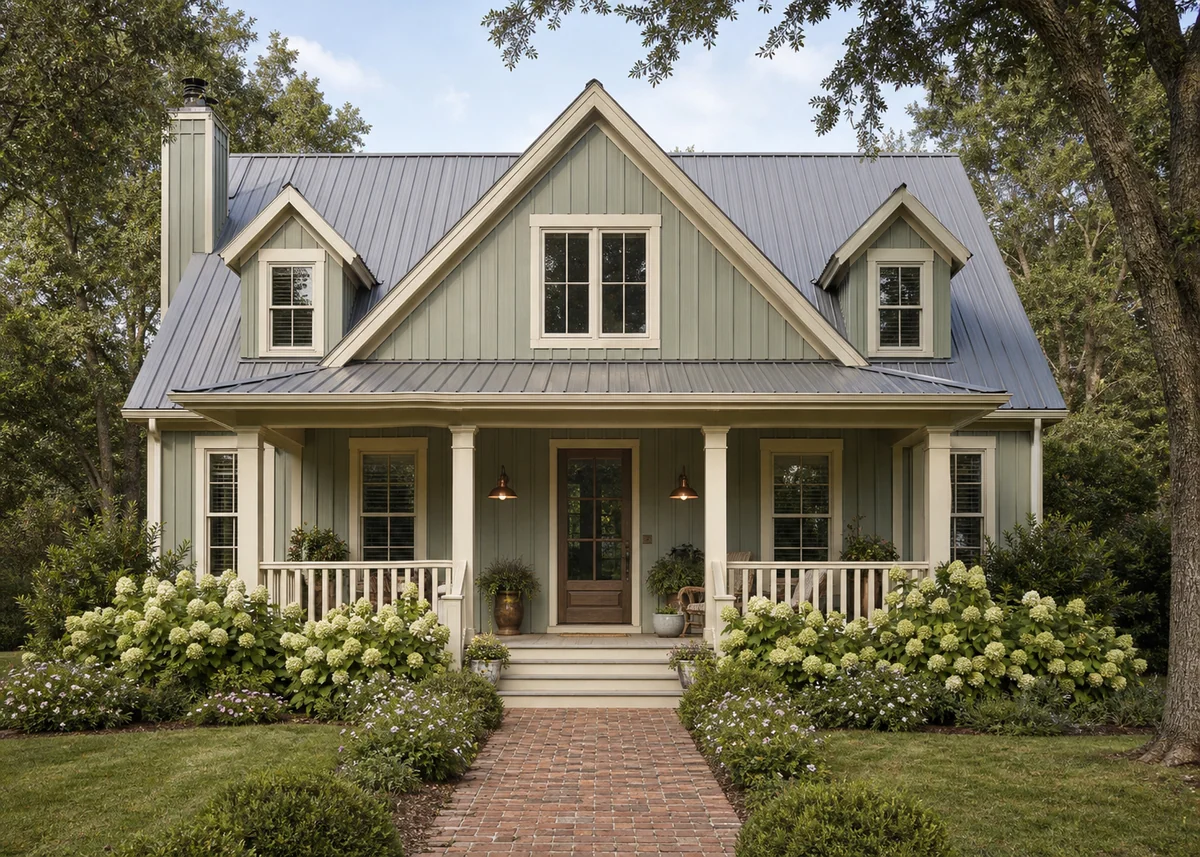
White-and-black is the default, but the farmhouse palette is broader and getting broader: soft greige, mushroom, sage green and even deep charcoal or black board-and-batten make striking farmhouse fronts, always paired with warm wood accents and honest trim. Limewashed brick and natural cedar bring tonal depth no flat paint achieves.
The constant is contrast between body and openings: light bodies take black or bronze windows; dark bodies take white or wood-toned frames. Keep trim minimal — farmhouse style uses flat, simple casings, not layered colonial mouldings.
Landscape and Arrival
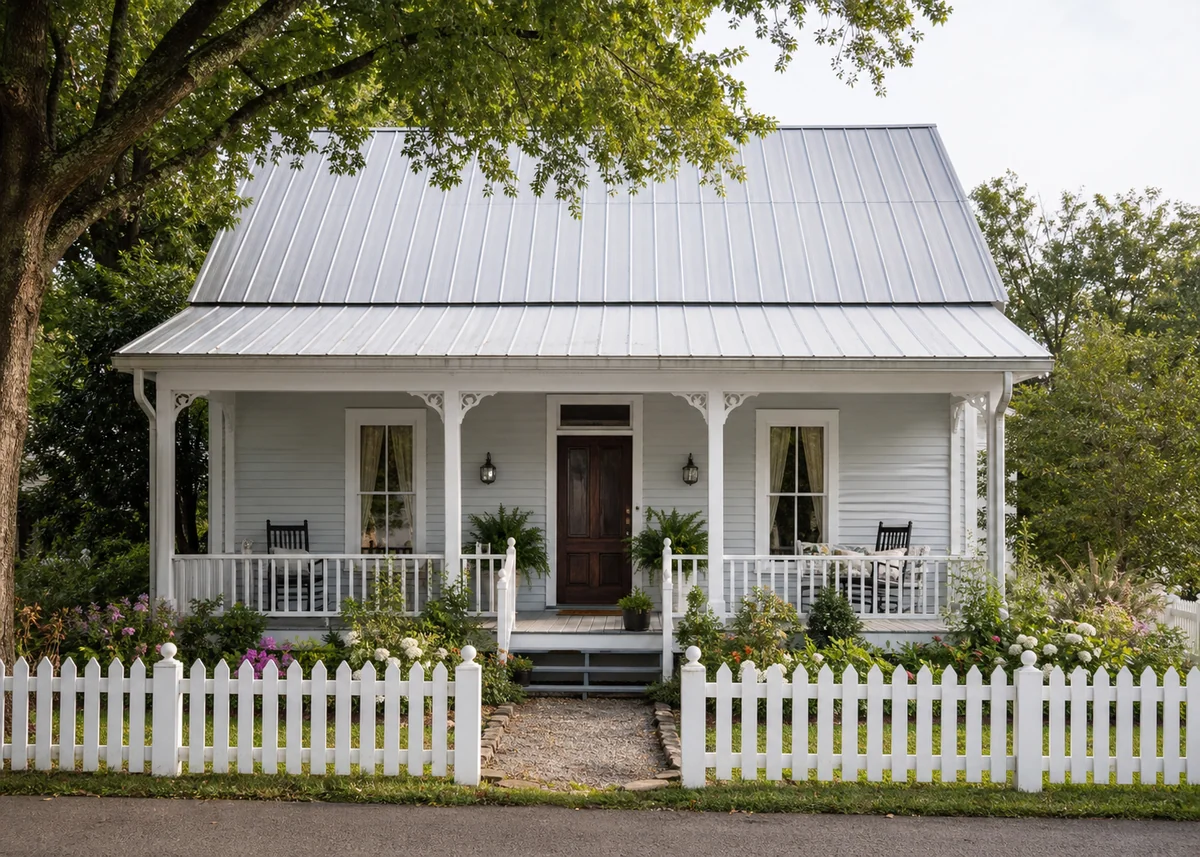
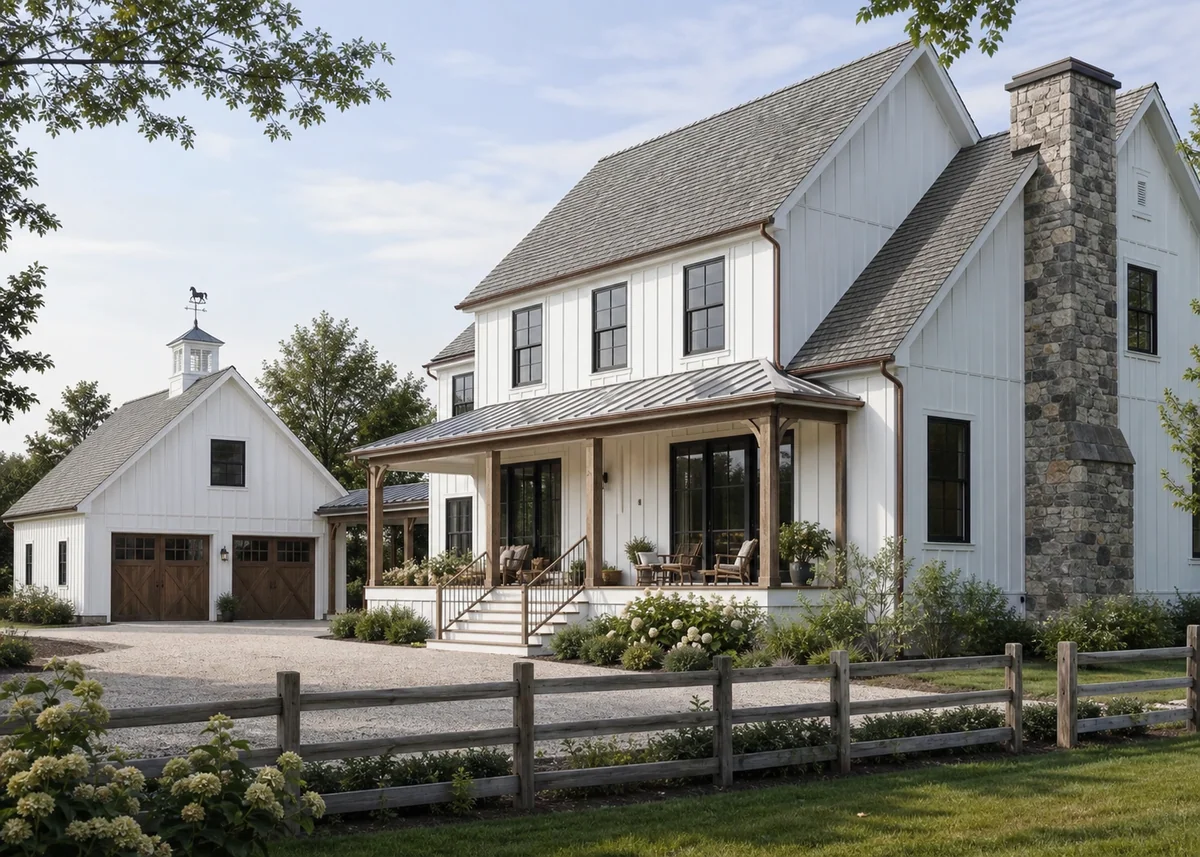
Farmhouse landscapes are generous and a little loose: gravel or brushed-concrete drives, board or split-rail fencing, hydrangeas and native grasses against the porch skirt, and a proper path — brick, bluestone or concrete pavers — from gate to steps. Perfect geometric hedging fights the style; soft abundance suits it.
Outbuildings and accessories extend the story: a matching board-and-batten garage or shed, a cupola or weathervane if the roofline invites one, galvanised planters, and warm 2700K lanterns at door, garage and gate. The goal is a frontage that looks settled into its land, even on a brand-new suburban lot.
Frequently Asked Questions
What makes a house front 'modern farmhouse'?+
White (or now greige/sage/black) board-and-batten siding, black or contrast window frames, standing-seam metal roofing, steep gables and a substantial covered porch. Warm wood accents and lantern lighting complete the look.
How do I avoid the generic builder-farmhouse look?+
Limit gables to one or two well-proportioned ones, use thick porch posts and real-dimension battens, add one aged material like reclaimed brick or weathered timber, and choose windows with substantial frames. Texture and restraint beat more features.
Is a metal roof necessary for farmhouse style?+
It's the most identity-defining roof, but budget builds can keep asphalt on the main roof and use standing-seam metal on porch roofs, where it's closest to eye level and delivers most of the character.
What porch depth works for a farmhouse?+
2.4–3 metres for a true living porch that fits rockers, a swing and passage space. The farmhouse porch is an outdoor room; under 1.8 metres it becomes a corridor.
What colours suit farmhouse fronts besides white?+
Greige, mushroom, sage green, deep charcoal and black all work when paired with warm wood accents and clear body-versus-frame contrast. Limewash finishes add tonal depth flat paint can't.
What landscaping fits a farmhouse front?+
Loose abundance over formality: gravel drives, board or picket fencing, hydrangeas, native grasses and a generous path to the porch. Galvanised planters and warm lanterns finish the arrival.