Luxury House Front Design Ideas
Luxury house front design is about orchestration, not ostentation. The world's most admired high-end facades combine noble materials — natural stone, bronze, hardwood — with generous proportions, layered lighting and an arrival sequence that unfolds like theatre. Every junction is resolved, every fixture is architectural, and nothing looks like it came from a catalogue.
In this collection you'll find luxury front elevations across the spectrum: resort-modern villas with water features and palms, classical stone mansions with columned porticos, and quiet-luxury compositions where the extravagance lives in the detailing. We also cover the practical machinery of a luxury frontage — gates, driveways, security and lighting control — that makes the beauty function.
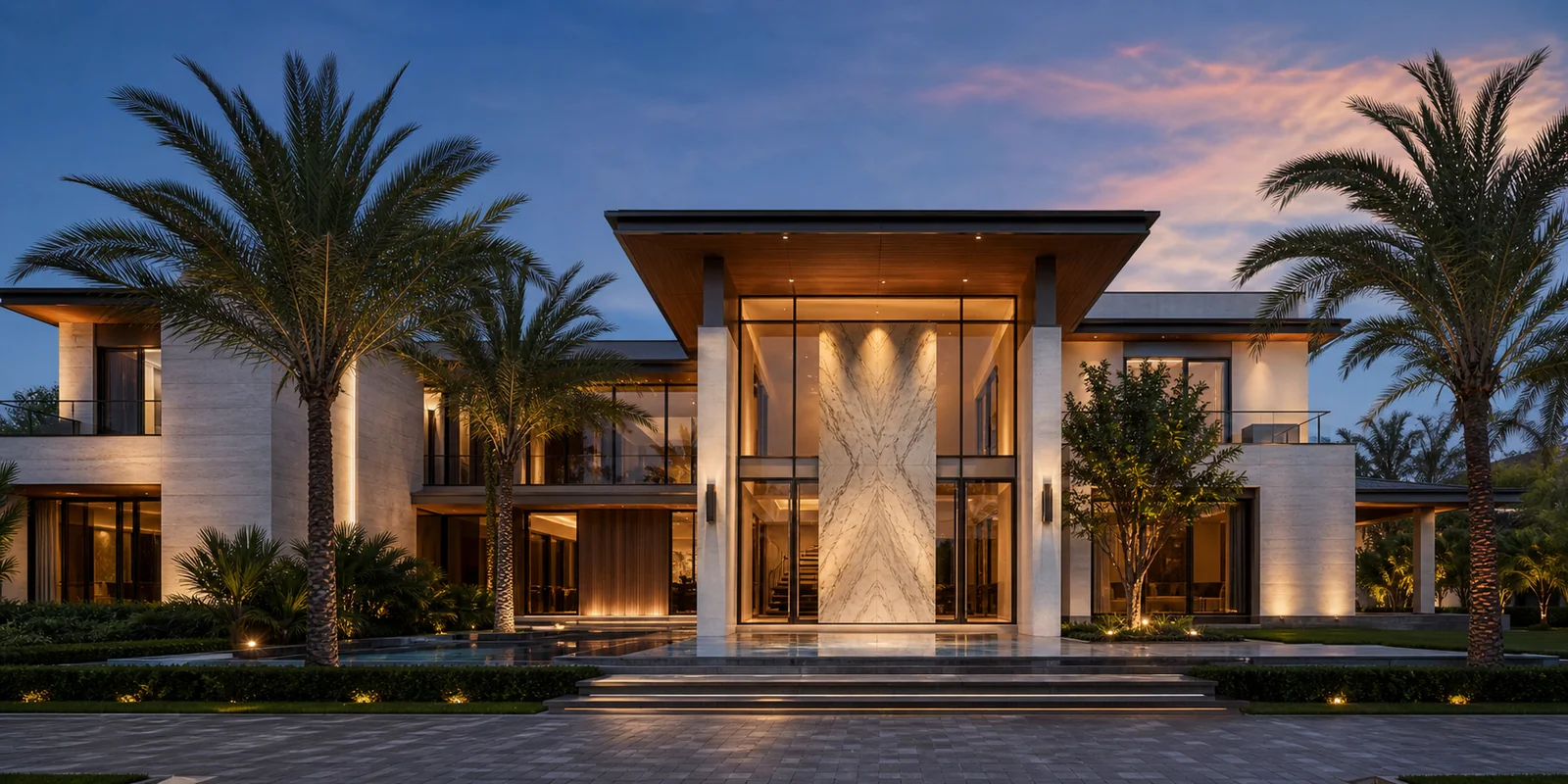
Luxury House Front Design Gallery
Every image below is a unique AI-created design concept. Love one? Use its caption as a starting prompt in our free AI generator and make it yours.
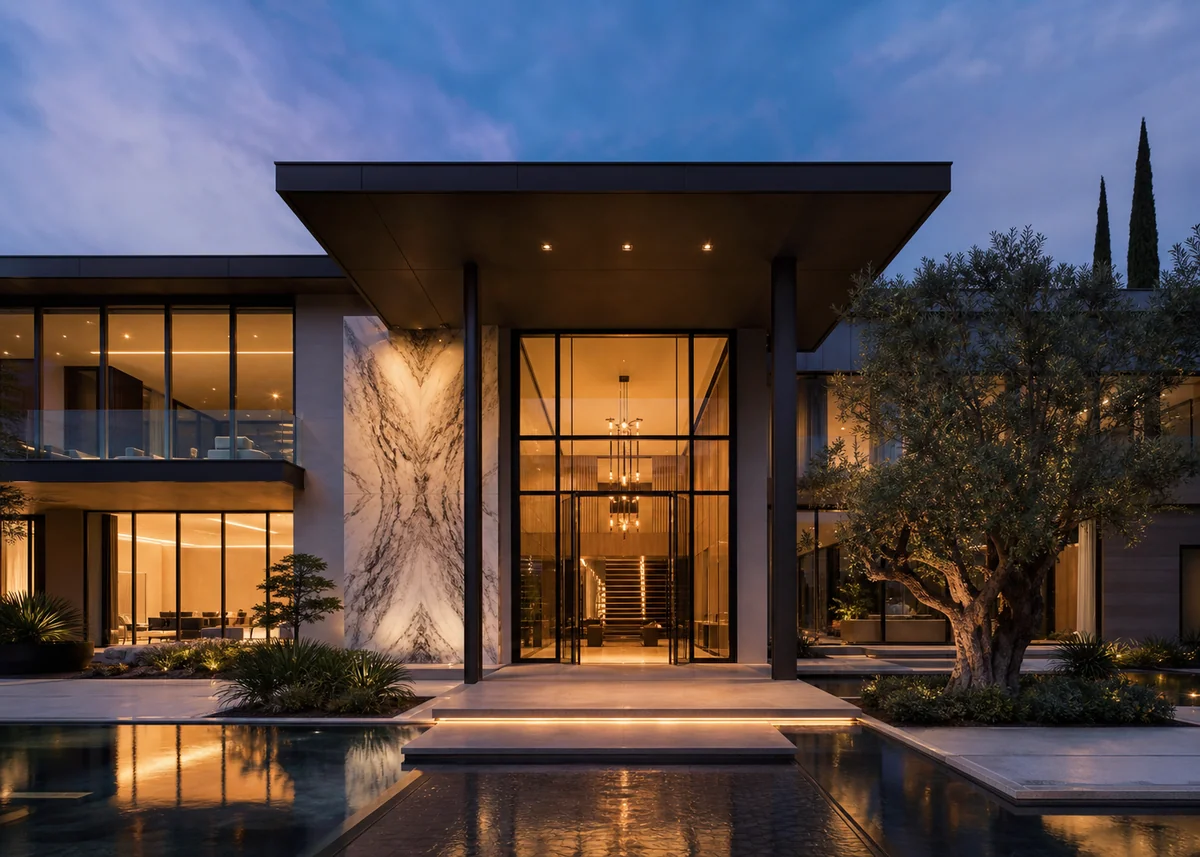
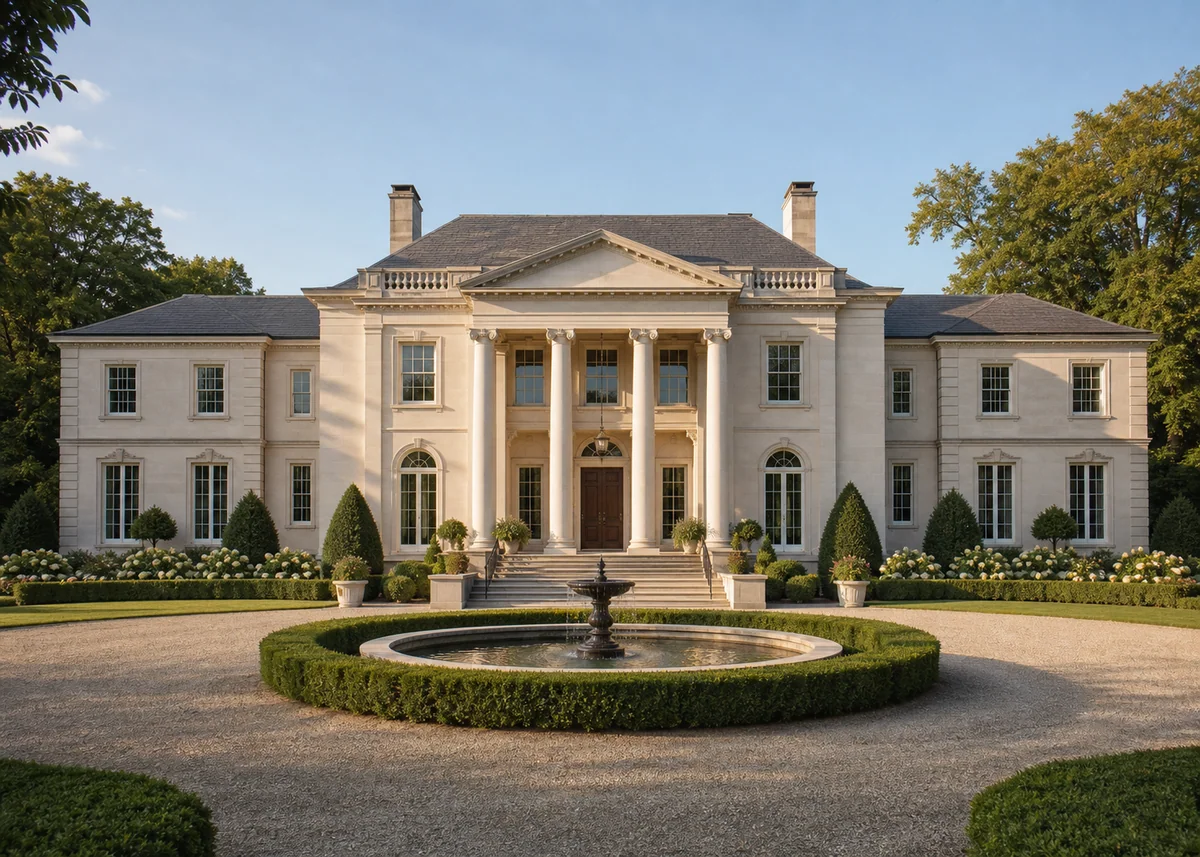
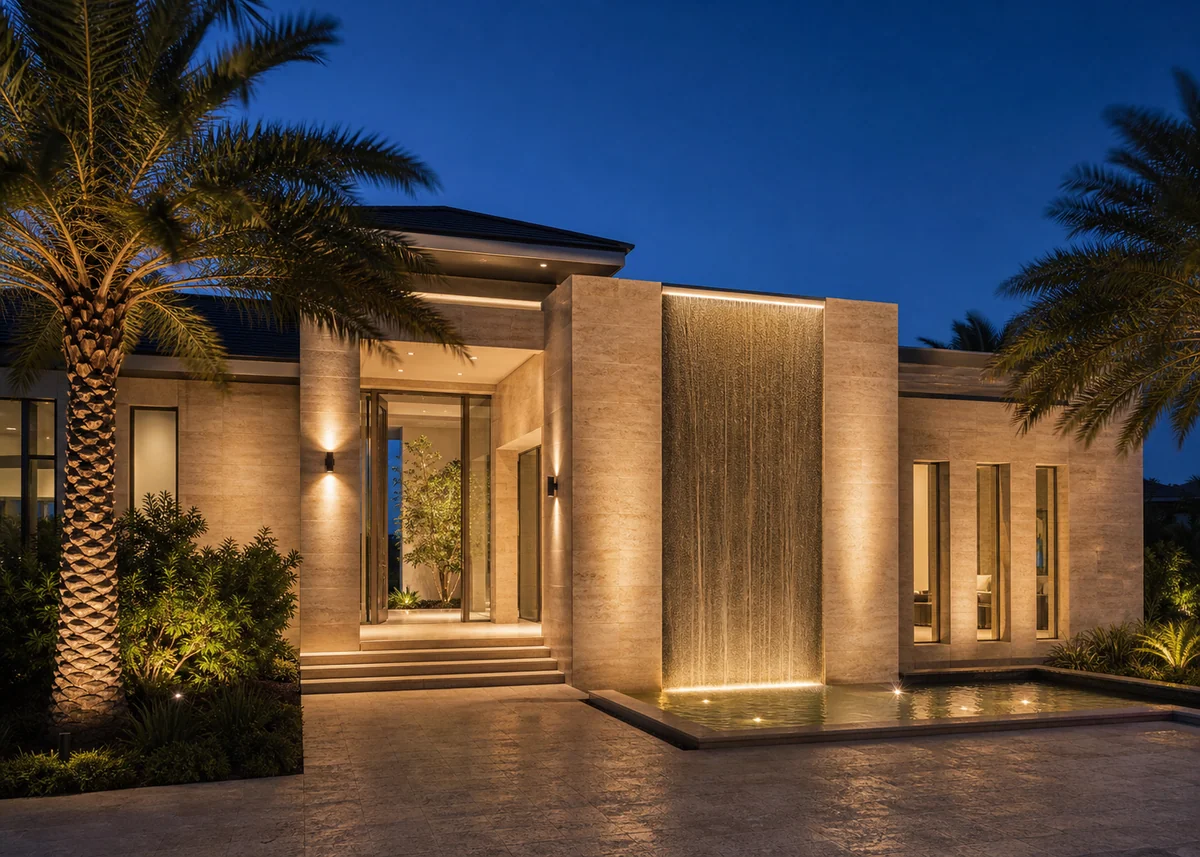
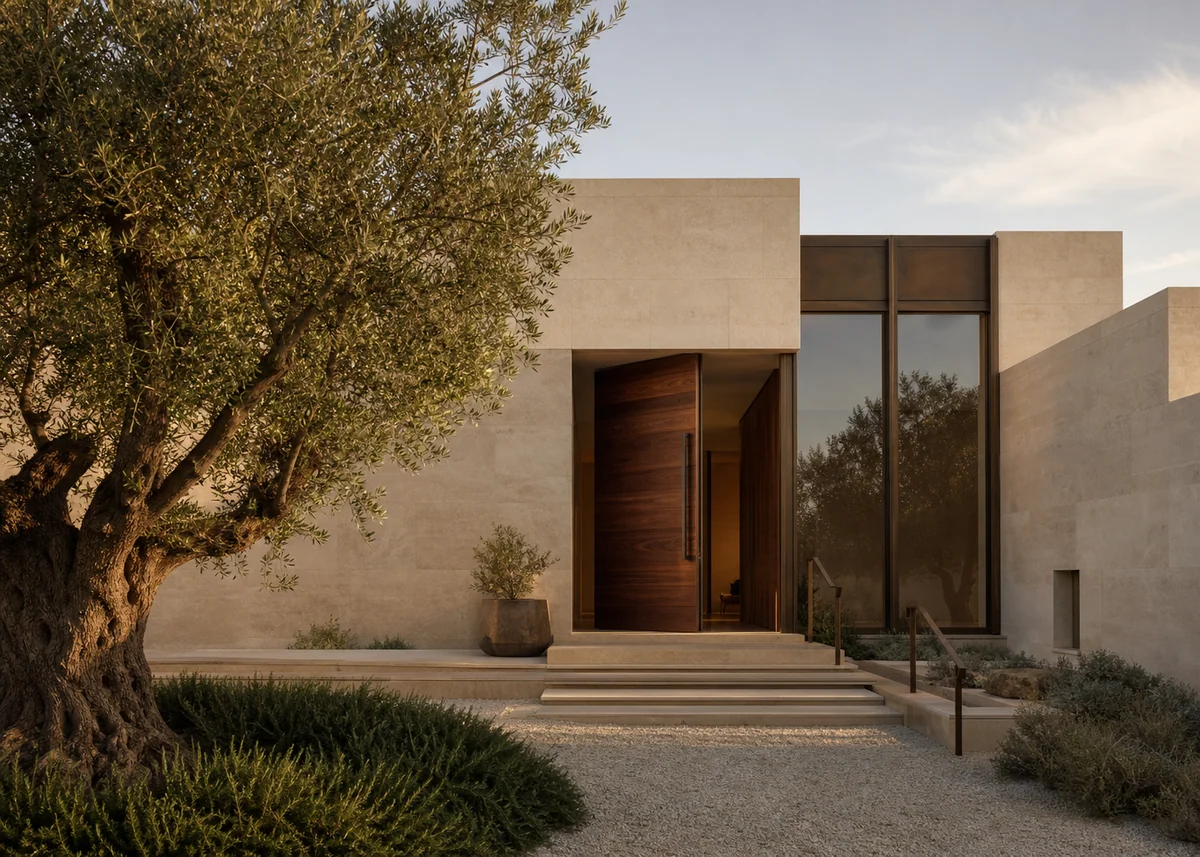
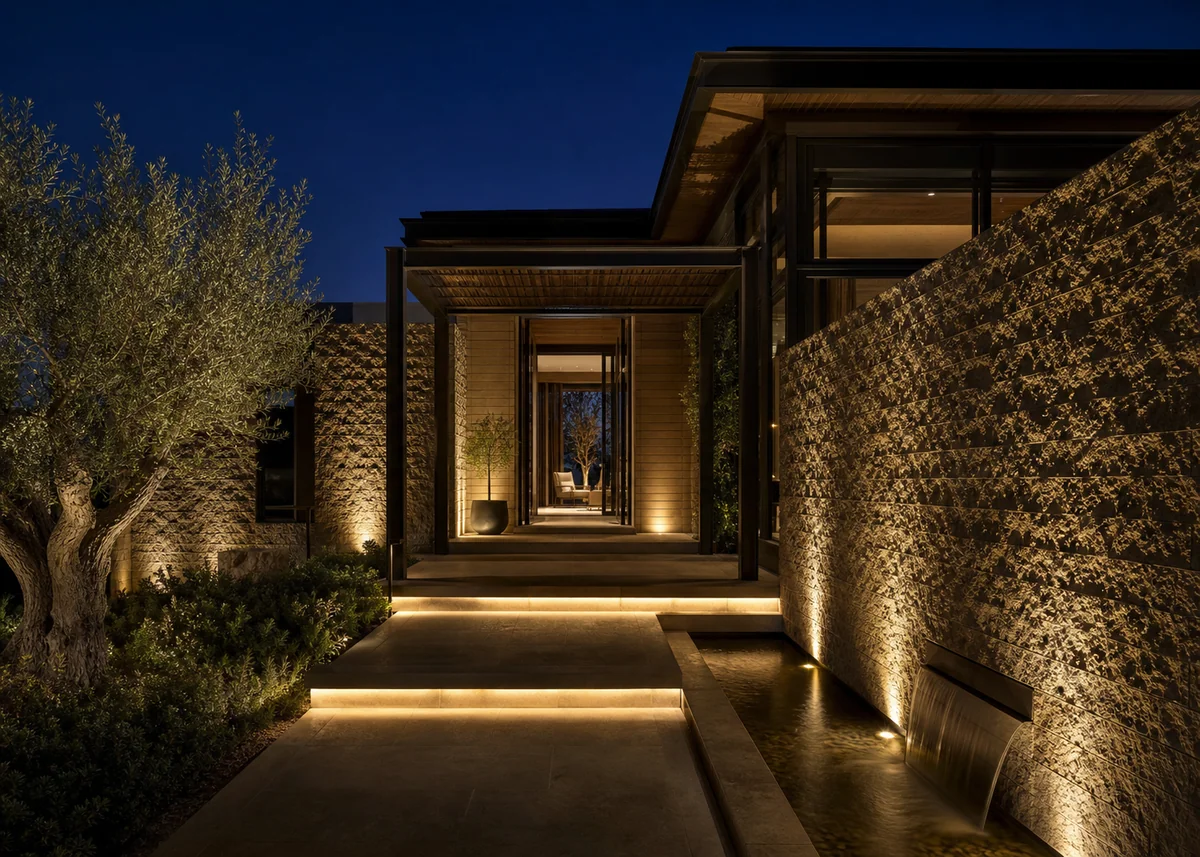
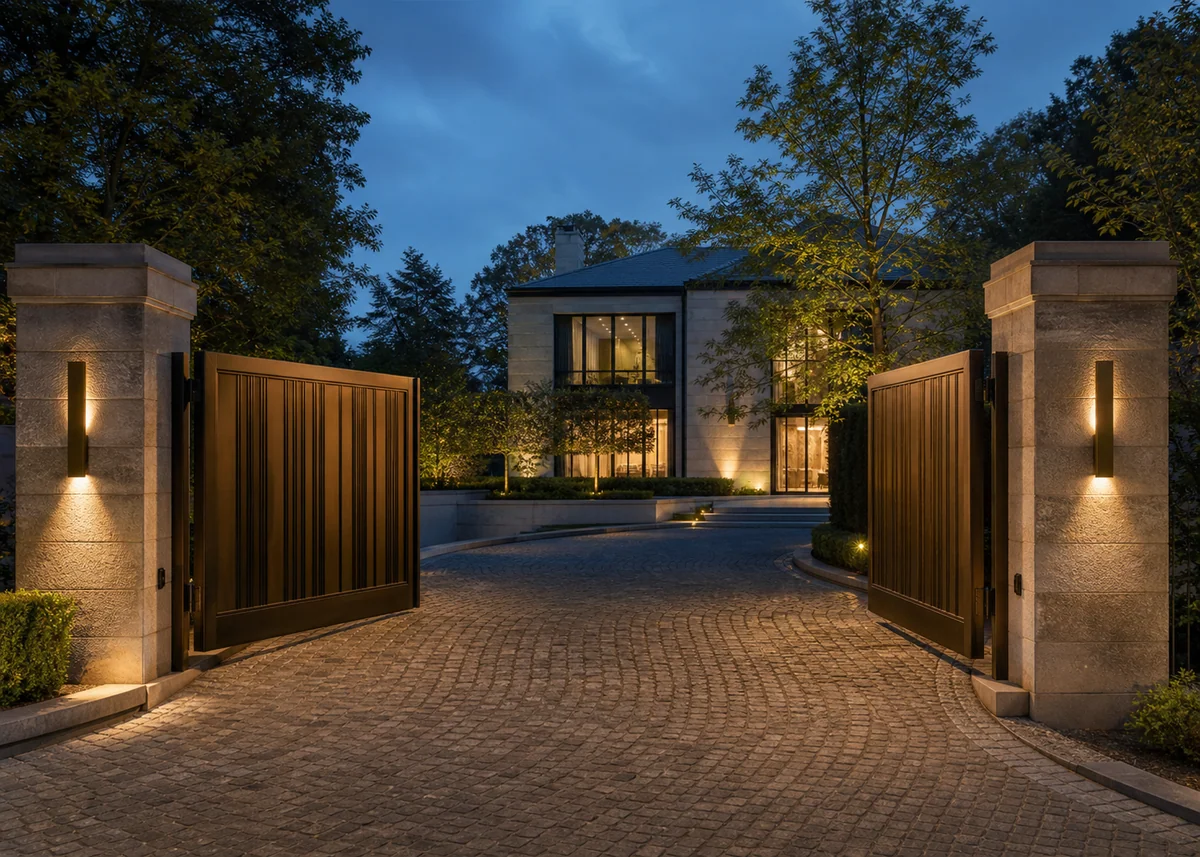
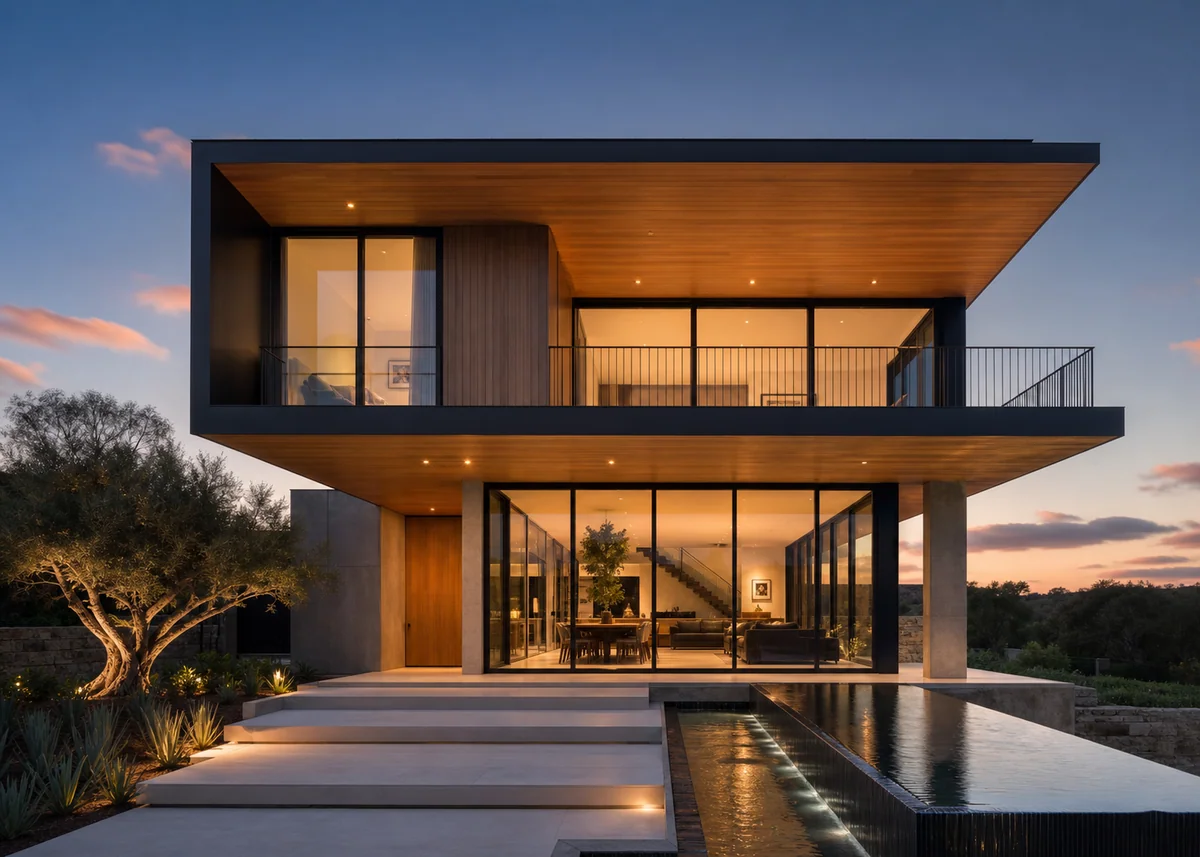
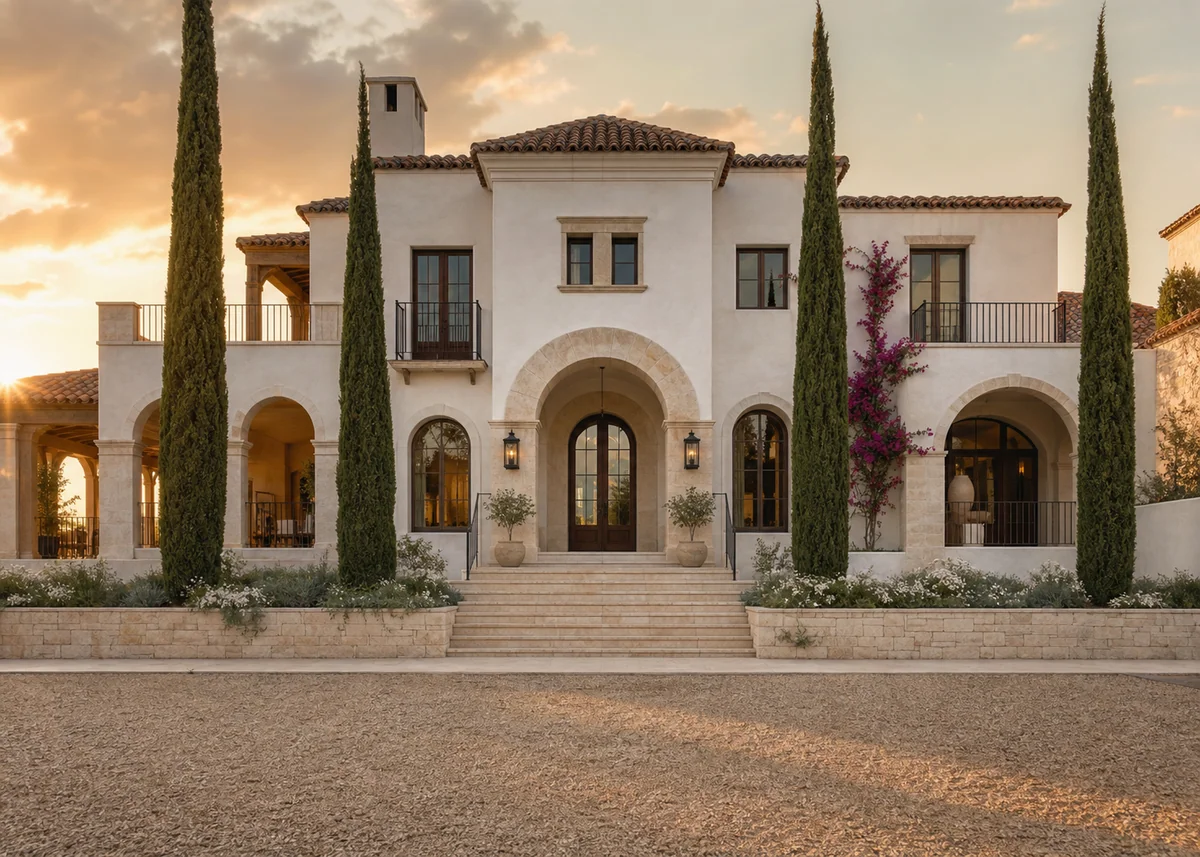
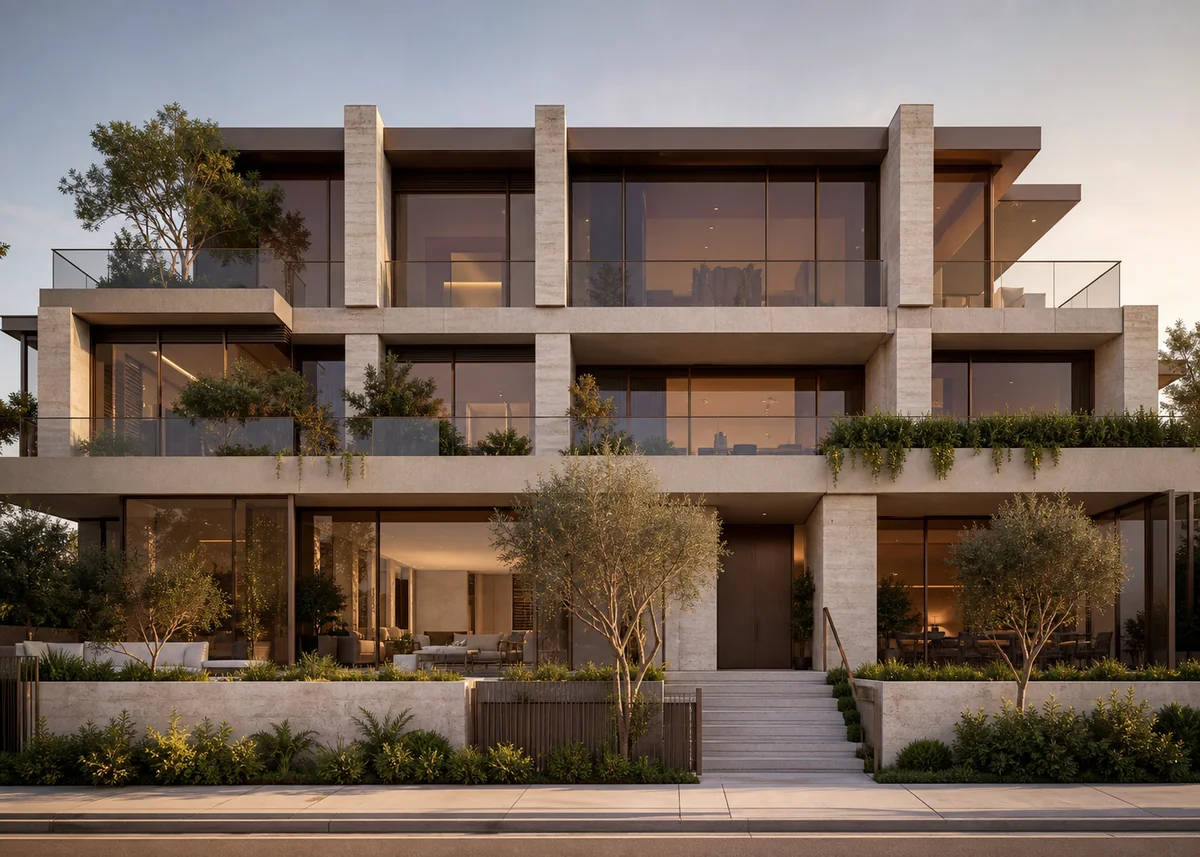
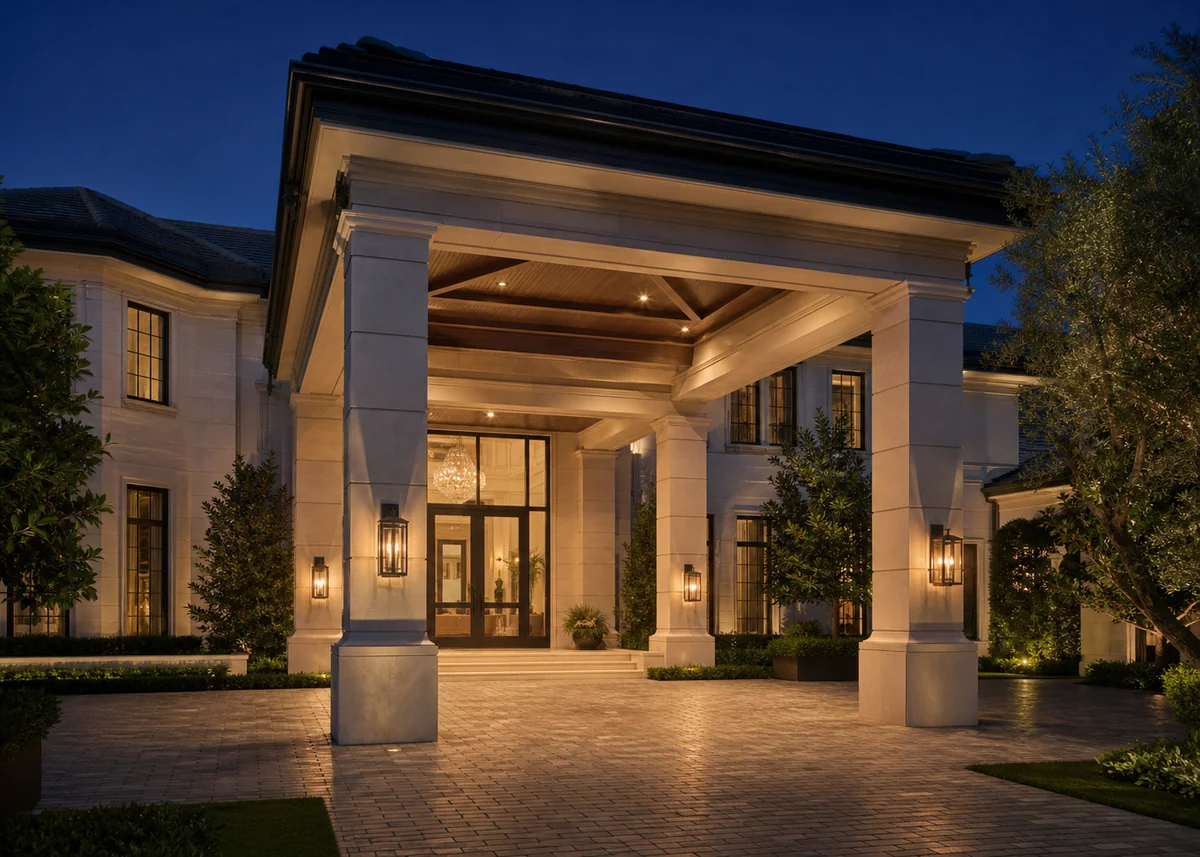
Design your own luxury front
Describe your plot, materials and style — our AI turns it into a photorealistic concept in seconds.
The Grammar of a Grand Entrance
A luxury facade concentrates its drama at the entry. Double-height porticos, 3-metre pivot doors in walnut or bronze, and framed views through the house to a garden or pool beyond all announce significance before a word is spoken. Scale is the first instrument: the entrance zone is typically 1.5 to 2 times the height of standard openings elsewhere on the elevation.
The approach matters as much as the door. A luxury arrival sequence choreographs the journey — gate, curved drive, porte-cochère or framed forecourt, landing, threshold — with material changes underfoot marking each stage. Even on smaller plots, a two-stage approach with a gate and a short walled garden path creates the same sense of occasion.
Noble Materials and How to Deploy Them
Natural stone is the backbone of luxury elevations: honed limestone for serene light-toned walls, travertine laid in French pattern for Mediterranean warmth, or dramatic book-matched marble reserved for the entrance feature wall. The luxury signal comes from thickness and detailing — deep reveals, mitred corners and full-height slabs rather than obvious thin tiles.
Metalwork completes the picture. Bronze and brass — real, living finishes that patinate — outperform powder-coat imitations at close range: door pulls, house numbers, downlight trims and gate details. Hardwood soffits in teak or iroko above entries add warmth overhead, the surface guests literally stand beneath at the threshold.
Water, Fire and Landscape Theatre
Nothing telegraphs resort-grade luxury like water at the entry: a still reflecting pool doubling the facade, a rill running alongside the approach path, or a sheet-fall wall whose sound masks street noise. Water features demand real engineering — balanced tanks, filtration, wind assessment — but transform how a house feels day and night.
Landscape at this level is architectural: mature specimen trees craned in for instant presence, clipped hedge geometry framing lawns, and layered planting that guarantees the composition looks complete from day one. A single 50-year-old olive or a pair of Canary palms does more for perceived value than any cladding upgrade.
Lighting Design: The Night Facade
Luxury homes are designed twice — once for daylight, once for night. A professional lighting scheme layers grazers that rake up textured stone, concealed linear LEDs under copings and stair treads, precision spots picking out trees, and soft fill from within the house. Fixtures are hidden; only effects are visible.
Control is part of the luxury: scenes programmed for evening, entertaining and away modes, warm-dim LEDs that shift from 3000K toward candlelight as they dim, and everything on astronomical timers. The discipline of a single colour temperature across the entire frontage separates professional schemes from enthusiastic amateur ones.
Gates, Driveways and Arrival Infrastructure
The gate is the facade's first handshake. Luxury gates are engineered objects — solid hardwood or bronze-clad leaves on concealed automation, flanked by stone piers with integrated intercoms and lighting. Sliding and cantilevered designs keep sight lines clean on tighter frontages while swing gates suit formal symmetrical compositions.
Driveway surfaces set the register underfoot and under-tyre: granite setts, resin-bound aggregate or large-format pavers with grass or gravel joints. Heated ramps in cold climates, drainage that never shows, and a forecourt sized so guests can turn without reversing — invisible engineering is the deepest luxury of all.
Quiet Luxury vs Statement Luxury
Statement luxury — double-height columns, gold accents, dramatic symmetry — photographs powerfully and suits formal architecture and hospitality-inspired living. Quiet luxury takes the opposite route: restrained forms in extraordinary materials, invisible technology, and detailing so resolved it whispers rather than announces. Both are valid; the choice is temperament.
The current direction of travel is toward quiet: honed rather than polished stone, bronze rather than chrome, planting rather than paving, and lighting that flatters rather than floodlights. Whichever register you choose, consistency is the discipline — a facade that mixes quiet materials with statement gestures usually achieves neither.
Frequently Asked Questions
What makes a house front look luxurious?+
Generous scale at the entrance, natural materials with deep detailing (stone, bronze, hardwood), layered professional lighting, mature landscaping and an arrival sequence with distinct stages. Resolution of every junction matters more than any single expensive material.
How much should I budget for a luxury facade?+
High-end frontages typically absorb 10–20% of total build cost once stone cladding, glazing, gates, water features, lighting and landscape are included. Lighting and landscaping deliver the highest perceived-value return per dollar.
Which stone is best for a luxury front elevation?+
Honed limestone for serene contemporary facades, travertine for Mediterranean warmth, granite for durability in harsh climates, and book-matched marble as a feature at the entrance. Thickness, deep reveals and mitred corners signal quality more than the species itself.
Are water features high maintenance?+
They require engineering — filtration, balance tanks, wind assessment — and periodic servicing like a pool. Still reflecting pools are the lowest-maintenance option; moving water adds sound but also pumps and cleaning. Design access panels in from day one.
What is 'quiet luxury' in facade design?+
Restrained forms executed in extraordinary materials with invisible technology: honed stone, real bronze, flush detailing, warm-dim lighting and mature planting. It whispers quality at close range instead of announcing it from the street.
Can AI visualise a luxury facade for my plot?+
Yes — describe your frontage and taste in the design matcher, e.g. 'luxury 60-foot villa front, honed limestone, bronze pivot door, reflecting pool, mature olive trees, dusk lighting', then use the closest local concepts when briefing your architect.