Contemporary House Front Design Ideas
Where 'modern' refers to a fixed design language, contemporary house front design means whatever leading architects are doing right now — and right now that means warmer, softer and greener. Today's contemporary facades mix brick, timber and dark metal in one composition, reintroduce arches and curves that modernism banished, and weave planting directly into the architecture.
This page tracks the current wave of contemporary elevations with a gallery of concept renders and notes on the trends behind them: the rise of dark and moody cladding, textured brick screens, curved entry walls, and the biophilic push that puts green walls and roof gardens on the street face. Use it as a trend report you can actually build from.
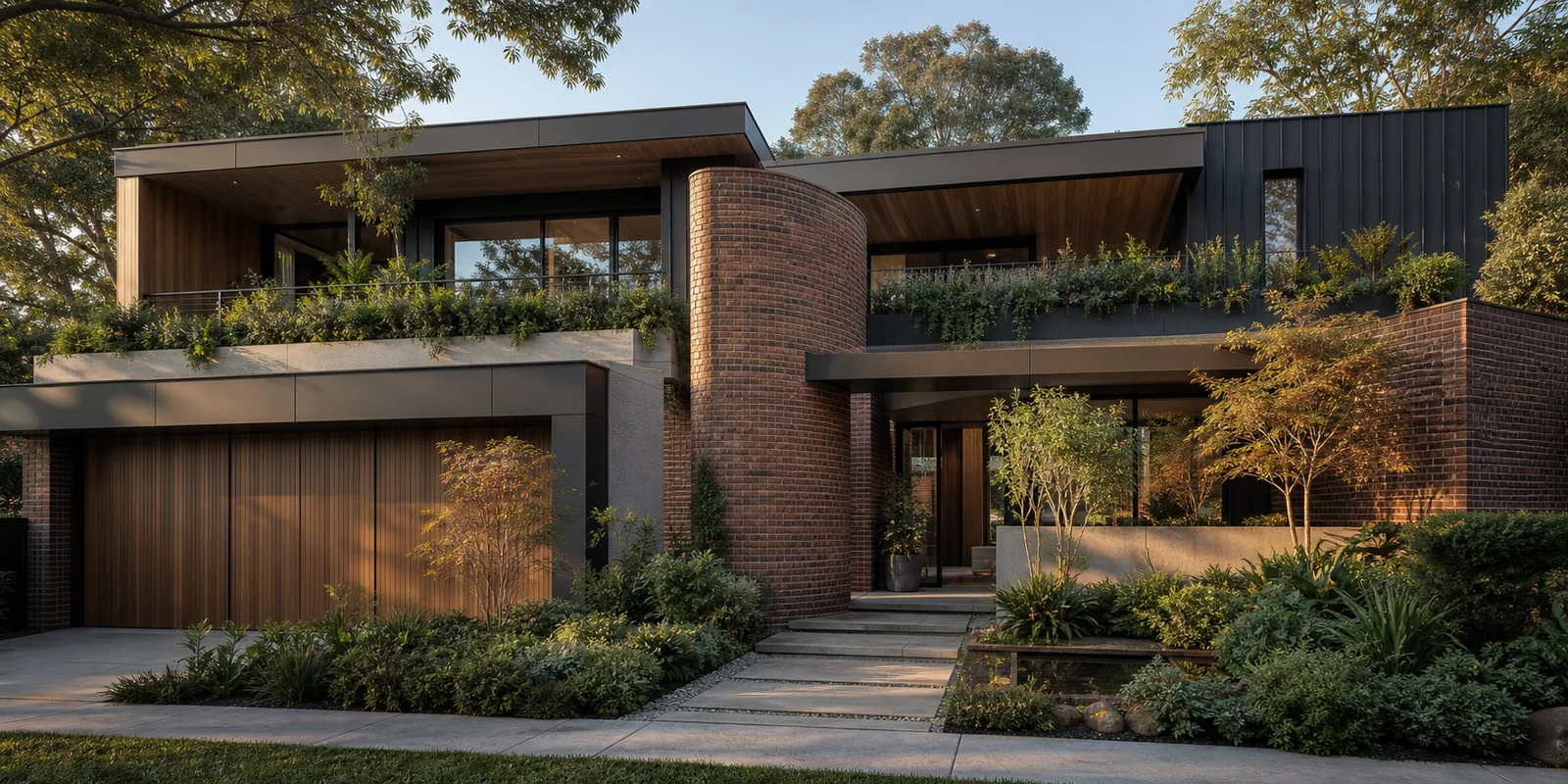
Contemporary House Front Design Gallery
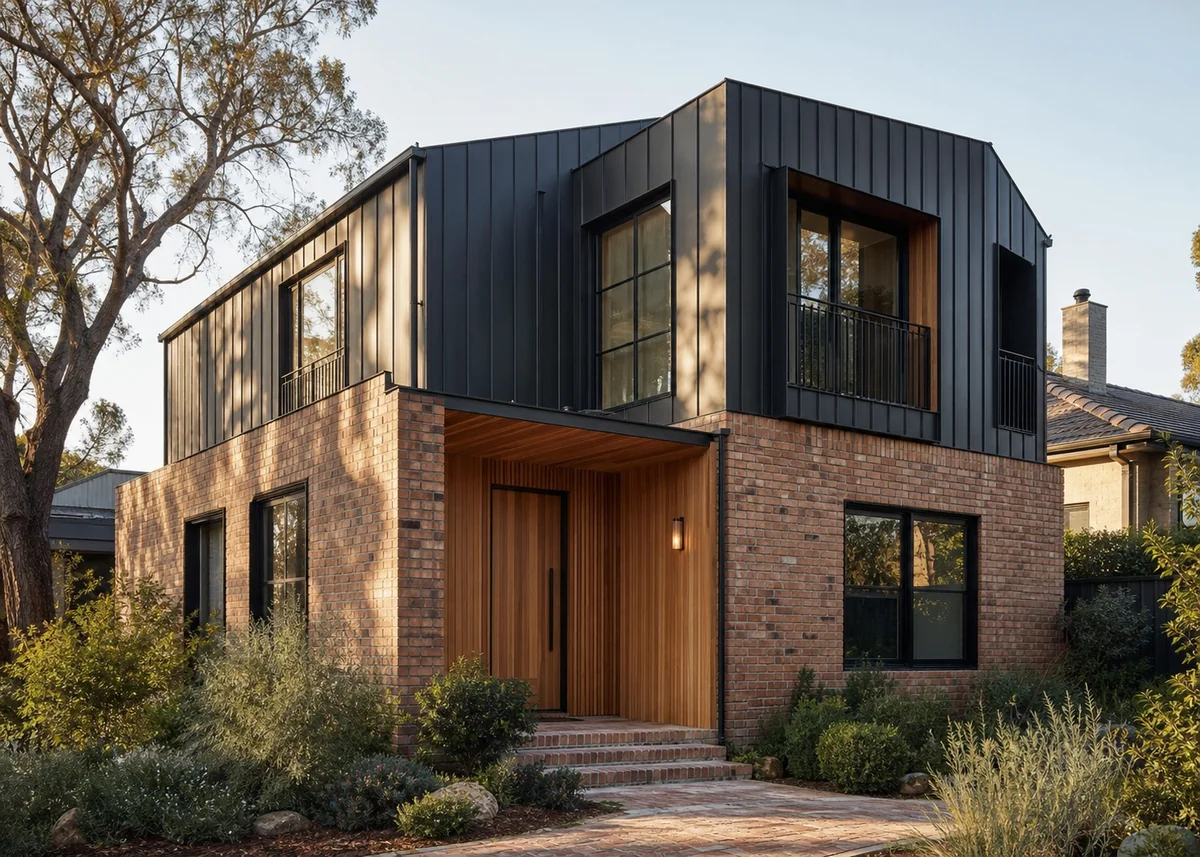
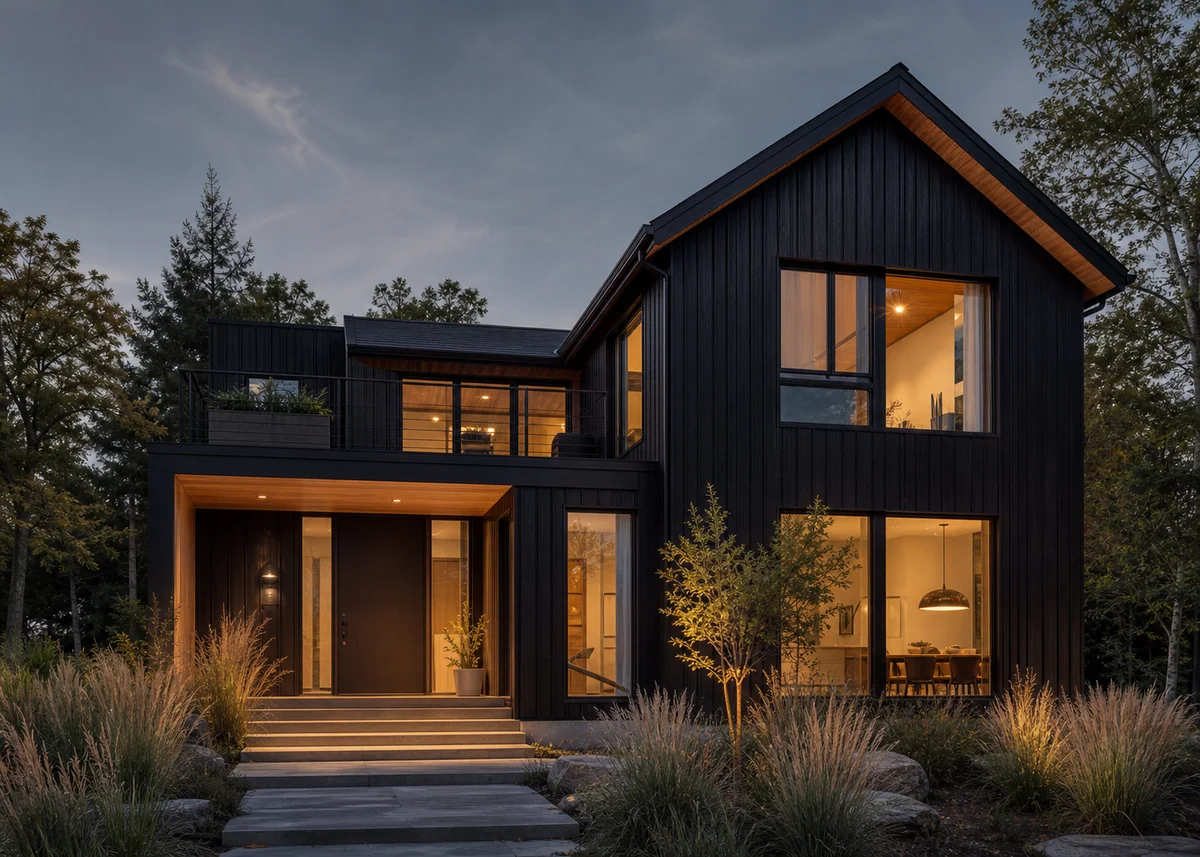
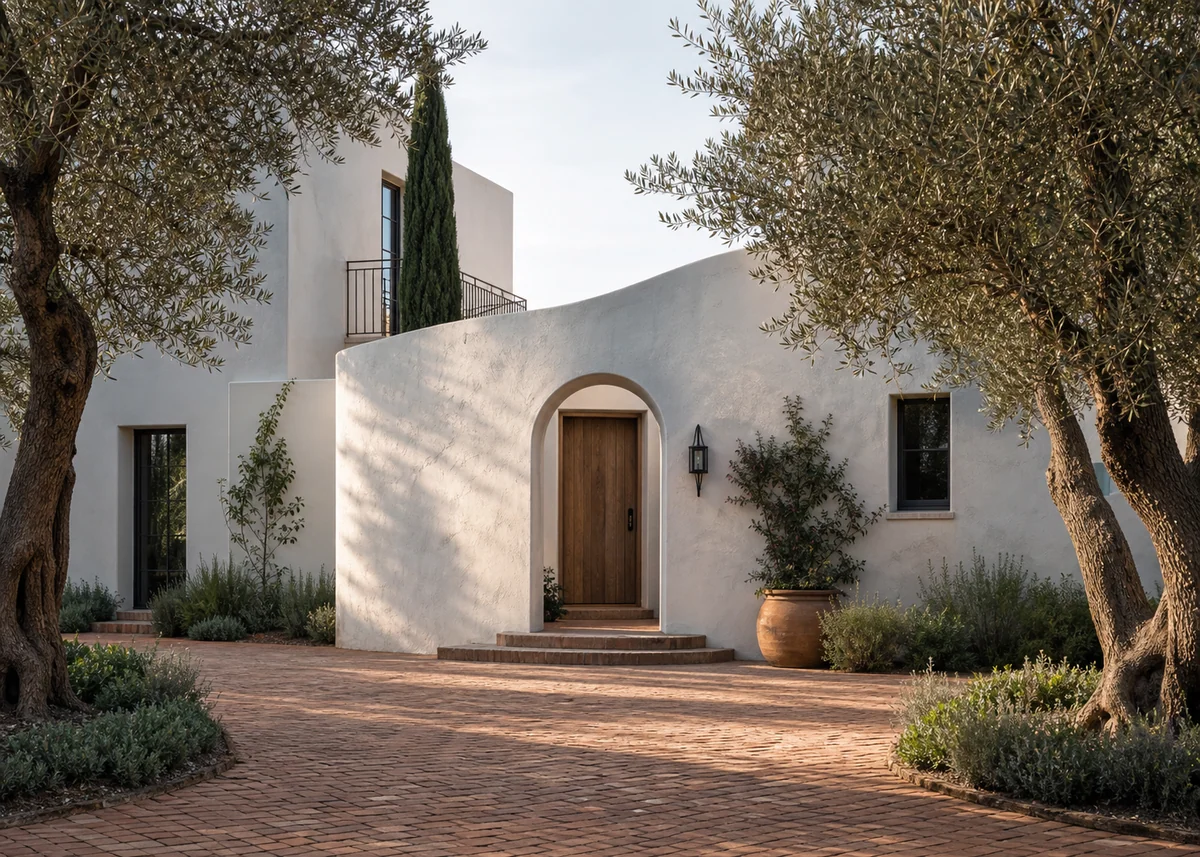
Every image below is a unique AI-created design concept. Love one? Use its caption as a starting prompt in our free AI generator and make it yours.
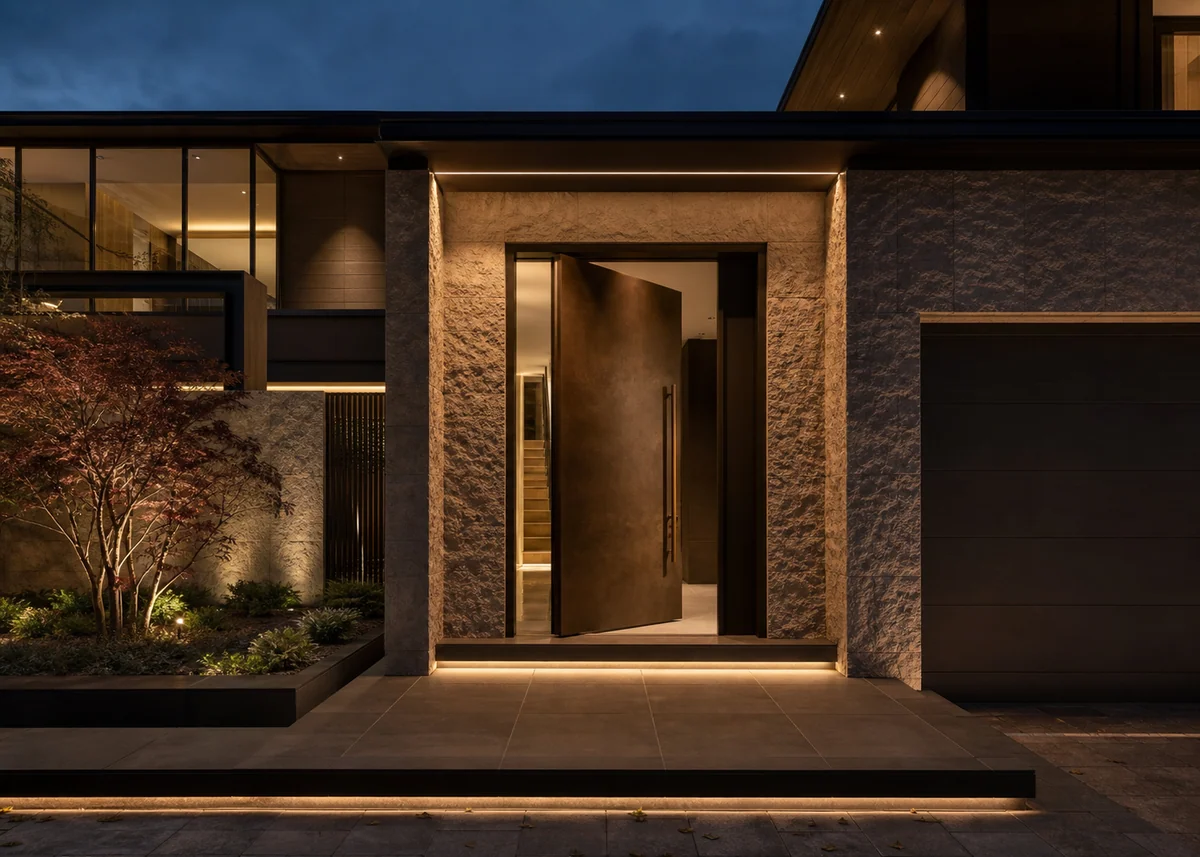
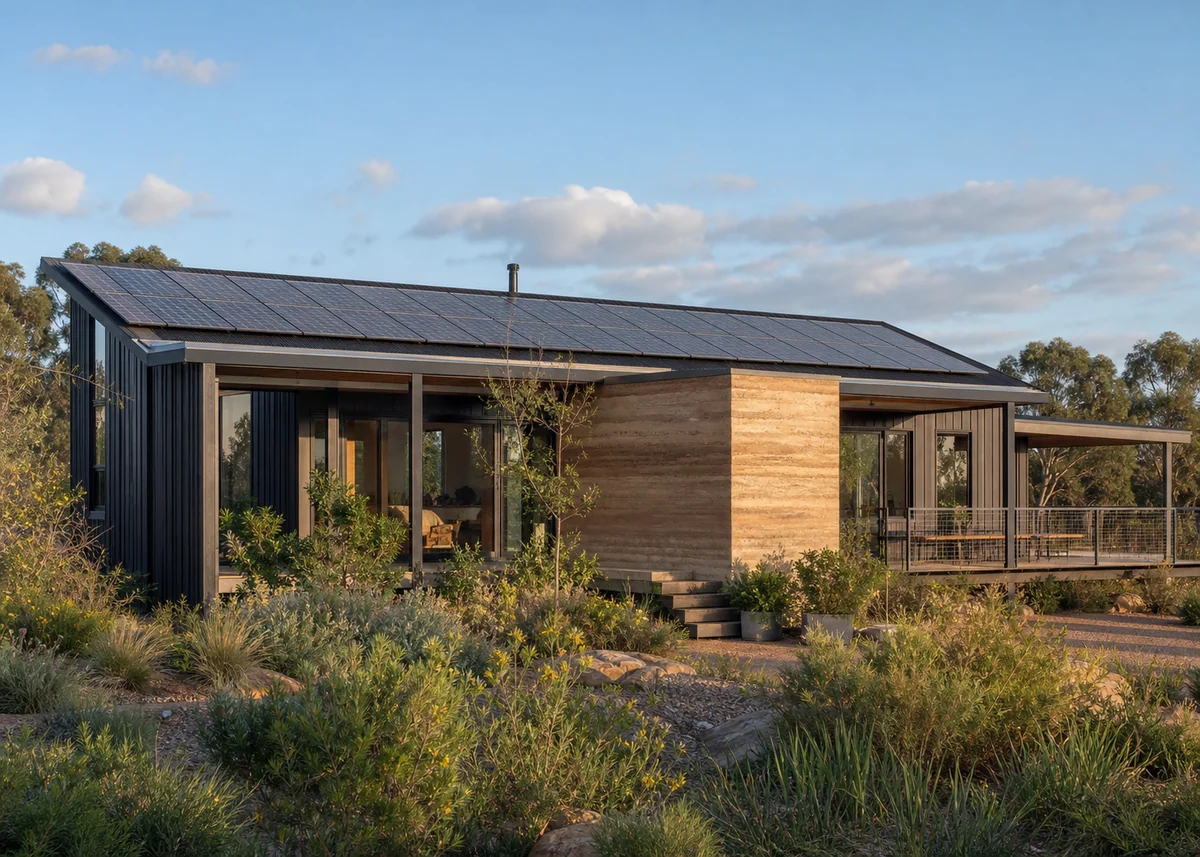
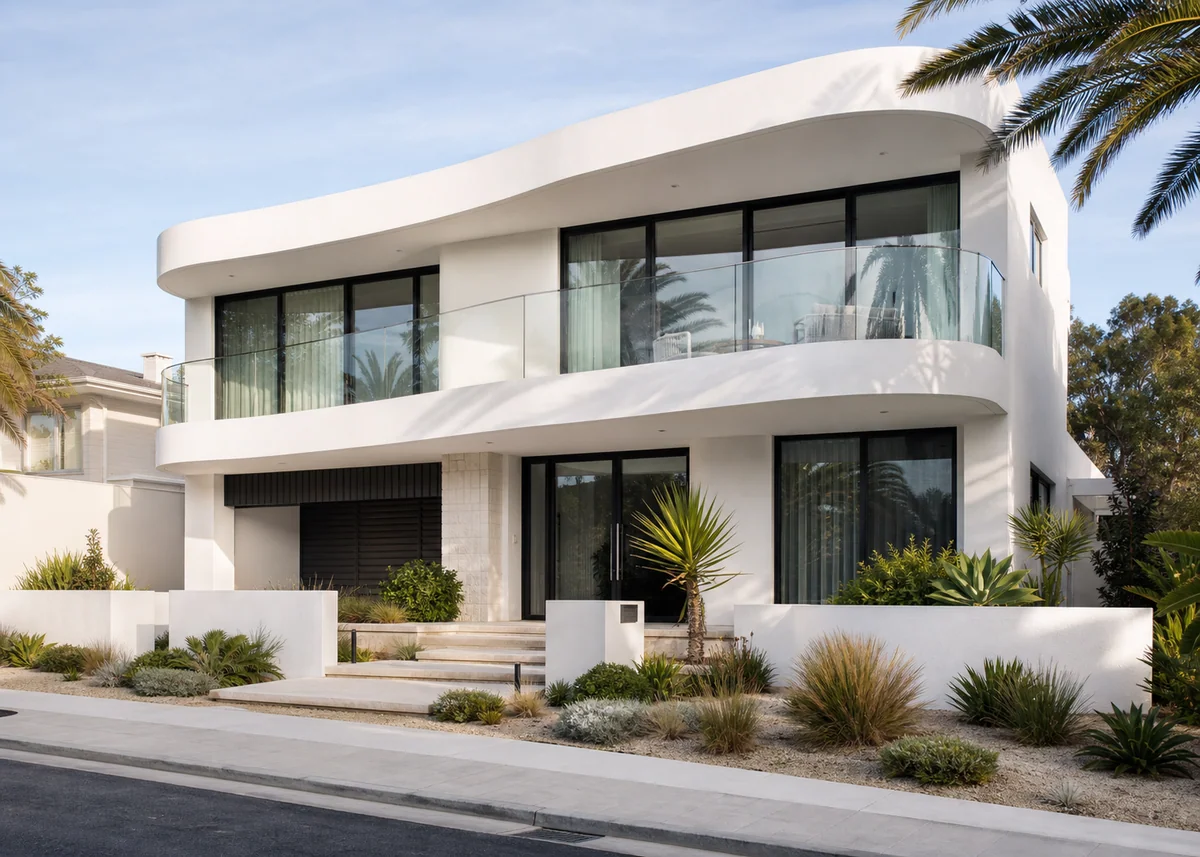
Design your own contemporary front
Describe your plot, materials and style — our AI turns it into a photorealistic concept in seconds.
Modern vs Contemporary: The Real Difference
Modern design is a historical style — flat roofs, white walls, machine aesthetics — frozen roughly in the mid-twentieth century. Contemporary design is a moving target that absorbs current culture, technology and climate thinking. A contemporary house today might quote mid-century modernism, but it will soften it with texture, curves and planting that the originals never had.
Practically, this means a contemporary facade gives you more freedom. You can pair a pitched roof with huge glazing, brick with black steel, or an arch with a minimalist wall. The unifying thread is intentionality: every element is current, considered and detailed cleanly, even when the vocabulary is eclectic.
Trend: Dark and Moody Facades
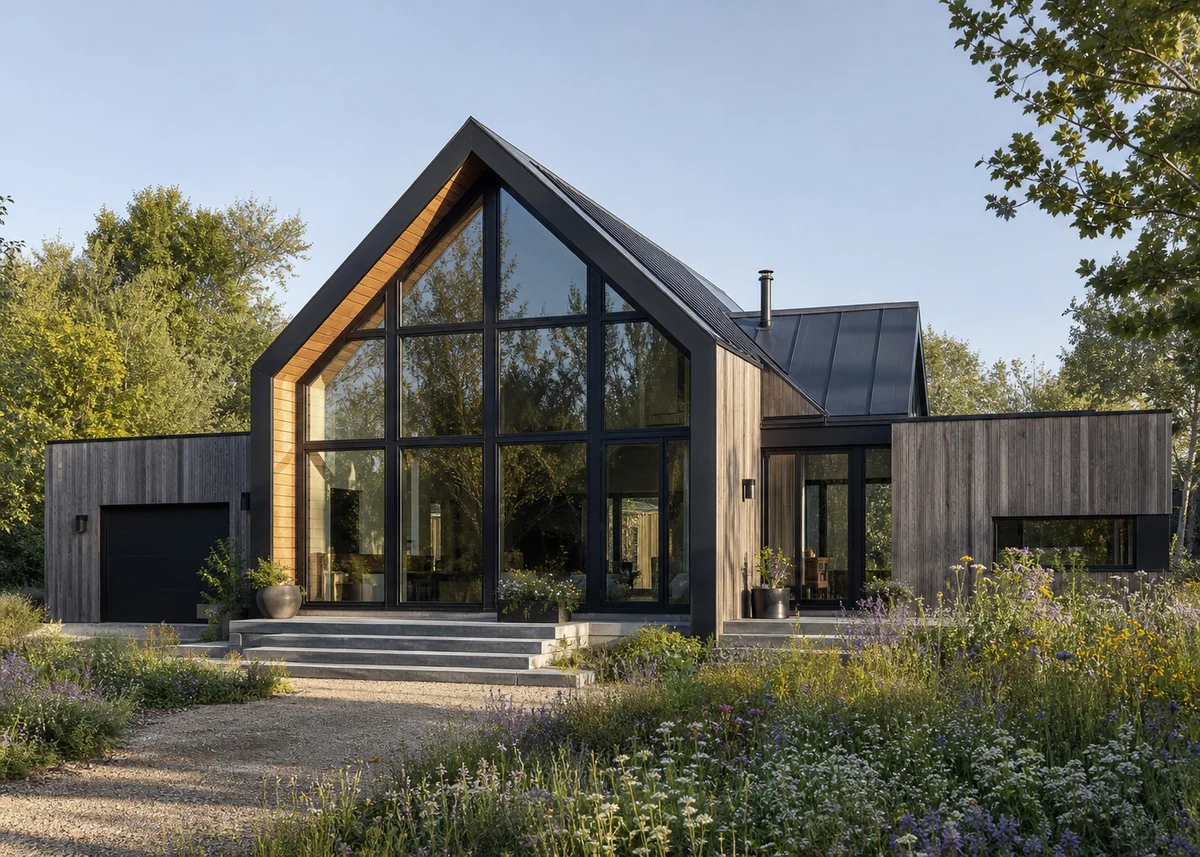
Charcoal, ink and soft black exteriors have moved from daring to mainstream. Dark cladding — stained timber, fibre cement, standing-seam metal — makes a house recede elegantly into its garden and turns windows into glowing lanterns at night. It also hides dust and weathering far better than white.
The key to a dark facade that feels rich rather than grim is texture and warmth: combine matte black walls with honey-toned timber soffits, warm 2700K lighting, and abundant greenery. Dark colours absorb heat, so in hot climates use ventilated rainscreen cladding and reflective membranes behind the dark skin.
Trend: Curves and Arches Return
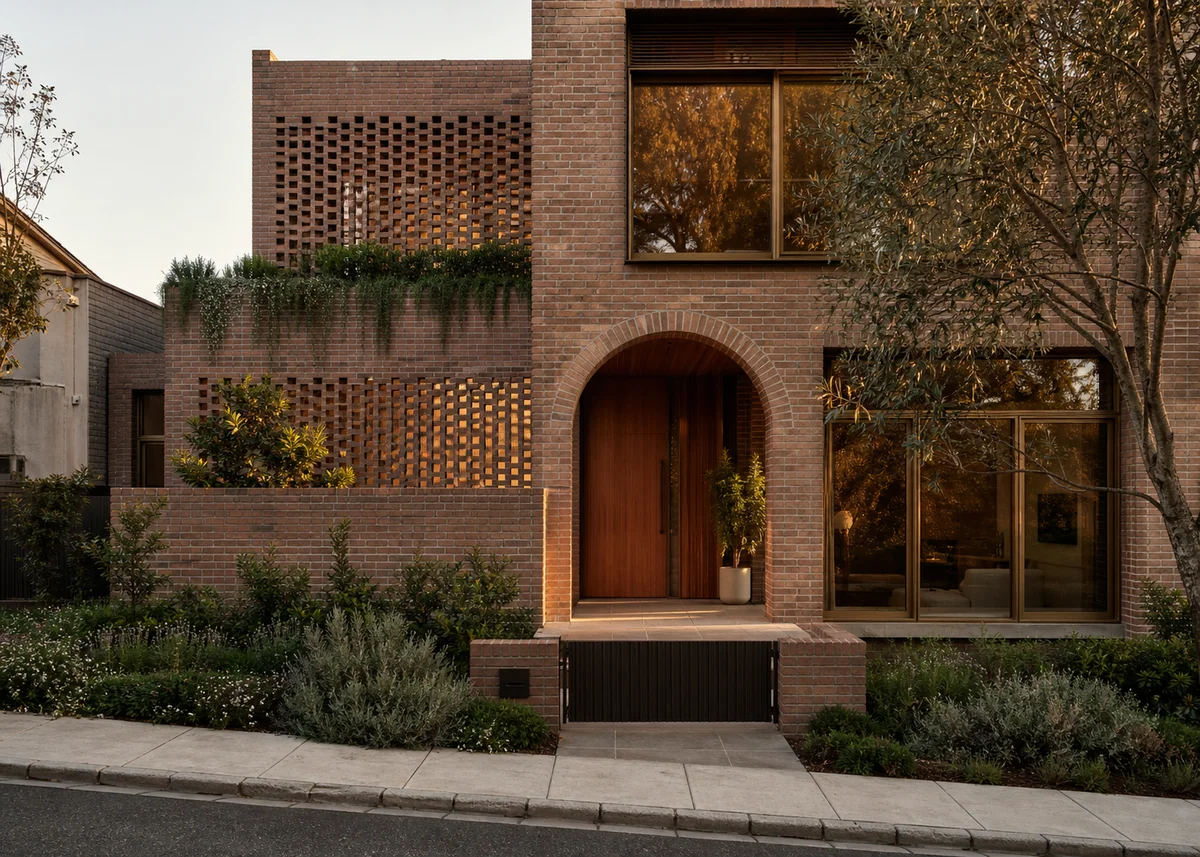
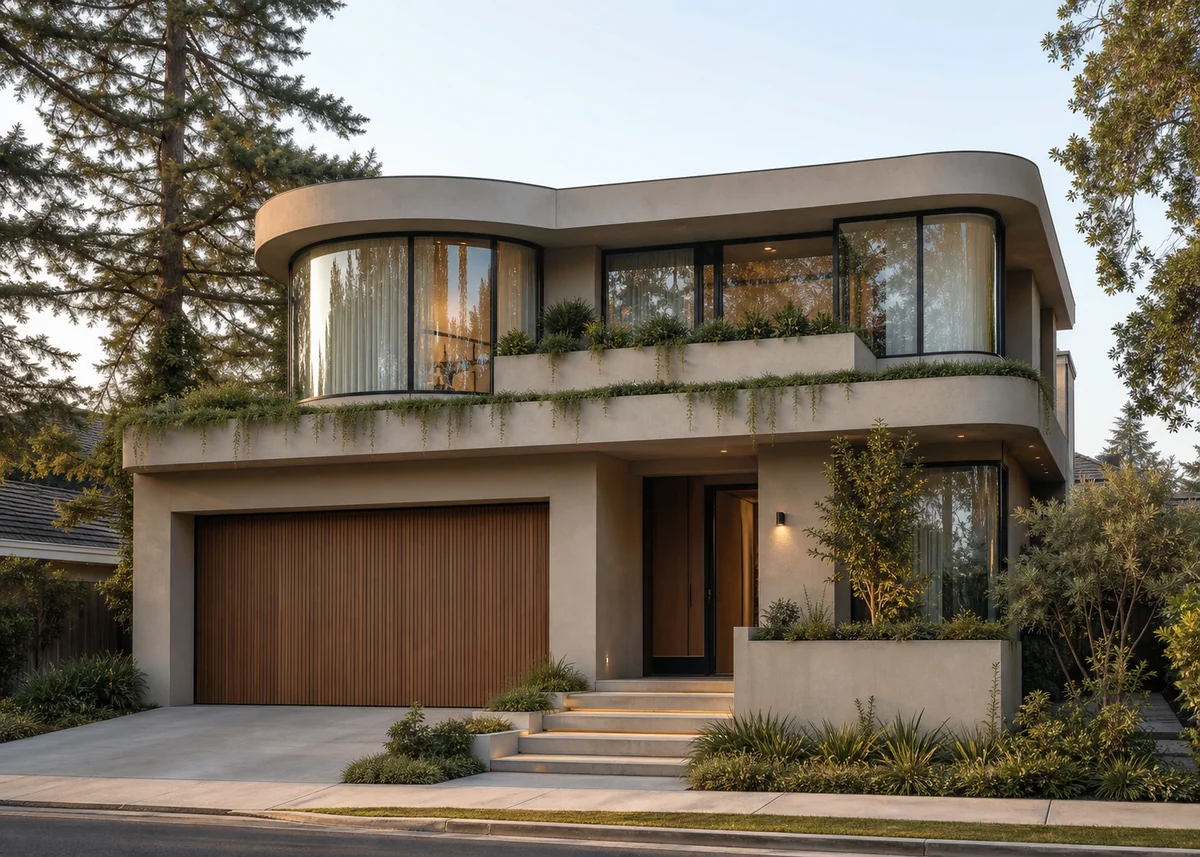
After decades of right angles, curved walls, rounded corners and arched openings are back on contemporary elevations. A single curved entry wall in render or brick softens an otherwise rectilinear composition and guides visitors naturally toward the door. Arched porches and windows add a Mediterranean warmth that photographs superbly.
Restraint keeps it contemporary rather than themed: one curve or one family of arches per facade. Pair the soft geometry with crisp details — frameless glass, shadow gaps — so the design reads as current rather than nostalgic revival.
Trend: Biophilic and Green Facades
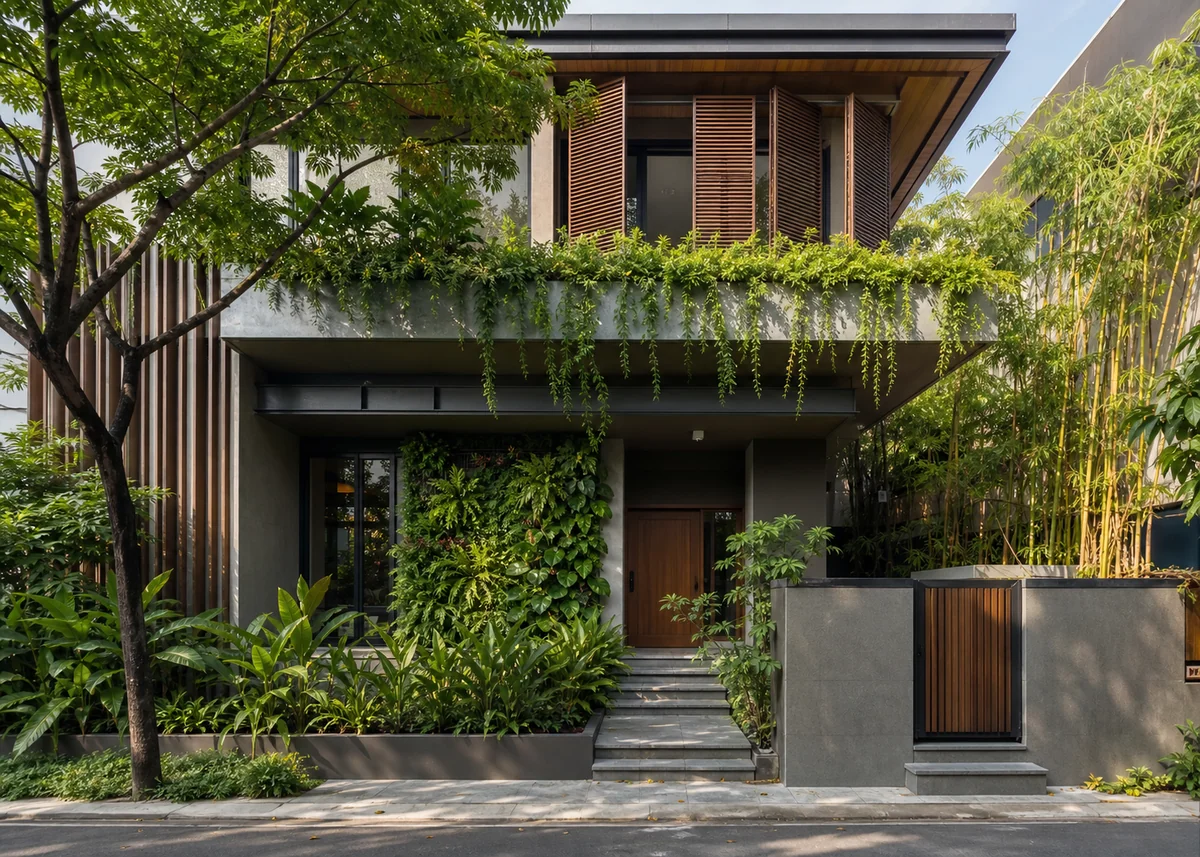
Planting is no longer landscaping around the house; it is part of the elevation. Contemporary designs integrate planted balconies, creeper cables on blank walls, green roofs visible from the street and even full living-wall panels beside the entry. The greenery cools the facade, absorbs street noise and signals environmental values.
Successful green facades are engineered, not improvised: drip irrigation on a timer, drainage layers behind planters, and species chosen for the wall's specific sun exposure. Start with hardy climbers — star jasmine, creeping fig — before committing to high-maintenance hydroponic living walls.
Material Mixing Without Chaos
The contemporary signature is three textures in one calm composition — for example, handmade-look brick at ground level, dark standing-seam metal above, and timber lining the entry recess. The trick is hierarchy: one material dominates (60%), one supports (30%), one accents (10%), and junctions between them land on architectural lines such as floor levels or window heads.
Repeat each material at least twice across the elevation so it reads as a theme rather than a leftover. And keep all metals in the same finish family — matte black or bronze — across windows, gutters, gates and light fittings; mismatched metal finishes are the fastest way to make a facade feel accidental.
Technology on the Facade
Contemporary elevations quietly integrate technology: video doorbells recessed flush into door jambs, linear LED lighting in shadow gaps, solar panels arranged as deliberate roof geometry rather than an afterthought, and EV chargers concealed in carport joinery. The design goal is invisibility — tech serves the composition, never clutters it.
Smart glazing is the frontier: electrochromic glass that tints on demand replaces external blinds on premium builds, keeping the facade line pure. For most budgets, motorised slim-profile external screens tucked into head boxes deliver the same clean look at a fraction of the price.
Frequently Asked Questions
What's the difference between modern and contemporary house design?+
Modern is a fixed historical style — flat roofs, white walls, minimal ornament. Contemporary means current: today that includes warm material mixes, curves, dark cladding and integrated planting. All modern-style houses built today are contemporary, but not all contemporary houses are modern in style.
Are dark house exteriors a bad idea in hot climates?+
Dark skins do absorb more heat, but ventilated rainscreen construction, reflective membranes and good insulation neutralise most of the penalty. In very hot regions, use dark tones on shaded elevations and lighter roofs.
How many materials should a contemporary facade mix?+
Three is the sweet spot: a dominant material around 60%, a secondary around 30% and an accent around 10%, with junctions landing on architectural lines like floor levels. Keep all metal finishes in one family.
Are arches contemporary or traditional?+
Both — it depends on detailing. A single render arch with a frameless glass door and no mouldings reads contemporary; multiple arches with keystones and trim read traditional. Use one family of arches and keep details crisp.
What is a biophilic facade?+
A facade that integrates living plants as design elements — planted balconies, climber screens, green roofs or living walls — with engineered irrigation and drainage. It cools the building, softens the street view and supports wellbeing.
Which contemporary trends will age well?+
Material honesty (brick, timber, metal), restrained curves and integrated planting have deep historical roots and should age gracefully. Ultra-trendy graphics or gimmick shapes date fastest. When in doubt, put trends in easily changed elements like doors, lighting and landscape.